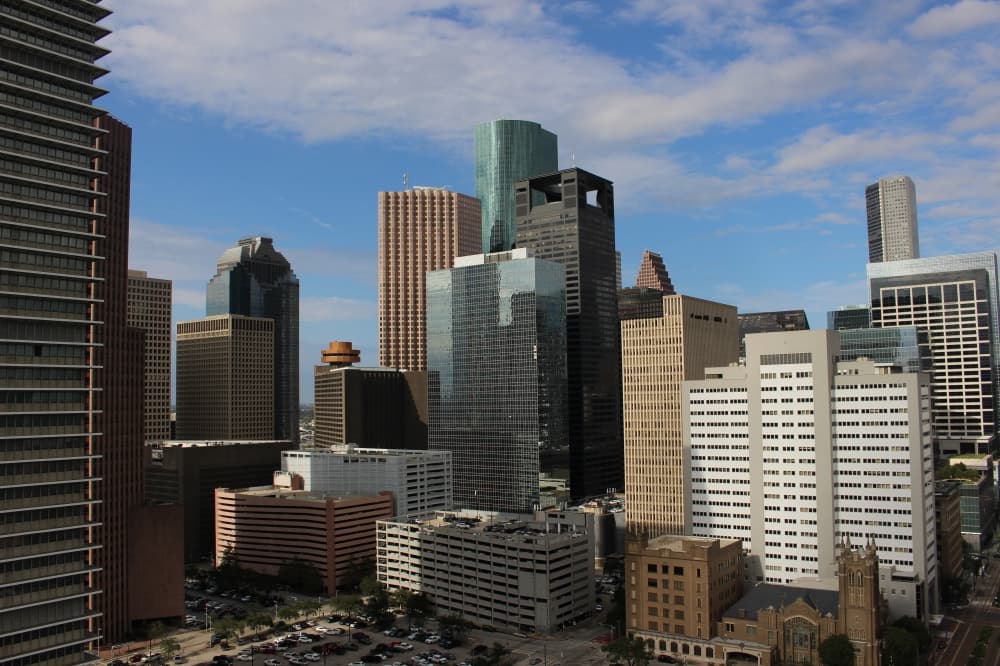
The Houston-Pasadena region ranked No. 7 out of 228 metropolitan areas on the American Lung Association’s most polluted cities by ozone, according to its 2025 State of the Air report released April 23.
Between 2021-23, the Houston region’s annual weighted average of high ozone days was 34.8, according to the report. Ozone air pollution can be referred to as smog and can cause lung inflammation.
In a nutshell
The ALA releases the State of the Air report every year to share information on air quality and health, according to the report. The report also touches on local air quality, air pollution health effects and action recommendations.
The Houston-Pasadena region also ranked No. 8 out of 208 metropolitan areas for most polluted cities by year-round particle pollution, according to the report. Particle pollution refers to particles in air pollution that can be smaller than 1/30th the diameter of human hair and are inhaled.
For short-term particle pollution, the Houston region ranked No. 125 out of 225 metropolitan areas, according to the report.
A closer look
On a county level, Brazoria, Galveston, Harris and Montgomery counties all received an “F” rating for high ozone days, according to the report.
The ALA also looked at each county’s population and populations at risk, such as children with pediatric asthma, people with chronic obstructive pulmonary disease and those who have lung cancer.
What else?
According to the ALA, air pollution’s effects can include respiratory effects such as:
- Wheezing and coughing
- Shortness of breath
- Asthma attacks
- Worsening COPD
- Lung cancer
Air pollution’s effects can also include other conditions, according to the ALA, such as:
- Premature death
- Susceptibility to infections
- Heart attacks and strokes
- Impaired cognitive functioning
- Metabolic disorders
- Preterm births and low birth weight
Factors that affect one’s risk of air pollution include the level of exposure, susceptibility based on other conditions one may have, access to health care and psychosocial stress, or non-physical stressors such as poverty that can amplify the effects of air pollution, according to the ALA.
Going forward
Among its recommendations, the ALA outlines different actions cities and counties can take, such as adopting policies to reduce emissions from buildings, manufacturing facilities and freight activities; or using “smart surfaces” solutions such as cool roofs, porous pavement and more green space.
On an individual level, the ALA recommends people check daily on their air pollution forecasts and reduce emissions from their vehicle or home energy use.
Learn more
View the 2025 State of the Air report here.