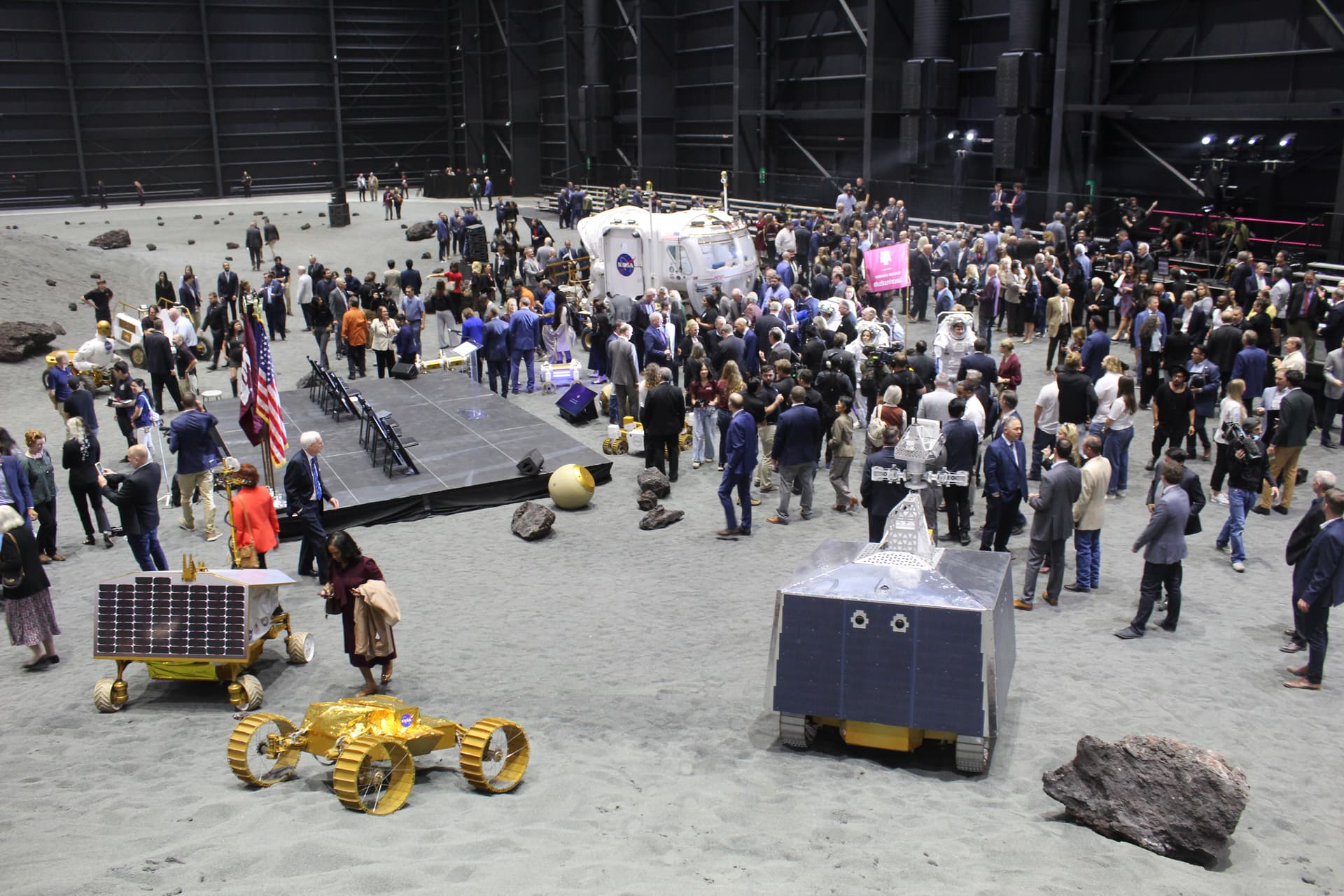
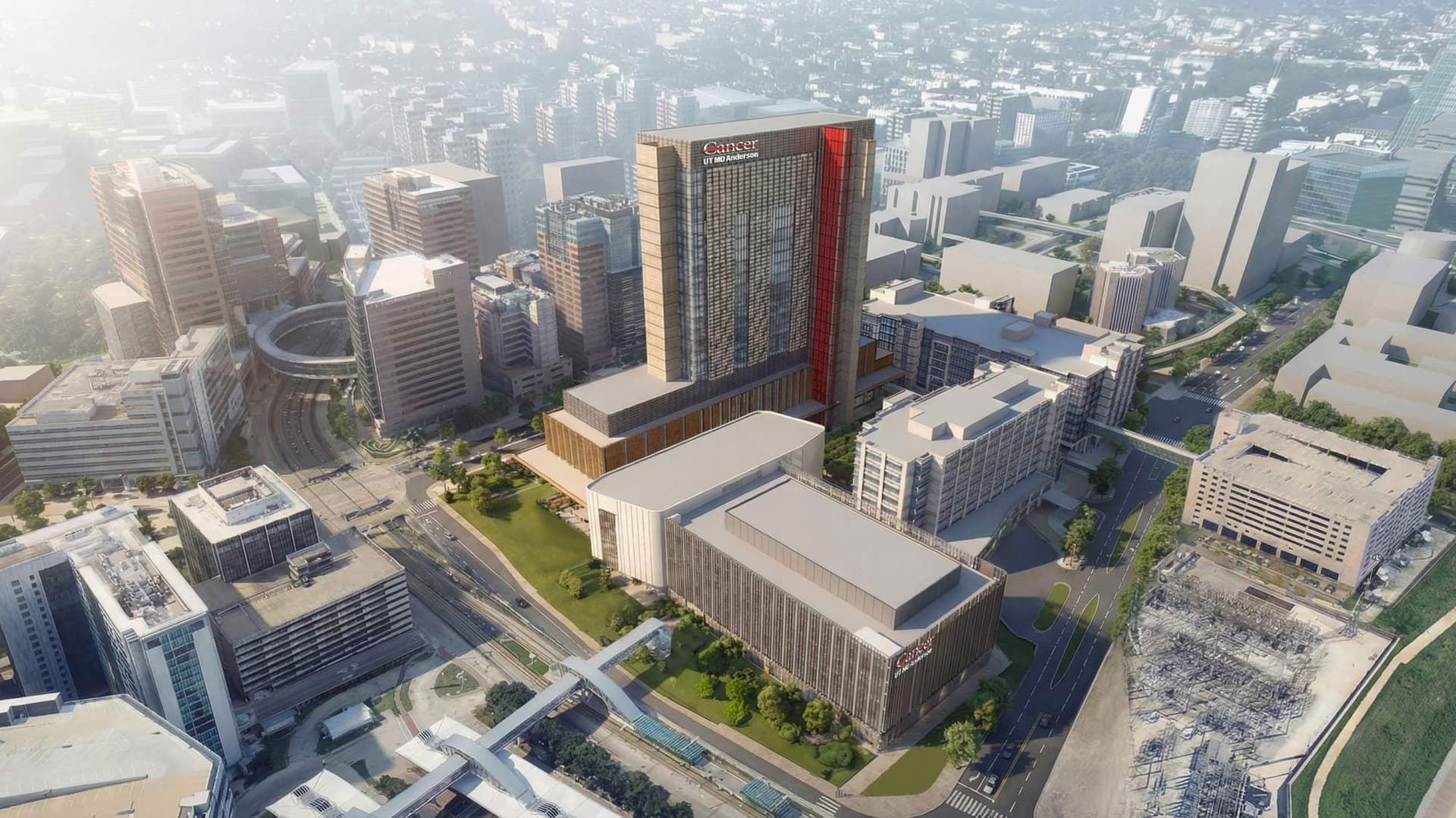
The institute's lunar and Mars analog environments will support research, testing and training in conditions that closely simulate extraterrestrial environments. (Rachel Leland/Community Impact)
Texas A&M University opened its new Space Institute on Nov. 20, unveiling a $200 million state-funded research and testing facility designed to develop technologies for future lunar and Mars missions.
“Houston, we now have a solution,” said Robert Ambrose, associate director of the Texas A&M Space Institute. “This facility is where NASA and commercial partners are going to figure out how to explore on the moon.”
About the facility
Located in NASA's Exploration Park outside Johnson Space Center, the institute's lunar and Mars analog environments, each 117,000 square feet, will support research, testing and training in conditions that closely simulate extraterrestrial environments.
NASA's goals include returning astronauts to the moon by 2028. Rachel Leland/Community Impact
The facility also has 10 research bays available for lease to academic, industry and government partners, including NASA. AstroLab and Intuitive Machines have already signed leases, with several other agreements in the final stages.
Lunar resources company Interlune plans to establish a center at the institute to produce simulated lunar soil for testing landers and rovers, said John Bellinger, a member of the Texas A&M University System Board of Regents.
Diving in deeper
Two research bays are reserved for Texas universities to support student opportunities in the space industry. Researchers will also have access to rental spacesuits to add realism to experiments conducted in the simulated environments.
The facility also has 10 research bays available for lease to academic, industry and government partners.Rachel Leland/Community Impact
Other features include flexible laboratories, maker spaces, machine shops, research garages and collaboration areas. The facilities will support the development of space instruments, robots, landers and deployment systems, Ambrose said.
The funding source
The project cost $200 million, and was paid for through the state’s Texas Space Commission, which was established in the 88th Texas Legislature and allotted $350 million for space programs in Texas, including $200 million for the institute, according to documents from the university.
“We weren't simply making a significant investment. We were making a commitment that Texas would lead the next era of space exploration,” state Rep. Greg Bonnen said.
Looking ahead
NASA's goals include returning astronauts to the moon, establishing a permanent lunar base and sending a nuclear-powered spacecraft, Space Reactor-1 Freedom, to Mars by 2028, Director of Johnson Space Center Vanessa Wyche said.
“The doors are open and soon this space will be filled with students, faculty, engineers and researchers working together to push the boundaries of exploration and discovery,” she said.