Houston City Council approved a deal that will provide the city a total of $50 million over the next four years from The Woodlands Township in exchange for agreeing to not annex the township.
The vote
Houston City Council voted to amend a Regional Participation Agreement between the city and The Woodlands that required the township to pay one-sixteenth of 1% of its sales tax to a Regional Participation Fund every year. The agreement, which began in 2007, also provided protection from annexation by Houston until 2057.
The amendment ends the annual sales tax payments and the long-term Regional Participation Fund payment structure between Houston and The Woodlands, providing for a total of about $27.4 million in payments from The Woodlands to Houston over the next three years, as well as releasing restrictions on the $22.6 million currently in the RPF to make those funds available to the city of Houston.
The payment schedule to Houston for the $50 million is proposed as:
- $22.63 million by Dec. 31 this year
- $9 million by the end of 2027
- $9 million by the end of 2028
- $9.37 million final payment by Dec. 31, 2029
The $22.6 million in the RPF will go to the city’s general fund, closing its gap of $25 million down to $3 million.
The fund had previously been used for regional public works projects "of mutual benefit" in exchange for annexation being off the table until 2057.
Since it was officially approved, the agreement now prevents the possibility of future annexation by the city of Houston.
Those opposed
The RPF had not been used since 2018, and no projects, which require approval from The Woodlands, have been suggested since then.
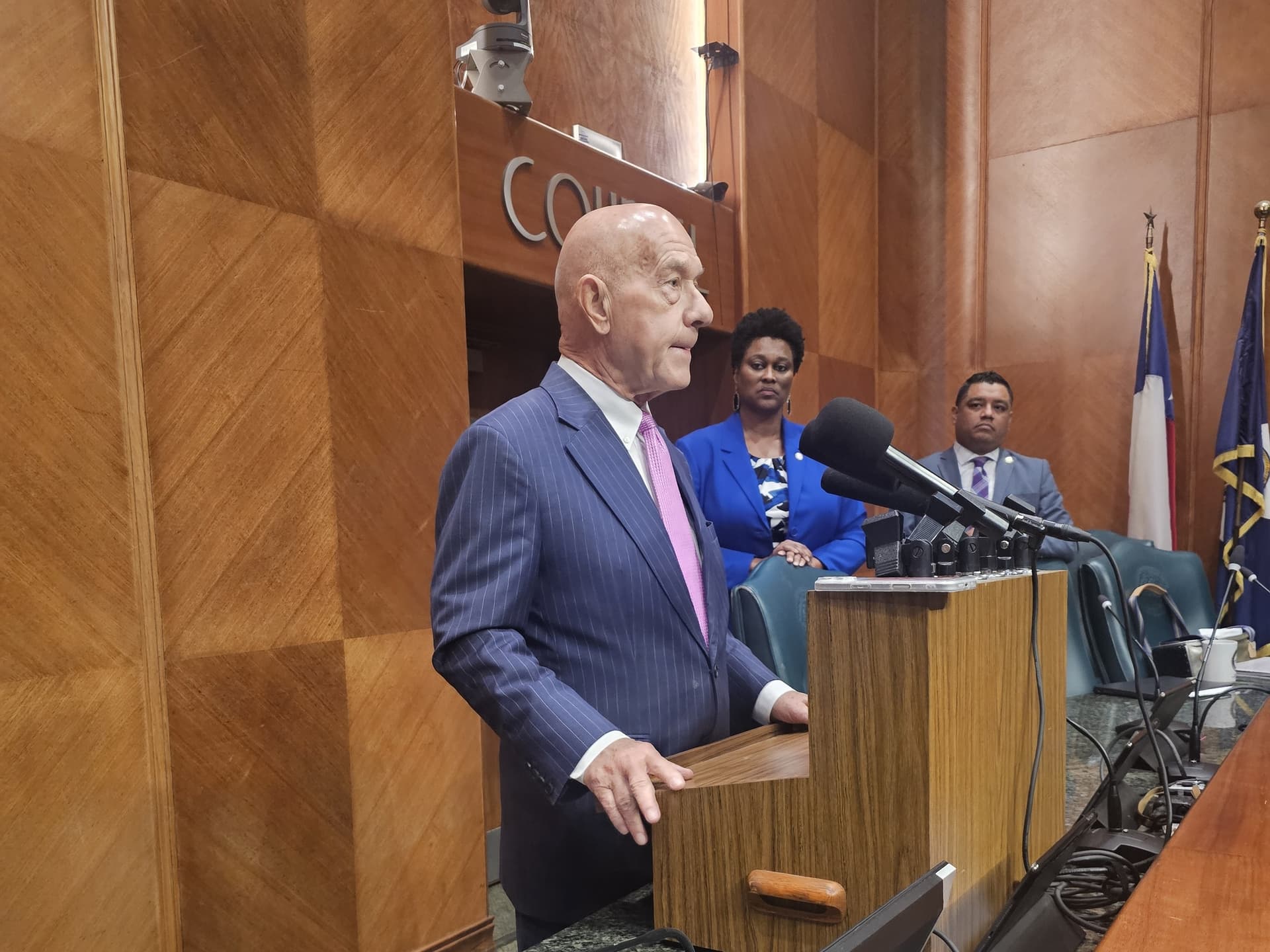
District C council member Joe Panzarella, who cast the lone “no” vote, said he was unaware of the fund until two weeks ago, when the amendment was added to the agenda. District K council member Martha Castex-Tatum said similarly that she was unaware of the fund.
“This is a fund that had previously invested in six different council districts,” Panzarella said. “It was a fund that was dedicated to infrastructure and parks. I was not necessarily opposed to the agreement, but opposed to unrestricting it and allowing it to go to anything outside of infrastructure.”
Mayor John Whitmire said most council members were unaware of the RPF because it had not been placed on the agenda for years. Meanwhile, Houston City Controller Chris Hollins said that the amendment was a “bad deal.”
“It's $27 million in new money that we're throwing away in exchange for giving up this revenue stream,” Hollins said at the meeting before the vote. “This mayor has criticized past administrations for relying on one-time fixes like asset sales to solve problems that don't actually solve all the problems. That's exactly what this is.”
Hollins estimated that the fund, depending on sales tax, could generate between $100 million and $200 million if it were kept as is through 2057.
Some background
Whitmire added that The Woodlands board of directors chair Brad Bailey is up for election to the state legislature, and the city has to be smart about using its relationships to advance the city’s goals.
“It’s all about timing,” he said. “The legislature meets in January. I promise you it was a smart decision to get that $50 million today and not risk getting the [state] Legislature involved.”
The $50 million will go towards operating 24 departments and 23,000 employees, Whitmire said.
“We had financial challenges for years and years,” he said. “Our vision is a city that has a reliable revenue stream, and we’re getting there. But it’s a challenge. So we had the opportunity to work with The Woodlands.”
One more thing
While the agreement states Houston will not annex The Woodlands, which will remain in its extraterritorial jurisdiction, it does spell out that should anything in the agreement change or other circumstances arise, the city would have to obtain voter approval from The Woodlands for annexation.