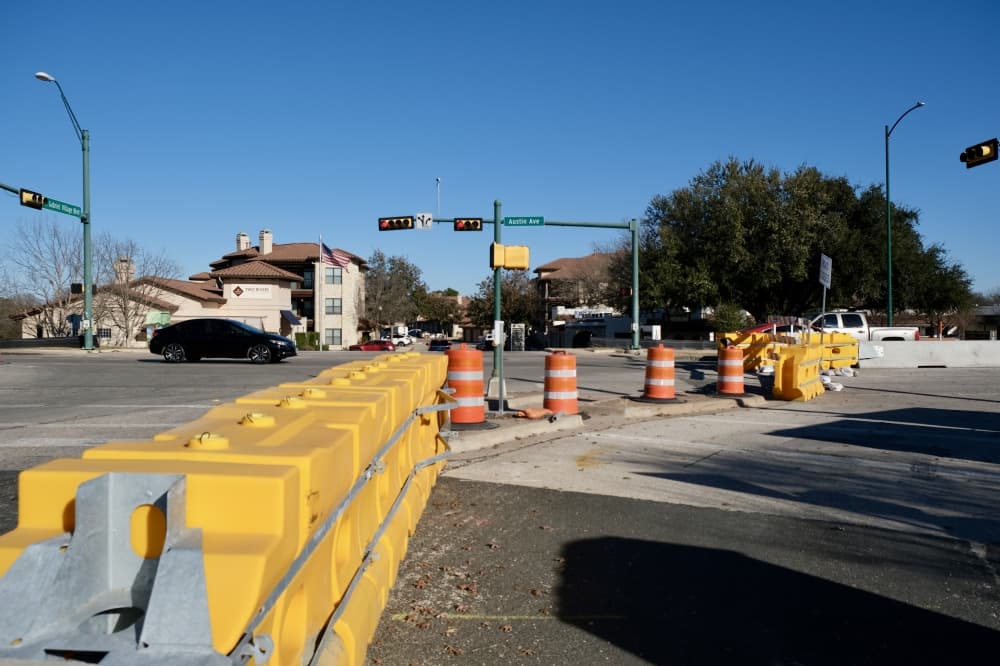
Georgetown officials and KPA Engineers updated the schematic design in late April for proposed changes to the Austin Avenue corridor, including portions of University Avenue and Seventh and Eighth streets.
What happened
The main changes include removing the median from the Myrtle Street and University Avenue intersection as well as adding left- and right-turn lanes, KPA Engineers Vice President Trae Sutton said.
“[This] opens up more traffic and allows traffic to get off University not just at Elm [Street], but at the first stop at Myrtle [Street],” Sutton said. “It’s a lot safer.”
Council members approved the changes to the schematic designs at an April 28 City Council meeting.
“I think that we’ve been able to make some changes that have been impactful to the neighbors,” District 1 council member Amanda Parr said. “I know we’ll continue to look at tweaks that can be made in the future.”
What they’re saying
Parr is interested in investigating locations for more pedestrian crossings without a signal, she said at the meeting.
While schematics do not show additional pedestrian crossings within this corridor, the intersection of College Street and University Avenue may be a possible location to consider, Georgetown Transportation Manager Lua Saluone said.
“We can look at that further once we get into the full design,” Saluone said.
Tom Yantis, Georgetown resident and former assistant city manager, said that while he supports the changes to Austin Avenue, he has concerns about the updated schematic design for University Avenue, which he says prioritizes vehicular traffic over pedestrians.
“I don’t think that the proposed changes to University Avenue are in keeping with the goals of the downtown master plan or the long-standing goals of making university more pedestrian friendly and less of a through route for vehicles,” Yantis said.
In case you missed it
Sutton presented the initial schematic plans to Georgetown City Council on Feb. 24.
The plan included removing parking spaces from the downtown square to accommodate expanded sidewalk use, narrowing roadways to three lanes in some sections to slow vehicle speeds, and expanding roads in other areas to five lanes to allow for better traffic flow.