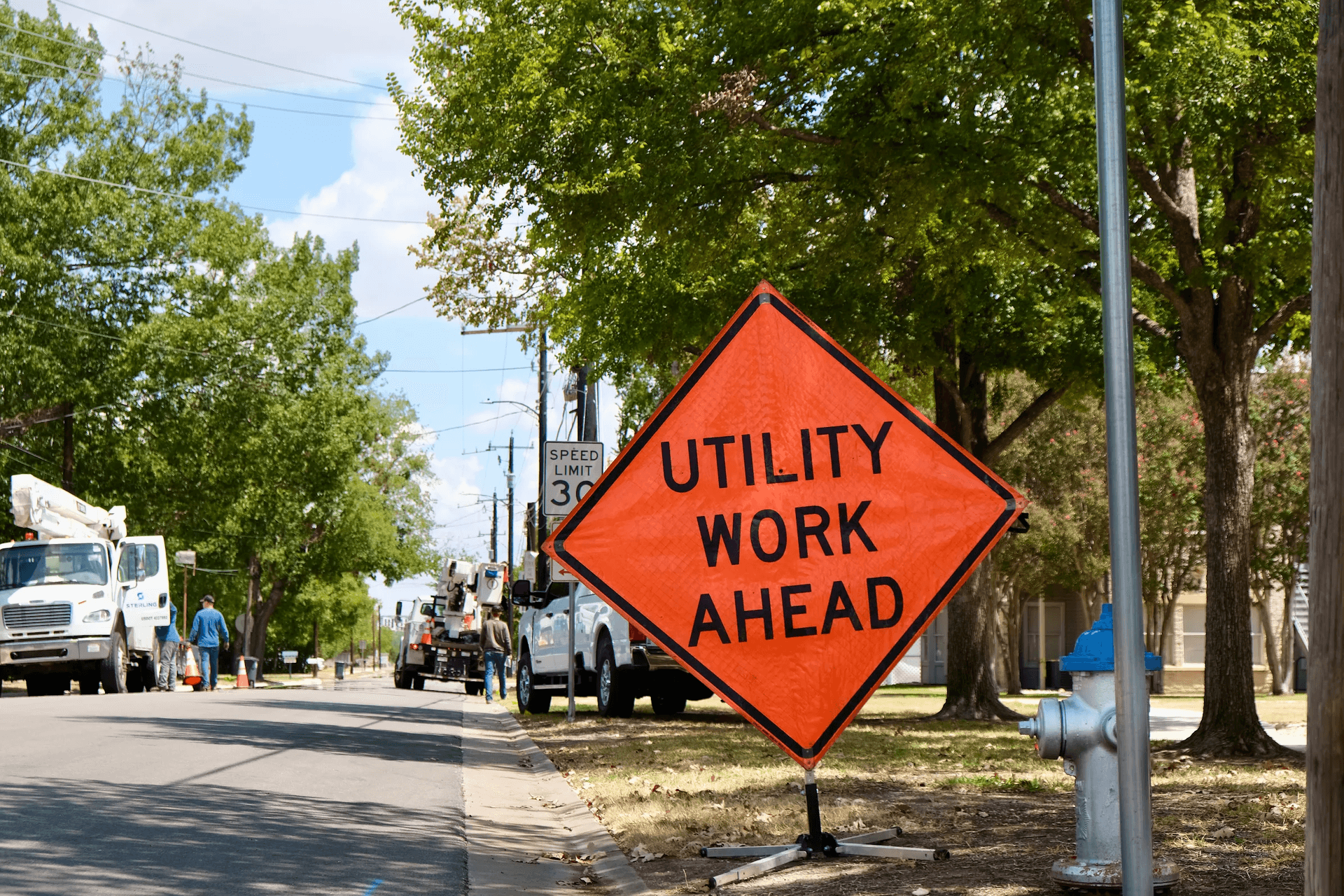
Several utility rate increases approved earlier this year are taking effect with the start of the 2026-27 fiscal year Oct. 1. (Gracie Warhurst/Community Impact)
As Georgetown’s population rises, the scale of the city’s municipal operations has reached a turning point, officials said. Several utility rate increases tied to this growth took effect with the new 2026-27 fiscal year that started Oct. 1.
What's happening
Over the past several months, Georgetown City Council has approved various utility rate increases across the five utilities it manages: electricity, stormwater, solid waste, water and wastewater services.
The increases will help sustain city services and fund strategic high-capacity infrastructure during a period of population growth, officials said.
In addition to rate increases, officials are also reconsidering the rate structure for water utilities in order to place more burden on usage than a fixed base charge. Because the base charge is intended to cover fixed cost obligations, customers will pay the fee whether they use any water or not, Chief Financial Officer Leigh Wallace said.
“We [changed] that policy a little bit to try to help with affordability on base rate and push a little more recovery into the volume, but still feel that overall the utility would be in a good financial position to meet all of its costs,” Wallace said.
Explained
For stormwater, the jump to $8 is driven by maintenance and flood mitigation. Additionally, once Georgetown hits 100,000 residents, estimated to take place in 2030, it triggers a new tier of Texas Commission on Environmental Quality permit requirements.
The city is raising rates now to avoid "rate shock" when those stricter standards take effect, Assistant City Manager Jack Daly said.
The solid waste utility adjustments will cover the Texas Disposal Systems contract and satisfy the debt service for the city’s new transfer station.
Water and wastewater rate increases are primarily due to population growth, which causes an average of 4,100 new water connections and 2,500 wastewater connections annually, Wallace said.
To accommodate growth, the city has several ongoing capital projects, including the Three Forks water reclamation facility and Northland wastewater treatment plant. The city utilizes 30-year debt financing for these projects to ensure that the cost is shared equitably between current residents and the future ratepayers who will benefit from these plants through the mid-2060s, Wallace said.
For water infrastructure, the city is constructing the Circleville pipeline to transport water from the Circleville area into Georgetown, as well as procuring groundwater contracts to pull resources from Lee and Bastrop counties. These projects involve high costs for reservation, pumping and transportation across county lines, Daly said.
Something to note
The city helps offset utility and development costs through impact fees. Local governments can levy these one-time charges for developers to help cover the cost of public infrastructure required by new developments.
“[The city is] working to make sure growth as much as possible pays for growth and existing customers aren't overly burdened by the impacts of growth,” Daly said.
Current water capital projects in the city total $857 million, and about $50 million is covered by impact fees, Daly said. Although “every little bit helps,” city officials said state laws limit the impact fees the city can collect.
“I don't want to diminish or make light of the impact fees we do collect—they do make a difference,” Daly said. “It's a valuable tool in the city's toolbox to help manage costs.”
The city aims to adopt the maximum impact fees allowed by the Texas Legislature, but officials are closely watching proposed laws that aim to restrict or abolish the fees.
What they’re saying
Although the city aims to offset the cost of development with impact fees, as well as target higher-volume users through volumetric prices, Wolf Property Management owner Adam Starr said fixed costs and commercial classifications disproportionately impact multifamily properties.
Because multifamily properties can be classified as a “high-volume” and sometimes commercial user, rising costs are passed onto individual tenants, placing a heavy financial burden on lower-income residents, Starr said. He said that tenants in apartments smaller than the home he owns are paying more in utility costs.
“Actually, you're not loading up commercial property users with the extra cost, "Starr said. "You're loading up the people that can't afford to buy something. … It's like it's so counterintuitive."
On its website, the city of Georgetown states that each apartment management company spreads utility costs to residents differently, preventing the city from explaining how these residents are charged for water services.
Before you go
City officials adopted a $1.65 billion city budget Sept. 8. The budget is supported by a $0.363167 per $100 valuation tax rate.
To the average resident, a $1.6 billion budget for a city of Georgetown's size could appear extraordinarily large, Wallace said. However, there are two primary factors driving these numbers, she said.
Unlike many other cities, Georgetown owns its electric utility, adding about $100 million in energy purchase costs to the budget. This also means that the city can charge commercial customers more for electricity up front, protecting electric ratepayers from having to cover development costs, Daly said.
Additionally, the budget includes approximately $700 million dedicated to capital projects—long-term infrastructure builds essential for a growing city.
“Hundreds of millions of dollars in capital projects are being recognized in this year's budget,” Wallace said. “So that's why you see these really big numbers—it's because of these big projects we've been talking about for a long time.”
Source: city of Georgetown/Community Impact
Study shows less rainfall is reaching Lakes Travis and Buchanan