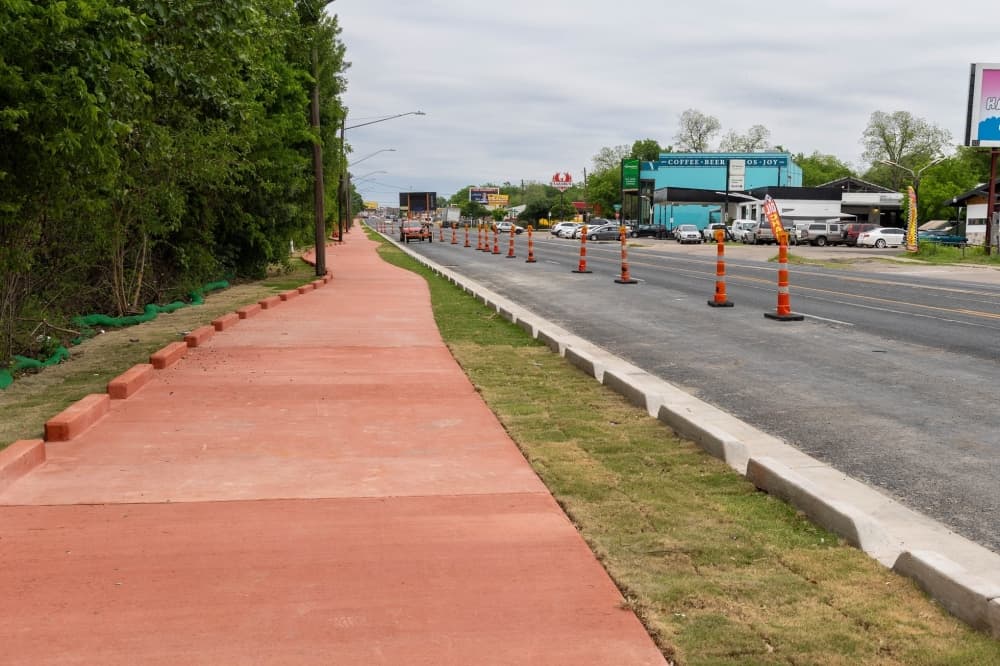
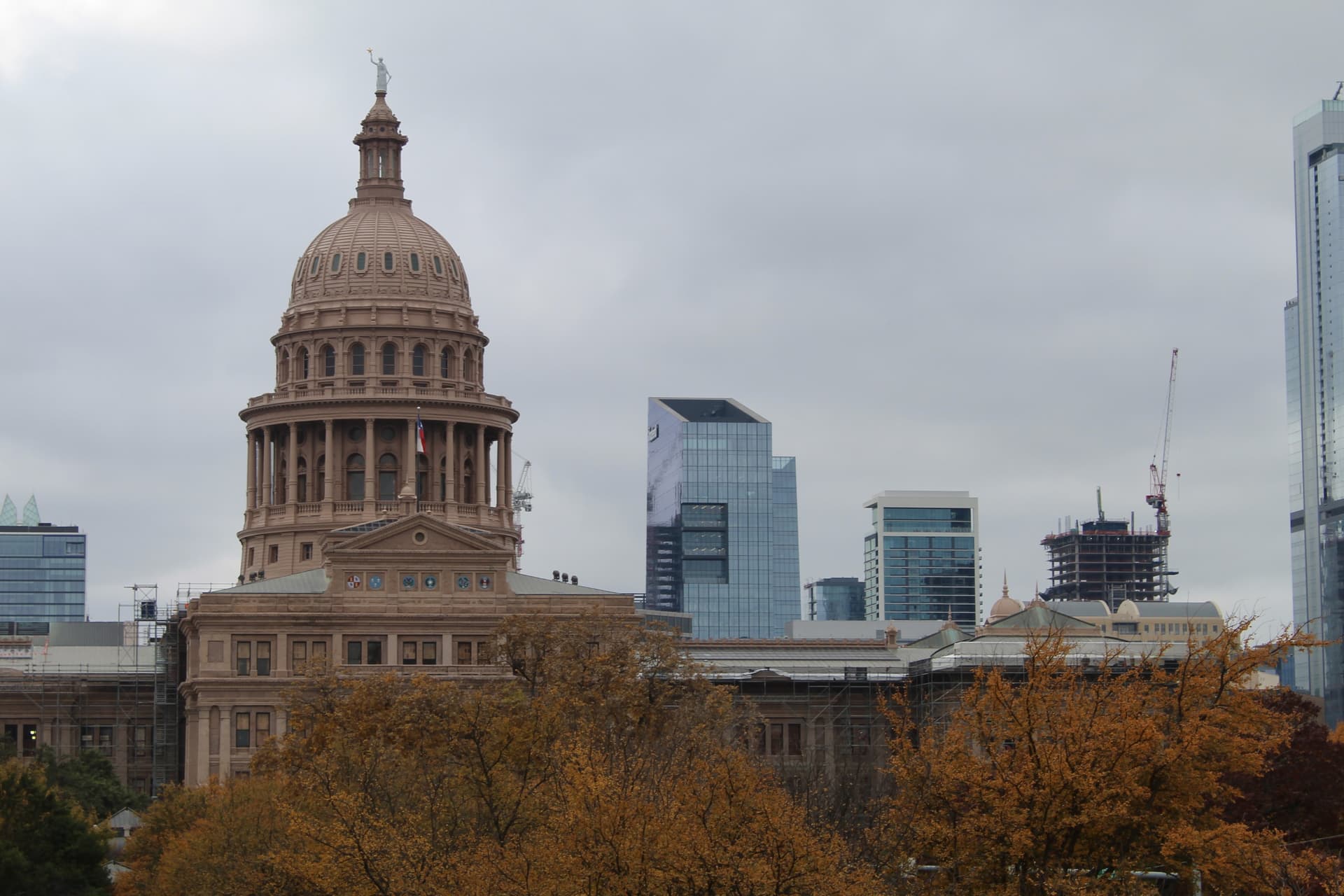
Mobility improvements along Airport Boulevard were funded by past city transportation bonds. (Courtesy city of Austin)
City Council is continuing to weigh whether to put a bond measure to Austin voters this fall, while city staff have recommended pushing the potential election to 2028.
The overview
Council members started the latest round of city bond planning in 2024, which has since included analysis by city staff and public review by the resident-led 2026 Bond Election Advisory Task Force, or BEATF. Their bond development work resulted in several recommendations for a new package this spring.
Bond proposals now on the table include two larger comprehensive options from staff and the BEATF of $750 million and more than $766 million, respectively. Those came alongside two trimmed versions of $390 million and $436 million, created at the request of a council subquorum.
Each $100 million of new bond spending would cost the median homeowner more than $14 annually, based on previous city estimates.
While many elected officials have noted pressing needs for a new round of projects like park and mobility upgrades, it still remains to be seen if they'll opt to put a bond on the ballot this year. City financial guidelines—including a "decision tree" for bonds recently adopted by council—led staff this month to suggest holding off for two years and instead plan for a 2028 election.
Zooming in
Austinites last passed a comprehensive bond package in 2018, which included $925 million for public safety, affordable housing, libraries and cultural facilities, parks and flood mitigation, public health, and transportation. Other standalone bonds approved in the last decade include $720 million and $460 million mobility bonds in 2016 and 2020, and a $350 million affordable housing bond in 2022.
That pace is out of line with other comparable cities, according to Eric Bailey, deputy director of the city's capital delivery office overseeing public project construction.
“Austin stands alone a little bit in terms of the frequency of the bonds that we’ve done in the past several years," he told council.
Hundreds of millions of dollars from those recent measures still remains to be spent as of this spring, including 80% of the housing bond and more than a third of transportation funds from the three other packages. Bailey said bond-funded project development has sped up since the creation of Austin Capital Delivery Services in 2023. However, city policies including the council-approved decision tree advise against new bonds if a large amount of past debt remains unissued, prompting the recommendation against a 2026 election.
The decision tree is meant to avoid issues resulting from what Bailey called "frequent, poorly coordinated" past bonds to ensure projects are efficiently built. Mayor Kirk Watson also said "the rules were not followed" by previous councils, creating challenges for current officials to manage.
"We’re trying to correct something that could’ve been corrected just by following the policy," he said May 20. "Now we’re in the box, if you will, of wanting and needing to do things ... that we can’t do what we want, maybe can’t even do what we need, because we didn’t follow the policies well.”
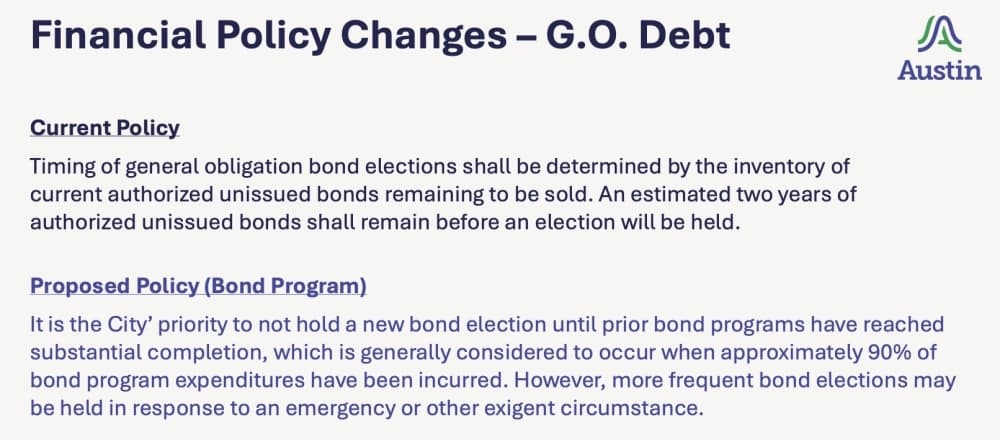
City finance staff have also suggested changing policy to clarify that no new bond election should take place until the city reaches 90% spent for past programs. Austin is now at roughly 65% spent for its last decade of voter-approved debt between the 2018 comprehensive bond and standalone mobility and housing measures.
City Council is considering a new bond election, and related financial guidelines for when they should be held. (Courtesy city of Austin)
An alternative would require 90% completion by individual proposition category, rather than overall programs, allowing the city to move ahead on more specific projects if there's been faster progress in those areas. For example, while almost half a billion transportation bond dollars remain unspent overall, the city is at or near completion in individual categories like sidewalk upgrades and traffic signal installation. Mayor Pro Tem Chito Vela said he'd favor a proposition-by-proposition limit going forward.
The approach
Council members will continue to debate the size and merits of a potential 2026 bond ahead of their mid-August deadline to call an election this fall. During their May 19 work session, several said they're still thinking through priorities ahead of more discussions in the summer.
There appears to be general agreement that the city parks system should be a main beneficiary of any 2026 measure, particularly for land acquisition adding new green space. Council member Mike Siegel noted a need for more parkland dedication funds with past dollars nearly exhausted, impacting some outlying areas where park additions haven't kept up with population growth. Council member Ryan Alter said park investments from land to facility improvements are "desperately needed."
“Parks are so central to the identity of Austin," Vela said. "[Austin Parks and Recreation] is essentially out of capital funds, and I do feel an obligation to continue get them some capital dollars so they can continue to make investments. It’s multigenerational; kids are at parks, the elderly are at parks; everybody loves parks."
Council members Paige Ellis and Krista Laine said they now favor a smaller 2026 bond of around $350 million, led by $250 million in park investments. Their new outline also includes $80 million for active mobility projects and $23 million for improvements to the Austin Animal Center and Hampton Branch Library.
Referencing the failure of last year's tax rate election that included tens of millions of dollars in homeless service funding, they also said council "must learn from the lessons of Prop Q" and suggested cutting $25 million proposed by city staff for a new homeless shelter.
"While there was significant discussion last year around funding for a Homeless Resource Center, bond funding is best reserved for shovel-ready, long-term capital investments with evident public support," they wrote on council's message board May 20.