The resident-led task force tasked with recommending the scope of Austin's next bond produced two options in May: a $766.53 million package and a narrowed $436 million proposal, which will now be used by City Council to shape a final plan this year.
What's happening
The 2026 Bond Election Advisory Task Force, or BEATF, was created after council members launched a new round of comprehensive city bond planning two years ago. Austin's last comprehensive bond vote was in 2018, followed by transportation- and affordable housing-specific measures in 2020 and 2022.
As part of the 2026 bond process, city departments identified priority projects worth almost $4 billion that could be funded with a new round of debt. That list was scaled down by city staff to a $700 million bond recommendation earlier this year.
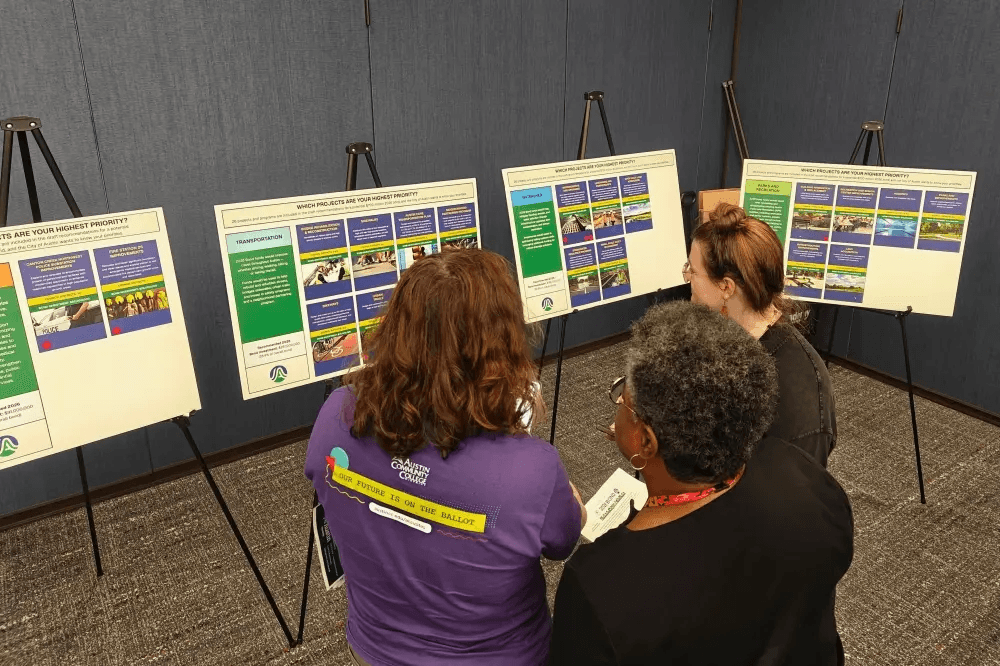
Meanwhile, the BEATF held months of meetings and considered public feedback before making its own bond proposals based around some of the same projects. After a draft outline was reviewed in April, the task force advanced the two options May 4.
The details
The BEATF's main proposal exceeds a $700 million cap on a 2026 bond recommended by city finance staff due to Austin's current debt capacity and taxing impacts. It includes nearly $770 million of projects in five main spending areas:
- $200 million for affordable housing
- $175 million for parkland initiatives like land acquisition, facility renovations and pool improvements
- $147 million for transportation projects like sidewalks, Vision Zero safety upgrades, bridge rehabilitation, and new trails and bikeways
- $131.1 million for public facilities like a new community center for Colony Park, upgrades to the Austin Animal Center and a new homeless shelter
- $113.43 million for drainage and flood prevention including land acquisition and local stormwater projects
At the request of five City Council members, the task force also developed a trimmed down blueprint of nearly $440 million including only parks, mobility and public facilities projects. However, several participants said they didn't support the smaller option floated by city officials just weeks ago.
"We have over $10 billion in unmet needs. We’re never going to get all the way there. But I struggle with trying to do quick math in the ninth inning from a council message board post," member Tina Cannon said.
The BEATF passed its larger bond recommendation unanimously May 4, while the smaller council-requested option without housing and watershed protection funding passed with several abstentions and votes against.
City staff previously projected every $100 million in a new bond would equate to more than $14 per year in new costs for the median homeowner. The task force's larger option would increase the typical property tax bill by more than $100, while the smaller version would be closer to $60.
The approach
The BEATF spent weeks deciding which priorities to include in its final recommendations. Late discussion in May centered around specific funding for East Austin, including long-awaited improvements to the George Washington Carver Museum and Colony Park's future library and public health center.
After hearing resident testimony on those projects, task force members agreed to reduce some bond allocations for parks, housing and transportation to ensure those facilities would be fully funded. Cannon said the decision was based around a more pressing need compared to other proposed acquisitions that may take years to fully benefit Austinites.
"We have a community that has been historically underserved, they have an existing facility that is under massive need of repair. It is an immediate need that we can take action on, versus buying new land that will continue to sit there for many more years," she said.
Member Nicole Conley, who moved to keep some of that funding for homelessness services, cautioned that new developments from a bond will carry added costs beyond the BEATF recommendations into the future. For example, she said a new library would require more staffing and funding in the city's budget than is currently accounted for.
What else?
In addition to the funding breakdowns, the task force also sent several bond policies for elected officials to consider. Those included a suggestion for more active participation from other local governments in Austin's future bond processes, and the creation of a "contract with the voters" for any 2026 bond to clearly outline upcoming projects.
“It just gives more transparency to the bond election," member Charles Curry said.
BEATF members voted in favor of other policies, such as producing affordability and future operating cost analysis for all bond-funded projects; highlighting the bond's monthly tax costs—and the public risks of not completing priority projects; requiring more holistic community engagement around bonds; and considering new funding sources outside of debt for critical city drainage upgrades.
What's next
City Council will weigh the BEATF's recommendations and another update from city staff throughout May leading up to a potential vote to advance a 2026 election.
Some officials previously suggested moving ahead with a smaller package this year and saving a more expansive bond for 2028, when Austin's debt capacity could improve and more ongoing bond-funded projects may be complete. Mayor Kirk Watson recently said council will balance pressing needs with financial reality and the city's new bond decision framework.
"If we do this right, it will show that the City (and the Council) can be trusted, that we can get big things done, and we can fix mistakes. We should be responsible, thoughtful, and work to inspire confidence, not just try to get results we want," he wrote in an April newsletter.