Editor's note: This story was updated to include a comment from the city.
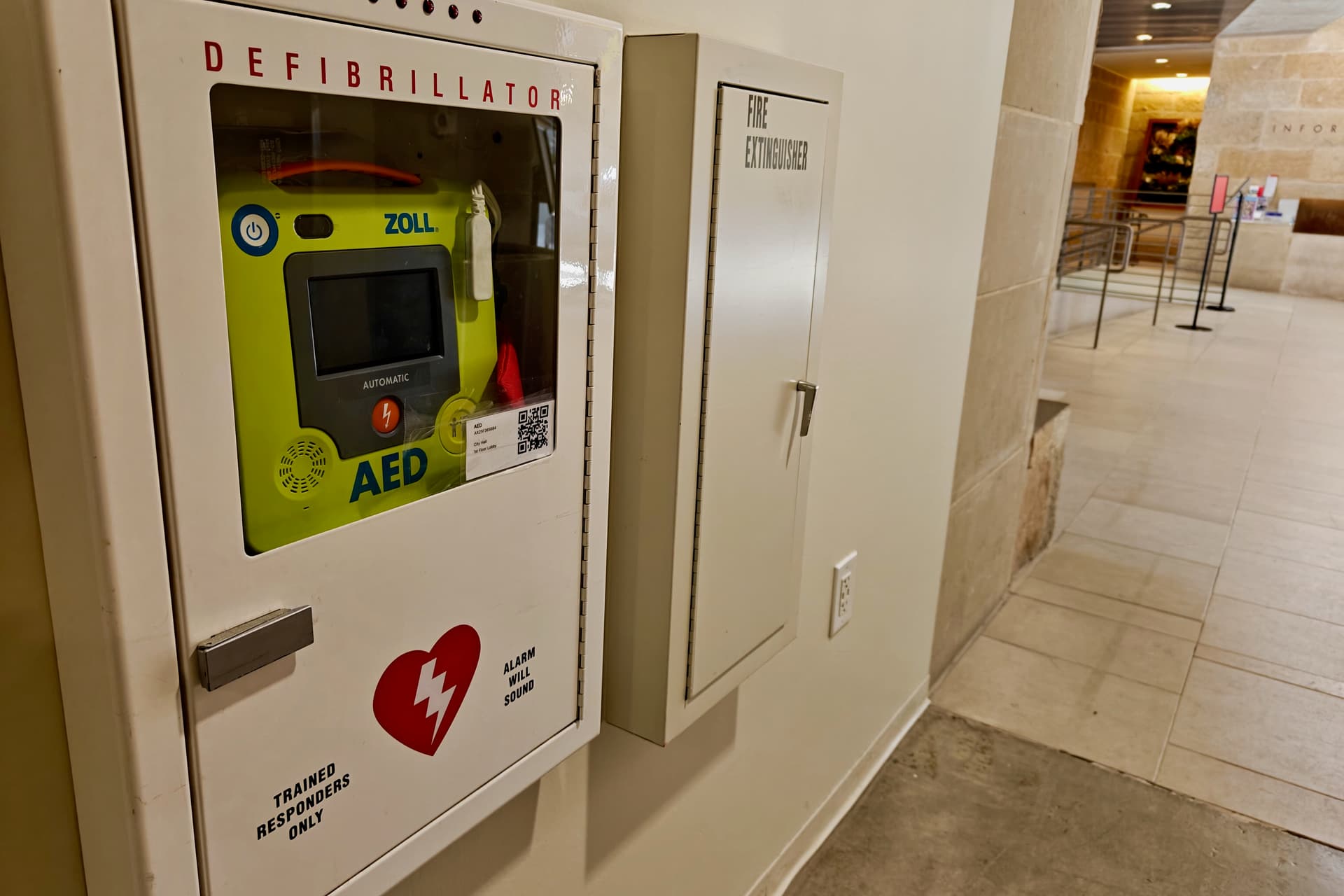
More businesses and public places around Austin could be required to have onsite automated external defibrillators, or AEDs, with the expansion of local requirements advanced by City Council this fall.
“When someone’s heart stops, seconds could be the difference between life and death. By expanding access to lifesaving defibrillators, we can support first responders, strengthen public health and make sure lifesaving care reaches Austinites wherever they are," council member Vanessa Fuentes said in a statement.
The overview
Today, Austin code requires AED placement in buildings that are more than 75 feet tall. Many city facilities are also equipped with AEDs, although there are no formal rules about locating the devices in public buildings.
Austin is now moving to mandate defibrillator access in spaces like restaurants, stores, gyms, venues and recreation centers under a resolution initiated by Fuentes and unanimously backed by local officials Sept. 24. New rules could also be added to:
Equip all city public safety vehicles with AEDs
Require emergency response plans in all locations where AEDs are placed
Offer more AED and cardiopulmonary resuscitation, or CPR, training to both city employees and residents
Improve AED registration and tracking citywide
A city spokesperson confirmed code amendments will be presented to council by June 2027 and said more details on implementation, including costs, will be determined in the future. The city didn't respond to questions about how AED registration and compliance is currently tracked, or the impacts of Austin's existing Public Access Defibrillation Programs, as of press time.
Put in perspective
Before voting for the AED measure in September, officials heard from 17-year-old Calah Williams about the impact of defibrillator access. Williams, a Pflugerville ISD high school senior, said she founded the Calah Cares Project after witnessing her pastor collapse at a church where an AED wasn't available and no bystanders were trained in life-saving responses.
“One moment he was with us, and the next the room was full of people who loved him and didn’t know how to save him," Williams told council. "Those minutes felt like forever. Unfortunately, he didn’t survive and I’ve never stopped thinking about how different that day might have been.”
Since that March 2025 incident, Williams said she's worked with local churches to install AEDs and partnered with Austin/Travis County Emergency Medical Services on defibrillator and CPR training. She also noted that most people experiencing medical episodes likely aren't collapsing in high-rises, where Austin's rules currently apply, and that training and the right equipment can result in better outcomes.
“I know what it feels like to stand in a room and wish someone had known what to do. I don’t want anyone else in Austin to feel that," she said.