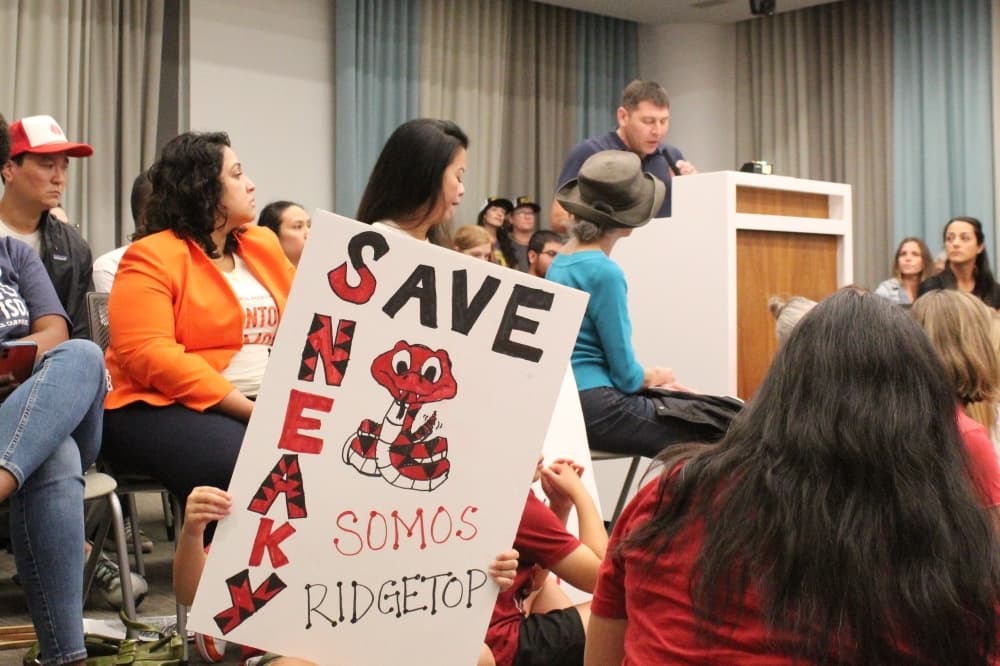
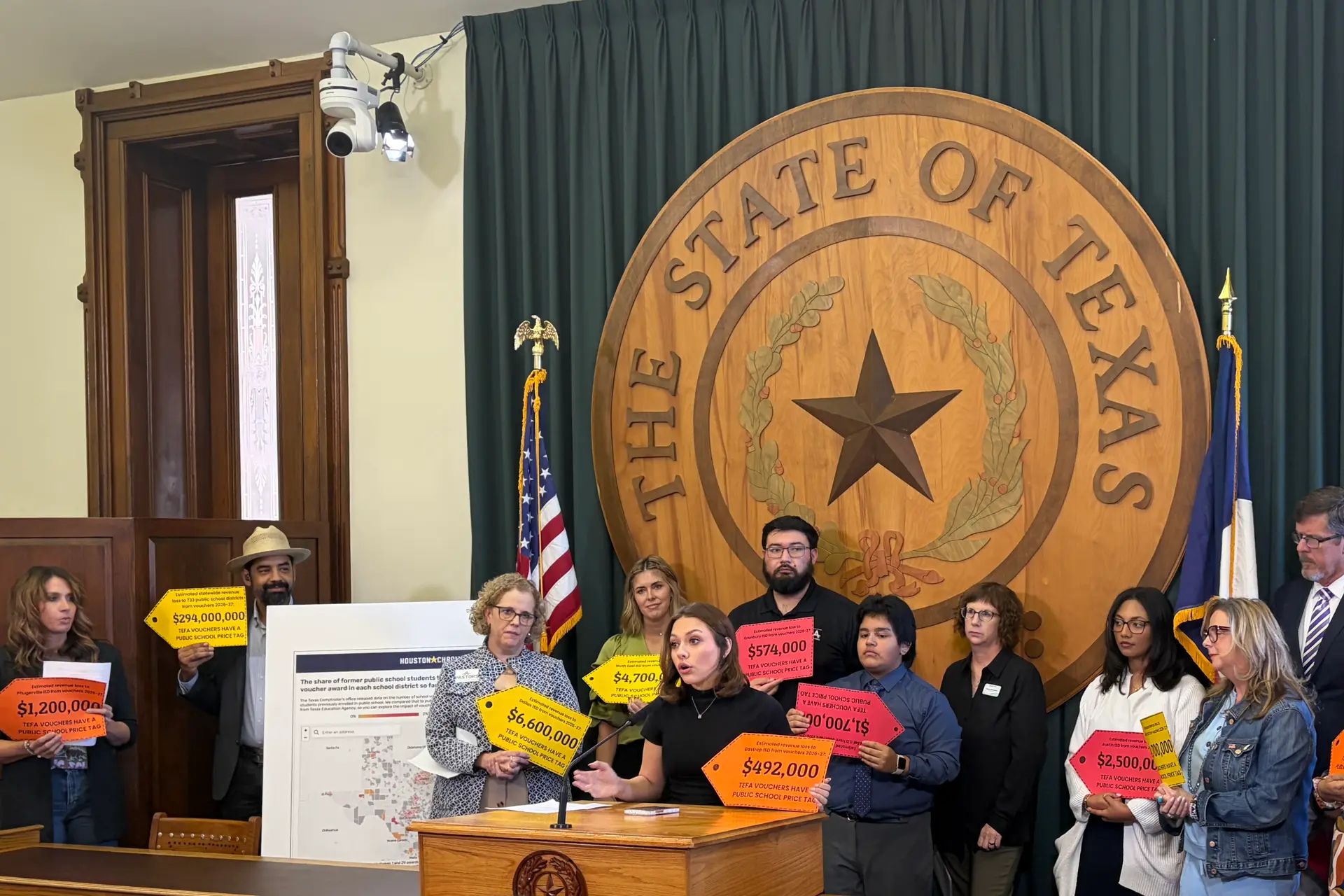
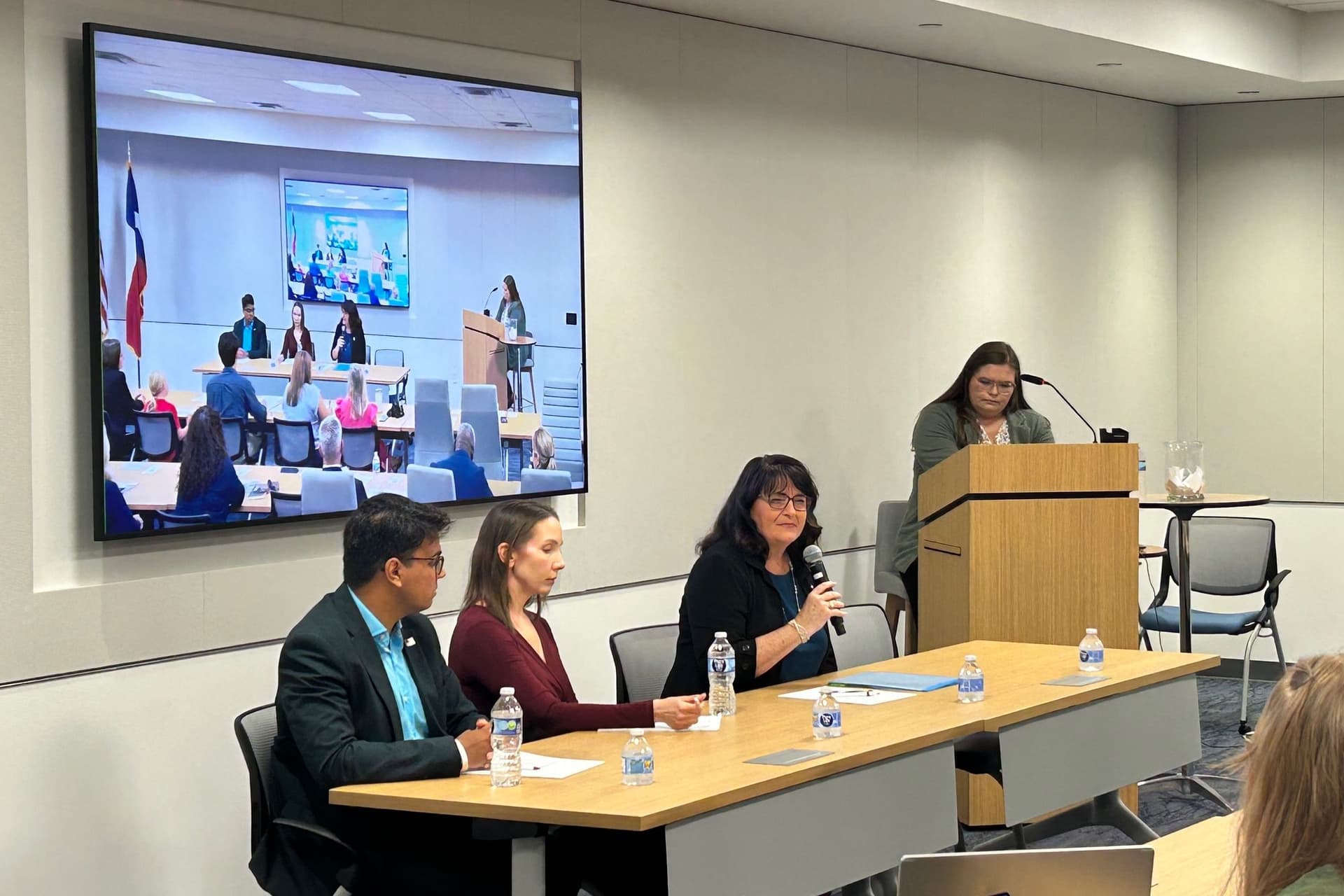
Nearly 120 people signed up to speak at a Nov. 20 board meeting before Austin ISD trustees voted to close 10 campuses in the 2026-27 school year. (Chloe Young/Community Impact)
Editor's note: This article has been updated to reflect Austin ISD's decision to immediately close Paredes Middle School, bringing the number of closures in Community Impact's coverage areas to 57.
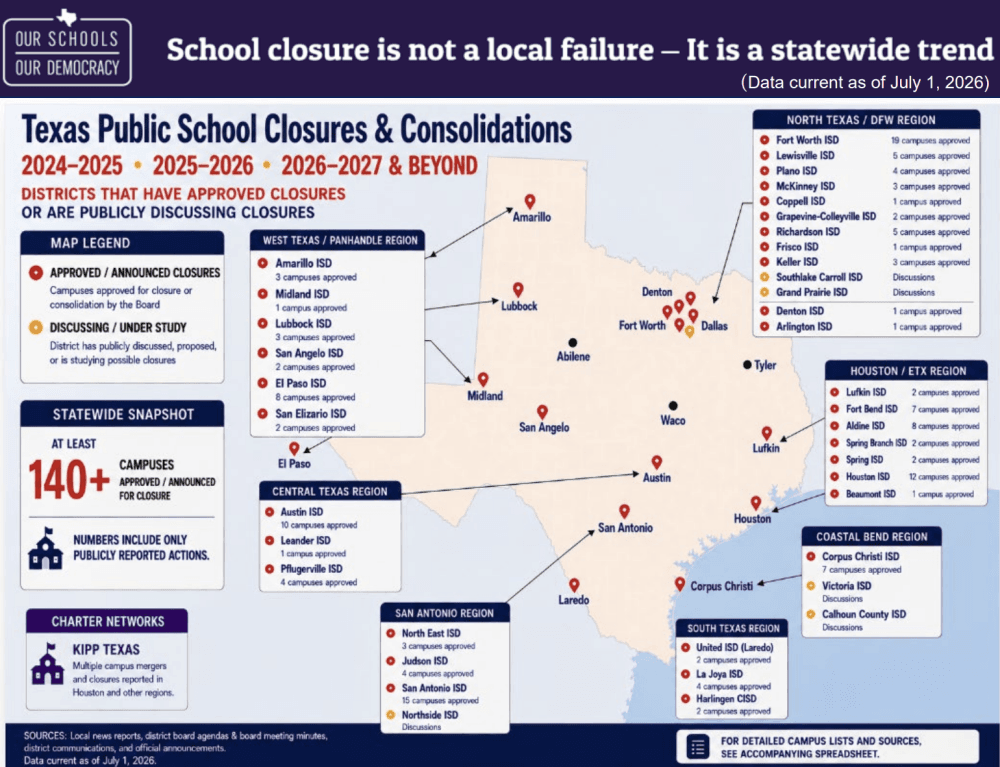
In less than three years, at least 150 public school campuses have closed or been approved for closure across Texas, records show. School boards voted to move forward with those closures to offset financial pressures and respond to state accountability issues at certain campuses, according to previous Community Impact reporting.
What’s happening
Among the closures are 57 schools in Community Impact’s coverage areas. Some districts have said that additional closures are not off the table.
“It is happening all over this state, ... and I think that we need a plan [to address] that because it's not a local issue,” said state Rep. Gina Hinojosa, an Austin Democrat who is running for governor, during a May 11 legislative hearing.
The latest closure took place in Central Texas—Austin ISD trustees voted on July 30 to immediately close a Southwest Austin middle school due to issues with student achievement. The closure will take effect before classes begin Aug. 18, with students moving to two campuses in the area.
Austin ISD trustees voted in November to close 10 schools and approve turnaround plans for 17 failing campuses, Community Impact reported.
Texas school boards have voted to close at least 150 campuses in less than three years, information collected by the public school advocacy group Our Schools Our Democracy shows. (Courtesy Our Schools Our Democracy)
Roughly 76,000 fewer students were enrolled in Texas public schools during the 2025-26 school year than the year prior, per a report published in May. This marks the first non-pandemic enrollment drop in recorded history, according to Texas Education Agency data collected annually since the 1987-88 academic year.
Texas public schools received state funding based on student attendance, according to the TEA, meaning that districts tend to receive less money when enrollment falls.
Analysts have warned that this year’s enrollment decline is not a one-off.
“During the 2026-27 school year, the enrollment across the state of Texas could drop over 100,000 kids,” said Bob Templeton, who founded Templeton Demographics in 2006 and now works for the consulting firm Strive Public Policy. Community Impact also spoke with Templeton's co-founder about the work demographics firms do with Texas public schools.
Templeton noted that when school enrollment dropped during the COVID-19 pandemic, it bounced back the following year. This time, he said school districts should plan for continued enrollment losses.
“I think we're entering a new era, and that we're likely going to see declining enrollment for at least the next five years,” Templeton said in a July 27 interview. “The state will eventually grow their enrollment again because we have so much room to grow long term.”
Why now?
Across Community Impact’s coverage areas, districts are grappling with high inflationary costs and shifts in enrollment, which can lead to budget shortfalls. Some districts are also making changes to boost academic performance at low-performing schools, as required by state law.
In response, officials are making tough decisions on campus closures and consolidations.
In the Houston region, Fort Bend ISD board members voted in March to close seven elementary schools ahead of the 2026-27 school year. The closures come as the district faces slowing enrollment and a $32.8 million budget shortfall, according to previous reporting.
The district saw 1,801 fewer students enrolled in the 2025-26 school year than it budgeted for, and each of the closed campuses had less than 600 students.
“This was a decision that I made, even knowing some of the challenges our students are going to face, because I think the alternative is untenable,” FBISD board President Kristin Tassin said.
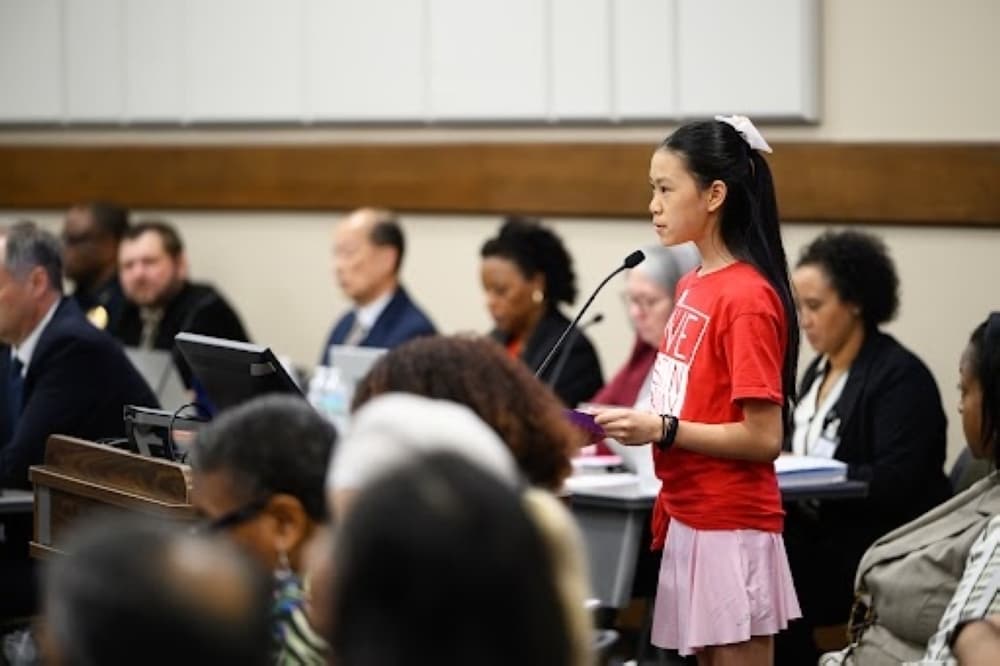
Parents, teachers, students and former students spoke out against the boundary changes during the public comment portion at a March 9 Fort Bend ISD board meeting. (Jamaal Ellis/Community Impact)
In the Dallas-Fort Worth area, Denton ISD leaders decided to repurpose an elementary school and move students to four other campuses after the school did not meet state accountability standards for three consecutive years,Community Impact reported.
“This is not an easy conversation or an easy recommendation, but we firmly believe we will better fulfill what we promised to our students and families this way,” DISD Superintendent Susannah O'Bara said.
Districts and individual campuses receive annual A-F ratings from the TEA. Accountability ratings for the 2025-26 school year are set to be released Aug. 14.
In the Austin metro, Pflugerville ISD is planning to close four elementary campuses at the end of the 2026-27 school year. The schools are all projected to face enrollment-based challenges due to housing trends and students leaving the district for other education options, Community Impact reported, and the decision to close the four schools will net about $9.8 million in annual ongoing savings.
Officials have said the closures will place PfISD students in higher-quality facilities and better-performing campuses.
“The concept of high-performing schools, to me, is offensive because so much of the measurable performance is based on the economic resources that the students at that school have,” Connally High School parent Mike Considine said at a PfISD community meeting. “This whole idea that we’re going to close bad schools and put the kids in good schools, ... you’re driving parents who look only at measurable school performance.”
Zooming in
Experts have attributed the statewide enrollment decline to multiple factors:
A shift toward alternate education options, including charter schools, private schools and homeschooling
Declining birth rates
Lower rates of domestic migration between states and cities
An increase in federal immigration enforcement actions, which Templeton said played a part in a loss of some Hispanic students, who accounted for 81% of the enrollment decline in the 2025-26 school year
The enrollment data for the 2025-26 school year does not include students who may withdraw from their public schools to participate in the Texas Education Freedom Accounts program, which is rolling out ahead of the upcoming school year. Under the $1 billion program, participating families will receive state funds to spend on private education or homeschooling.
Over 106,000 students have been selected for the TEFA program, according to the state comptroller’s office. Once families are accepted into the program, they must confirm enrollment at a private school involved in the program, notify the state of their homeschooling plans or opt out.
Private schools are not legally required to accept all interested students, according to previous Community Impact reporting, meaning that some families may opt out if they do not find a private school that will meet their children’s needs.
State data shows that about 43% of selected students previously attended a Texas public school, although it is unclear how many of those students will ultimately enroll in the program this fall.
“We're going to weather this [school] choice transition, and then I think we'll see some return to growth, but we're not likely going to see the strong growth years that we saw in the past,” Templeton said.
Greg Smith, executive director of the Fast Growth School Coalition, said it is important for public school officials to “package their message” to help attract families to their districts, such as promoting a new career center or expanding workforce development options. He noted that parents are likely to send their children “wherever they think they're going to get the best shot.”
“When we see some of this exodus out of the public school, some of it is because parents are indicating that they don't want their kids to be just simple, good test-takers,” Smith said in a July 28 interview. “They're not afraid of accountability, but if they feel like a school or school district is only focusing on a standardized test, they're opting for somewhere else.”
The impact
Each school year, Texas students unexpectedly change schools nearly 450,000 times, researchers at Rice University’s Kinder Institute found.
Texas students who move schools during the academic year tend to score lower on standardized tests and are at a higher risk of dropping out of high school, according to a multiyear study released by the institute in 2022.
Even more students change schools in the summer months, although the study states that a majority of those moves reflect students transitioning from elementary to middle school or middle to high school—rather than moving homes, campuses or districts.
When campuses close and students are forced to switch schools, it can be “a real pain point,” Templeton said.
“In many cases, these are families that are really big fans of their schools,” he told Community Impact. “It's especially emotional [in] those elementary grade levels, because typically, that represents about six years of a child's time in school.”
The 2023-24 school year was the last year that students walked through the doors of Richardson ISD's Springridge Elementary. (Courtesy Richardson ISD)
More context
In April, halfway through fiscal year 2025-26, about 44% of public school districts said they anticipated ending the fiscal year in a budget shortfall, per a survey of 244 districts conducted by the Texas Association of School Business Officials. About 43% of districts that responded to the survey told the association that they expected to make minor cuts when writing their budgets for the next fiscal year, while 37% expected “significant cuts” and the other 20% did not plan on making cuts.
After announcing plans to close and repurpose campuses, some districts are exploring additional cost-cutting measures to manage budget shortfalls. As of press time:
Leander ISD, which voted to close one elementary school ahead of the 2026-27 academic year, was considering calling a voter-approval tax rate election or bond election after adopting a budget with a $9.9 million shortfall.
Last year, Texas lawmakers passed House Bill 2, an $8.4 billion school finance bill designed to increase educator salaries, provide more training for teachers and expand special education resources.
The legislation also included a $55 increase to the base amount of per-student funding schools receive from the state, known as the basic allotment. That increase fell short of the $1,300 per-student increase that some school leaders requested to keep up with inflation.
At the time, lawmakers said they hoped HB 2 would help close budget gaps faced by some schools. However, several school districts told lawmakers during a June 1 hearing that they received less money during the 2025-26 school year than originally expected under the law.
“Our state's funding formulas from HB 2 produced uneven results for school districts,” Boerne ISD trustee Rich Sena said. “After subtracting state aid for the teacher retention allotment, our district would have actually had less funding than the prior year, despite enrollment growth and inflation.”
Rep. Diego Bernal, D-San Antonio, urged the Texas Education Agency to help districts that reported funding losses, although TEA staff said the agency cannot do so “unilaterally” without guidance from state leaders.
“This is a major problem that in advance of next session, in advance of the next major school finance bill, we have to figure out how to get right and fix,” Rep. Jeff Leach, R-Plano, said.
Meanwhile, state leaders have indicated that funding for public schools and the TEFA program are top priorities for next year’s legislative session.
On July 14, Gov. Greg Abbott, Lt. Gov. Dan Patrick and House Speaker Dustin Burrows directed state agencies, appellate courts and public universities to reduce their budget requests for the next biennium by at least 3%, which they said would help advance fiscally conservative policies and fund priorities like property tax relief. Education funding, state pension programs and certain social services are exempt from the required reductions, they said.
Lawmakers are currently holding information-gathering hearings to shape their priorities for the next state legislative session, which begins in January.