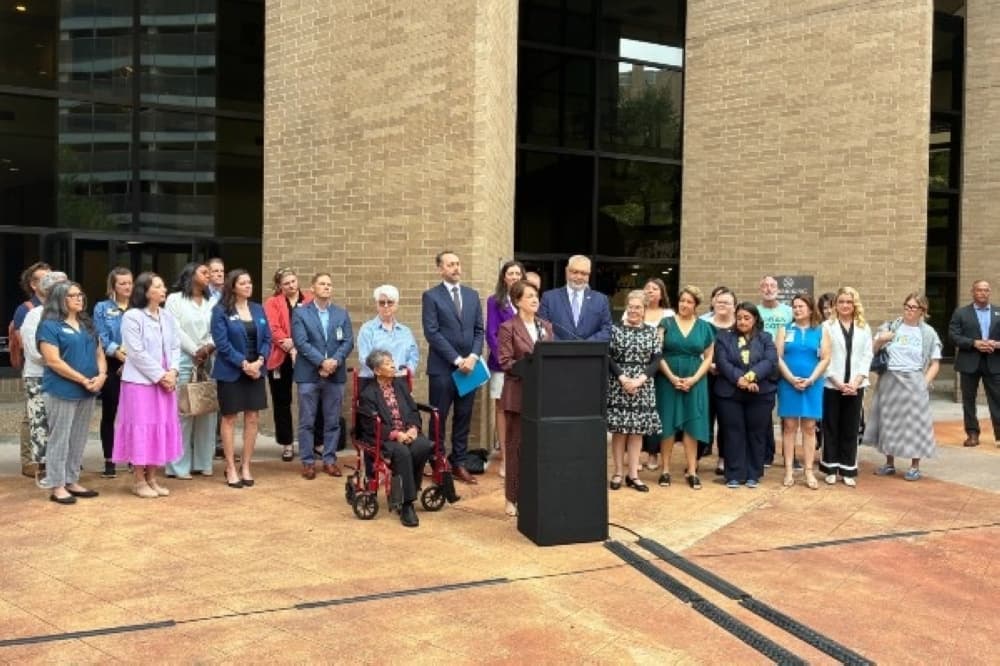
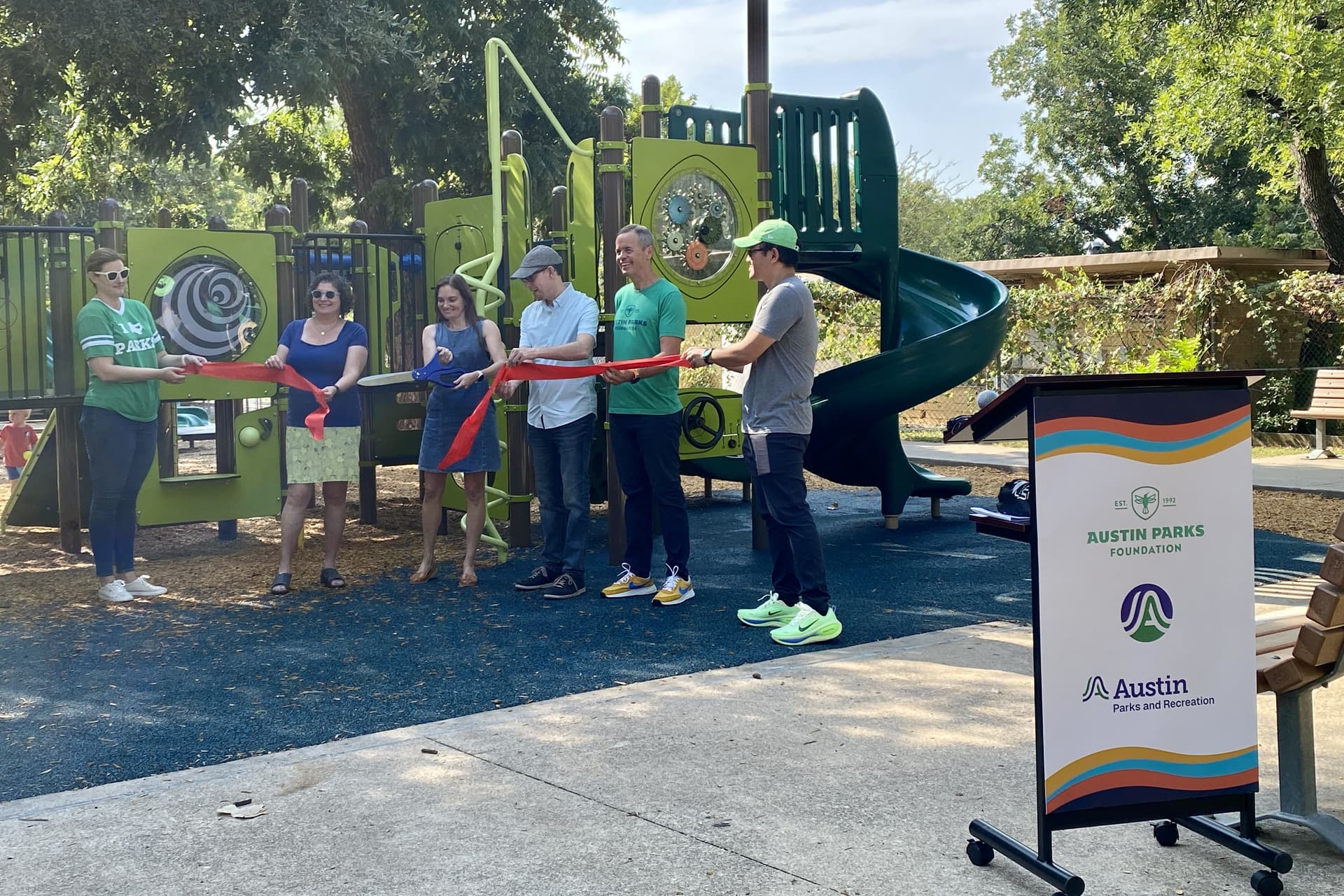
Community partners, county officials and nonprofit leaders gather outside the Travis County Administration Building for a press conference following the court's approval of $17.65 million in child care and after-school funding on May 5. (Jessica McLaren/Community Impact)
Travis County Commissioners Court approved $17.65 million in contracts to expand child care and after-school programs—18 months after voters passed a tax increase to fund the Raising Travis County initiative.
The funding will serve more than 5,200 children and 180 providers through 12 community organizations and Pflugerville ISD, officials said during a May 5 press conference following the vote.
By the numbers
Since Proposition A passed, the county has already funded child care scholarships for 1,000 children, enrolled more than 2,650 students in out-of-school time programs and distributed $2.6 million in gap funding to 150 providers—before the May 5 contracts added another $17.65 million to the effort.
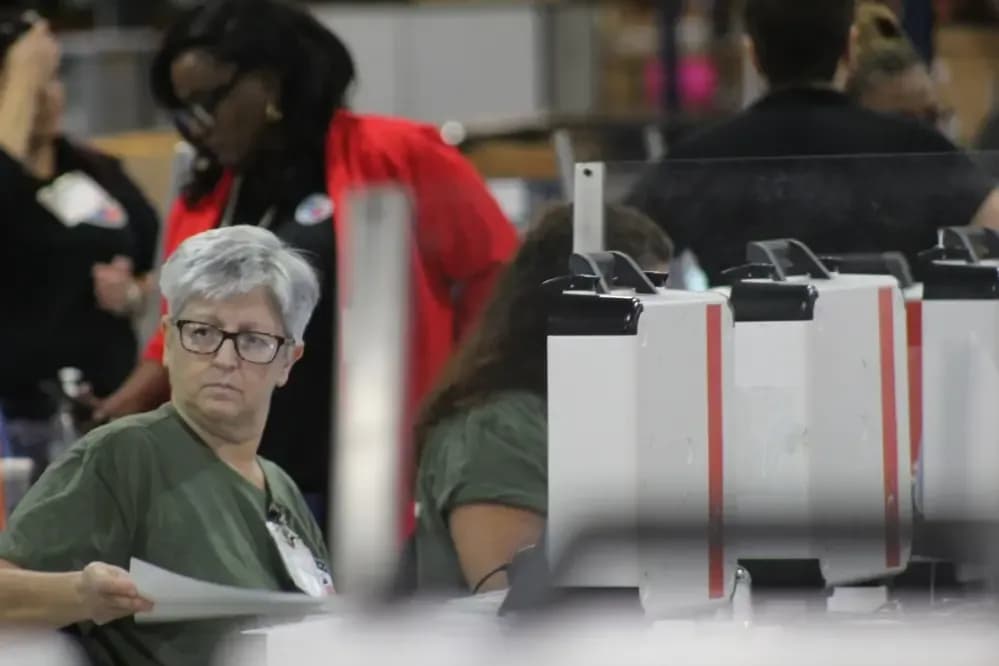
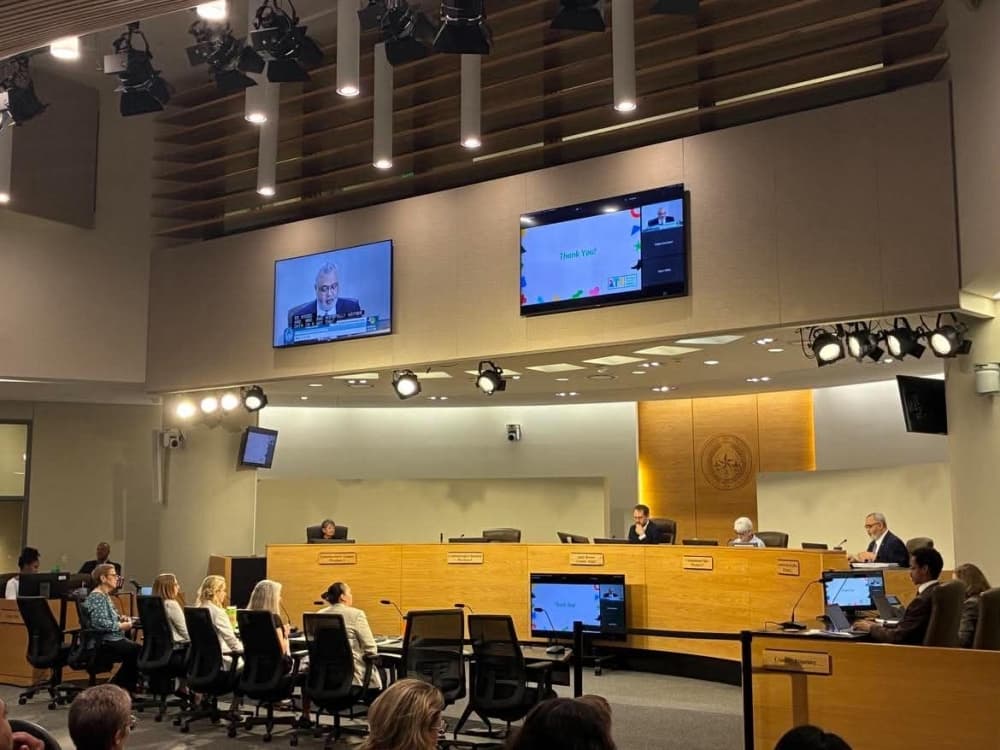
The Travis County Commissioners Court votes on $17.65 million in Raising Travis County contracts during a May 5 meeting at the Travis County Administration Building in Austin. (Jessica McLaren/Community Impact)
According to the May 5 presentation, the court approved:
$730,000 to Pflugerville ISD for programs serving 150 elementary students
$12.75 million to 11 other organizations for after-school and summer programs serving youth ages 4 through high school
Other organizations receiving funding, in order of amount, are: Austin Sunshine Camps, Boys & Girls Clubs, Foundation Communities, YMCA, Latinitas, El Buen Samaritano, Communities in Schools, Austin ISD's 3rd Base program, Urban Roots, Leap of Joy and Austin Youth River Watch.
County staff also outlined plans for a contracted slots model during the presentation, with implementation timelines still under discussion. The county is currently gathering feedback from providers on the program design.
All contracts include an optional one-year renewal.
Why it matters
Travis County is facing a child care workforce crisis. According to a survey from United Way for Greater Austin presented at the meeting:
26% of providers are understaffed, leading to classroom closures
Nearly 50% staff turnover last year
64% of job applicants lack basic requirements
Infant classrooms—which require a 1-4 adult-to-child ratio—are the most expensive to operate and often the first to close when understaffed, said Cathy McHorse, consultant for Raising Travis County.
Around 18,000 children under age 6 in Travis County have parents who work nontraditional hours, but only about 2,000 regulated child care spaces offer services outside traditional hours, according to a 2023 Urban Institute study.
The backstory
In 2024, voters approved increasing the county's tax rate to generate $75 million for Raising Travis County. Proposition A passed with 59.43% voter approval that November, increasing the tax rate by $0.025 per $100 valuation, or about $10.50 per month for average homeowners.
Commissioners including Margaret Gomez pointed to the November 2024 voter response as proof the community understood what was at stake.
The 18-month gap reflects the complexity of standing up a $75 million program through county procurement. The initiative builds on two decades of advocacy work by the Austin-Travis County Success by Six Coalition.
What they're saying
Officials and partners framed the investment as both a community obligation and a direct rebuke of cuts happening at higher levels of government.
"We are making investments as a community to have a better future for our children in the context of a historic defunding of public education that's happening at the state and federal levels, but particularly in the state of Texas," said Commissioner Bridget Shea.
Fellow commissioners credited Jeff Travillion as the driving force behind the initiative's $12.75 million investment in out-of-school time care—funding that, by multiple accounts, would not exist without his push.
"I believe that you judge a society by the way that it treats its youngest and most vulnerable," Travillion said at the conference.
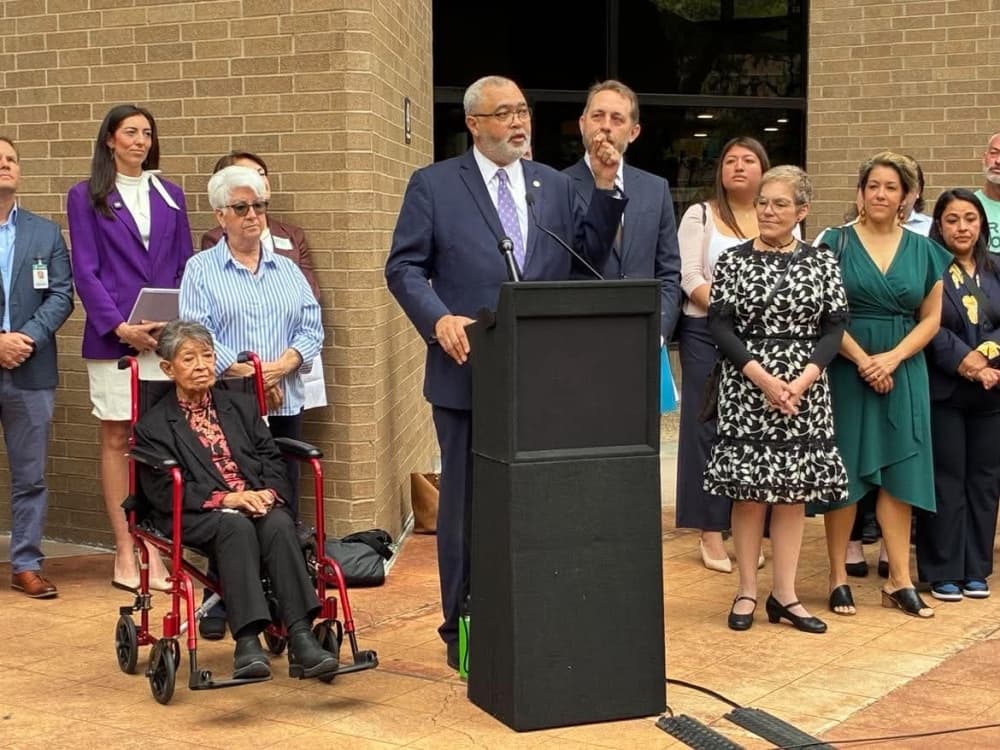
Commissioner Jeff Travillion (Pct. 1) speaks at a May 5 press conference outside the Travis County Administration Building, where fellow officials credited him as the driving force behind the initiative's $12.75 million investment in out-of-school time care. (Jessica McLaren/Community Impact)
For the providers doing the daily work, United Way CEO Ingrid Taylor pointed to what the funding makes possible.
"By reducing the paperwork and the administrative burdens, providers can focus their time and energy on the things that matter: the kids,” she said.
Latinitas Executive Director Gabriela Guardia put it in terms families understand, highlighting questions like, “Who's going to be there when school lets out, when work continues and when care is unaffordable or hard to find?”
“This initiative answers those questions,” she said.
Pflugerville ISD Superintendent Quintin Shepherd echoed that: "We hear from parents constantly who tell us that without this program, they would worry every afternoon about their child going home to an empty house.”
What's next
Leah Meunier, strategic adviser for Raising Travis County, and consultant Cathy McHorse outlined the initiative's four long-term strategies before the court.
These strategies include a reserved slots model for low-income families—with a request for services expected to post in November 2026 and contracts targeted for April 2027—expanding nontraditional hours, investing in the workforce pipeline and implementing cost-sharing or grant programs via business-government partnerships.
There will be a virtual town hall about the initiative June 16 at 6 p.m.
New East Austin supportive housing offers exit from homelessness