Child care scholarships, after-school care and other efforts are underway to grow a voter-approved initiative to provide more affordable child care for low-income families in Travis County.
In 2024, voters approved increasing the county's tax rate to generate $75 million for Raising Travis County. So far, the county has awarded more than $28 million to the Workforce Solutions Capital Area nonprofit as well as local school districts and other community organizations.
Over the coming months, an additional $17 million in child care contracts will go before the Travis County Commissioner Court for approval—the majority of which may cover after school care for children ages 4 and up, said Leah Meunier, strategic adviser for Raising Travis County, in an interview with Community Impact.
Current situation
The Raising Travis County program is working to increase available spots for child care while also improving the quality of the programs, Meunier said.
The county has awarded $17.34 million to Workforce Solutions Capital Area to cover 1,000 child care scholarships annually for children up to 3 years old. The organization has also received $4.16 million to cover quality improvements at 150 child care providers, such as teacher raises or updates to curriculum, Meunier said.
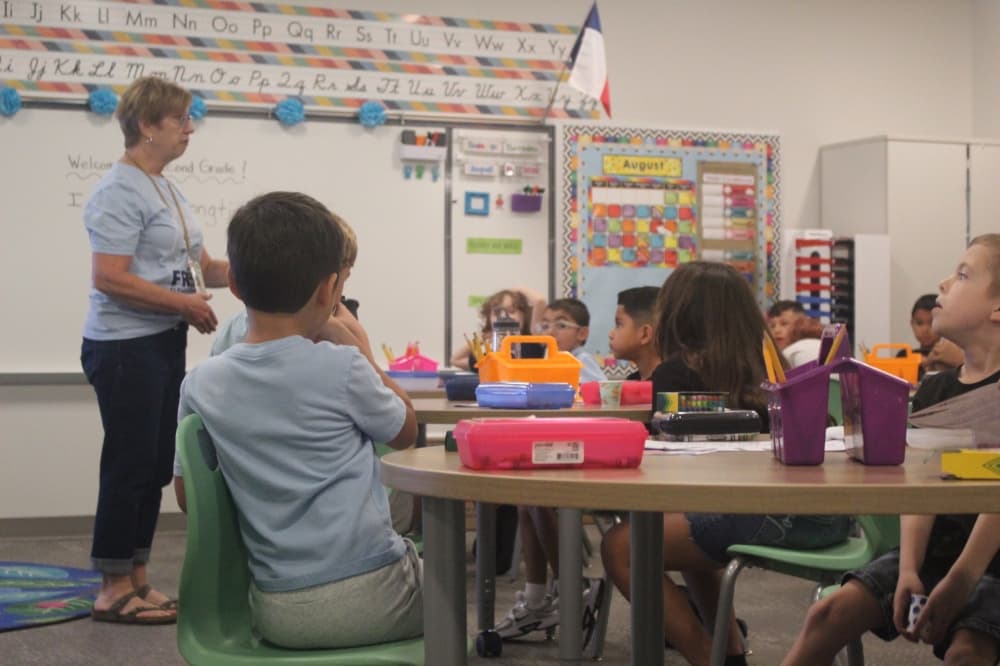
Additionally, $4.85 million in annual funding has been allocated to cover extended prekindergarten and after-school care at Austin, Del Valle and Manor ISDs. This school year, AISD opened nine Apple Blossom Centers offering extended after-school care for 3-year-old prekindergarten students from 3-6 p.m. each school day.
In late March, the court approved awarding more than $500,000 to the Salvation Army to provide emergency child care for families experiencing homelessness.
“That's an investment we're really proud of because that was an unmet need in our community,” Meunier said.
Looking ahead
In the future, the county is seeking to offer contracted slots by paying child care providers to reserve seats for low-income families. The county also plans to assist providers in offering child care during nontraditional hours—before 7 a.m. and after 6 p.m. during the typical workweek or on weekends.
Around one-third of children, or 18,000 children, below age 6 with working families in Austin and Travis County have parents who may need child care during nontraditional hours, according to a 2023 study from the Urban Institute.
“There are a lot of families who need care in the evenings [and] over the weekends,” Meunier said. “We want to make sure that we're working with providers to figure out what's the best way to support them so that they can open their operations during those hours to meet those needs.”
Why it matters
Providing affordable child care and after-school care is “an economic imperative” for the region, Meunier said. These options are crucial in allowing parents to go to work or return to school and learn a trade or acquire a degree to improve their financial situation, she said.
Entering high-quality programs before kindergarten prepares children to enter school. Not having access to these programs puts children at a disadvantage and negatively impacts their learning and future, Meunier said.
“It's really a two-generational intervention both for their parents and for the children themselves who learn and gain skills in those programs,” Meunier said.
Stay tuned
Going forward, the county wants to address teacher shortages and low wages in the child care industry while forming alliances with local businesses.
“We are looking forward to developing a more robust pipeline for educators both in the early childhood space and in the youth development space because we recognize that that's a real need,” Meunier said.
The county will host a virtual town hall about the Raising Travis County initiative on June 16 at 6 p.m.