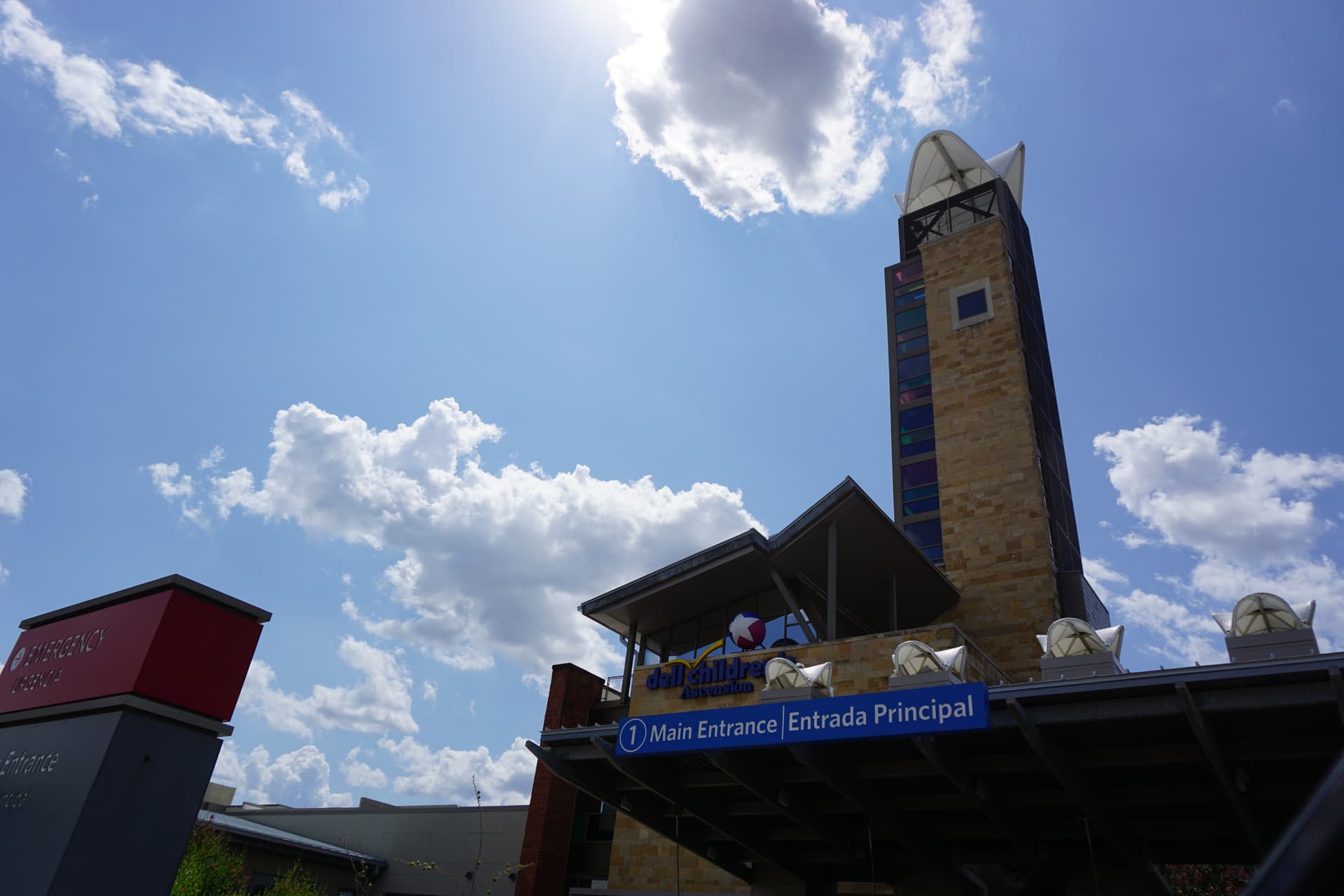
Families across Central Texas can now access lifesaving pediatric bone marrow transplants at Dell Children's, which has eliminated the need to travel for advanced cancer care, Dell Children's physicians said. (Chloe Young/Community Impact)
Dell Children’s Medical Center in Central Austin has become the first pediatric hospital to provide bone marrow transplants, also known as stem cell transplants, in Central Texas.
The advanced procedure increases the cure rate for pediatric cancer patients, Dell Children’s doctors told Community Impact. The hospital’s new stem cell transplant program means Austin-area families no longer have to leave Central Texas to receive lifesaving cancer care, said Dr. Amir Mian, the program’s medical director and division chief for pediatric oncology and hematology for Dell Children’s.
“Previously, everybody had to travel out of town, and what it meant was leaving home for more than a month, sometimes even longer,” Mian said. “Now they don’t have to ... nobody has to leave town just to get lifesaving treatment.”
How it works
The transplant involves removing a patient's bone marrow and replacing older, damaged stem cells by administering new, healthy stem cells to pediatric cancer patients through an IV, Mian said. Stem cells form blood and immune cells and are found in bone marrow.
These new stem cells travel to the patient’s bone marrow and begin producing healthy blood cells that may restore their immune system and eliminate the underlying cancer, he said.
The treatment is administered when a patient’s cancer or cancer treatment damages or destroys their bone marrow. Many patients with solid tumors or cancers of the blood, such as lymphoma and neuroblastoma, must receive high doses of chemotherapy, which can destroy bone marrow and healthy stem cells while killing the cancer, Mian said.
Receiving the new stem cells after chemotherapy allows the patient to recover and increases their chance of being cured from cancer, said Dr. Shannon Cohn, pediatric oncologist and stem cell transplant physician.
Doctors may harvest and preserve a patient's healthy stem cells before they undergo chemotherapy. Patients may also receive a stem cell transplant from a donor if their immune system needs to be reset or they have a high chance of relapsing, said Kelsey Liburd, Dell Children's stem cell nurse practitioner.
“Giving the stem cells allows us to give really high-dose chemo and then give the stem cells to rescue them," Liburd said. “Then, those new healthy cells regenerate.”
Pediatric cancer patients undergo chemotherapy or standard treatments for three to six months before receiving a stem cell transplant, Cohn said. The hospital’s comprehensive cancer care involves support from every sector of the hospital through social workers, nurses, educators, therapists, pharmacists, child life specialists and nutritionists, Mian said.
“Our goal is to bring the highest quality clinical care in a multidisciplinary manner to patients at their doorstep so they don't have to leave home to receive care somewhere else,” Mian said.
After receiving the transplant, patients may take around a month to recover while cells regenerate. During this time, patients face a high risk of complications, including inflammation and organ damage, Cohn said.
“It carries a lot of risks, but we commit to this intensive, high-level treatment when the risks of their cancer are so great that this improves the chance that they'll survive," she said.
Dell Children's provides comprehensive cancer care for pediatric patients in Central Texas, including chemotherapy and stem cell transplants. (Chloe Young/Community Impact)
Something to note
Dell Children’s has received the technology to collect and store harvested stem cells through a collaboration with We Are Blood—a nonprofit blood center serving Central Texas. After a patient’s stem cells are harvested, they are packaged and sent to the blood bank, where they are frozen until being given to the patient once they are admitted to the hospital.
The blood center recently launched a new multiyear strategic plan to meet a projected 25% increased demand for blood products in Central Texas.
"We Are Blood is proud to have played a key role in assisting the first pediatric stem cell collection in Central Texas to support Dell Children’s Medical Center’s historic bone marrow transplant program,” said April Tiller, director of clinical services at We Are Blood, in a news release.
Why it matters
Before this treatment was offered at Dell Children’s, Austin-area families had to travel outside of Central Texas to receive care. Families were often required to visit hospitals in Houston, Dallas or San Antonio for months at a time, having to leave their jobs and live away from friends and family, Mian said.
Traveling out of town added an extra burden for families of children undergoing a stem cell transplant—an intensive treatment that comes with a great emotional and financial cost, he said.
“It's been a hugely positive impact to be able to keep kids at home in their home city where their family units can stay whole while they get this critical component of their cancer care," Cohn said.
Looking ahead
Next year, Dell Children's is aiming to begin providing advanced CAR T-cell therapy and gene therapy, Mian said. These modern treatments involve collecting and reengineering stem cells to fight disease, Cohn said.
The program’s cutting-edge technology could eventually be used to treat autoimmune diseases, metabolic disorders and sickle cell diseases, Mian said.
“This is the frontier of medicine,” Mian said. "Maybe seven or eight years back or so, this was novel therapy, which was just available at maybe one or two or maybe three hospitals across the country, but now ... we'll be able to offer that to our patients as well."