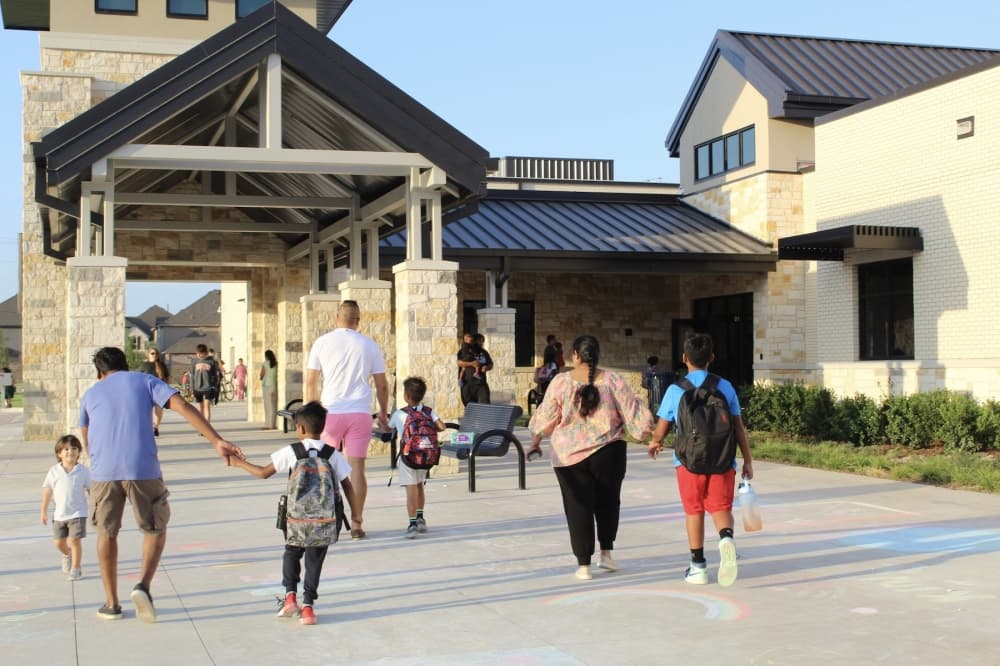
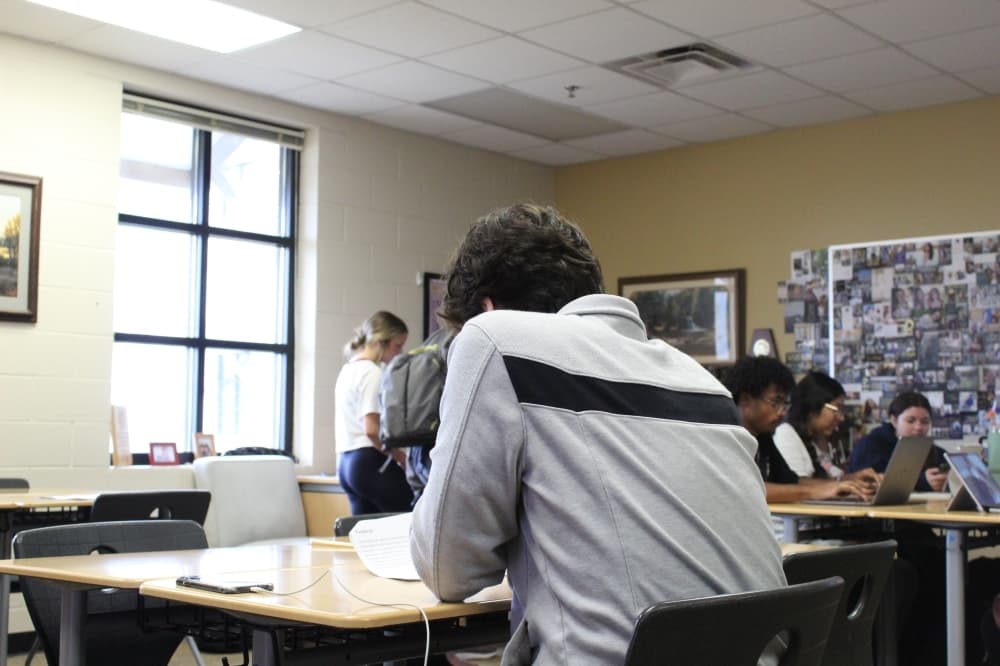
Many Texas students began returning to the classroom for the 2026-27 school year in mid-August.
Over the summer, dozens of Texas public school campuses closed amid enrollment declines, financial pressures and academic performance issues. Meanwhile, tens of thousands of students are using state funding for private school tuition, and one public school district is on the brink of state intervention after two of its campuses received their fifth failing scores in newly-released state accountability ratings.
Here are five things Texans should know as the 2026-27 school year kicks off.
1. 2026 school accountability ratings issued
The Texas Education Agency released public school accountability scores from the 2025-26 school year on Aug. 14.
Texas schools are rated on an A-F scale based on three criteria: student achievement, school progress and closing the gaps. TEA data shows that in the 2025-26 school year:
- 17% of districts and 25% of campuses received an A
- 47% of districts and 36% of campuses received a B
- 29% of districts and 24% of campuses received a C
- 7% of districts and 10% of campuses received a D
- 2% of districts and 4% of campuses received an F
- 1% of districts and 6% of campuses were deemed “not rated”
Something to note
Austin ISD reached the threshold for state intervention this year after two middle schools scored their fifth consecutive F ratings, requiring the TEA to close those campuses or take control of the entire district.
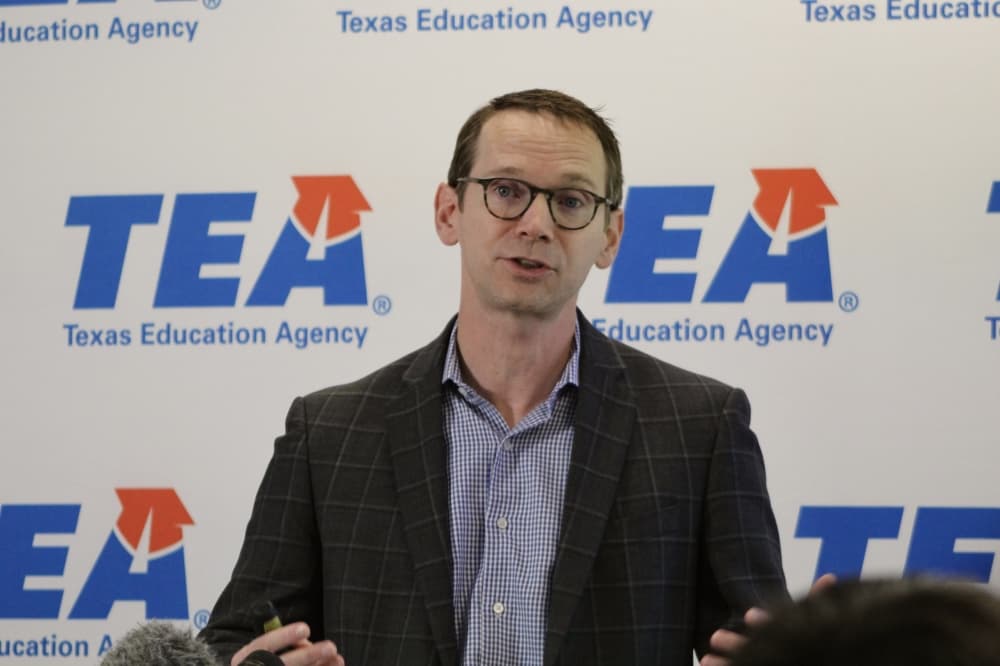
“The ratings still have to be finalized,” Texas Education Commissioner Mike Morath told reporters Aug. 14 in New Braunfels. “We want to wait to see what that looks like, and we also want to evaluate how well that school district, as a system, is trying to improve results for all kids.”
Districts that have concerns about their ratings may appeal those scores through Sept. 11, and the TEA will finalize all ratings in December. Austin ISD is the only district that may be subject to state intervention based on the 2026 ratings, a TEA spokesperson said.
Read the full story.
2. New rule impacts accountability-related school closures
If a Texas public school receives five failing ratings in a row, state law requires the Texas Education Agency to close that campus or replace the district’s elected board of trustees with a state-appointed board of managers. Some districts recently closed chronically struggling campuses to avoid state action, although a new TEA rule will make it harder to do so in the future.
What’s happening
Beginning Aug. 16, if a district closes a D- or F-rated campus and transfers “a plurality,” or the largest share, of the students from the closed campus to a school with a C, D or F rating, the closed campus’ rating will be assigned to the new campus. Districts will only avoid transferring a shuttered school’s rating history if they relocate a plurality of students to an A- or B-rated campus.
The new rule will not impact school closures and relocations that were approved ahead of the 2026-27 school year, according to the TEA.
Find more details here.
3. 100K students using new Texas Education Freedom Accounts
About 101,000 students will participate in the inaugural year of Texas’ education savings account program, the state comptroller’s office announced Aug. 13.
The Texas Education Freedom Accounts program gives families state funds to send their children to private schools or homeschool them, with priority going to students with disabilities and children from low-income households.
Zooming in
Of the first 85,000 confirmed participants, about 24% had a disability, according to state data, and 80% of participants were from low-income families.
White students make up about 40% of all TEFA participants, followed by Hispanic students at 28% and Black students at 14%. In comparison, about 24% of students attending Texas public schools during the 2025-26 school year were white, while 53% were Hispanic and 12.9% were Black, according to Texas Education Agency data.
Get the full details.
4. Public school closures deepen across Texas
In less than three years, Texas school boards have voted to close at least 150 public school campuses, records show. This includes 57 schools in Community Impact’s coverage areas, and some districts have said that additional closures are not off the table.
How we got here
Roughly 76,000 fewer students were enrolled in Texas public schools during the 2025-26 school year than the year prior, marking the first non-pandemic enrollment drop in recorded history. Public schools receive state funding based on student attendance, according to the Texas Education Agency, meaning that enrollment declines can lead to direct funding losses.
Analysts have warned that public school enrollment will likely continue to decline in upcoming school years as districts also face high inflationary costs and state accountability issues.
“It is happening all over this state, ... and I think that we need a plan [to address] that because it's not a local issue,” said state Rep. Gina Hinojosa, an Austin Democrat who is running for governor, during a May 11 legislative hearing.
Dig into the topic.
5. A look back at recent public education laws
During the 2025 Texas legislative session, state lawmakers made several substantial changes to public education.
They increased state funding for public schools by nearly $8.4 billion, although some school administrators recently told lawmakers that the boost was not enough to prevent budget shortfalls.
More details
Other laws that took effect ahead of the 2025-26 school year banned students from using cellphones throughout the school day; required districts to hang donated posters listing the Ten Commandments in classrooms; and increased teachers’ authority to remove students from class for repeatedly disruptive or threatening behavior.
The next state legislative session begins in mid-January.
Learn more.