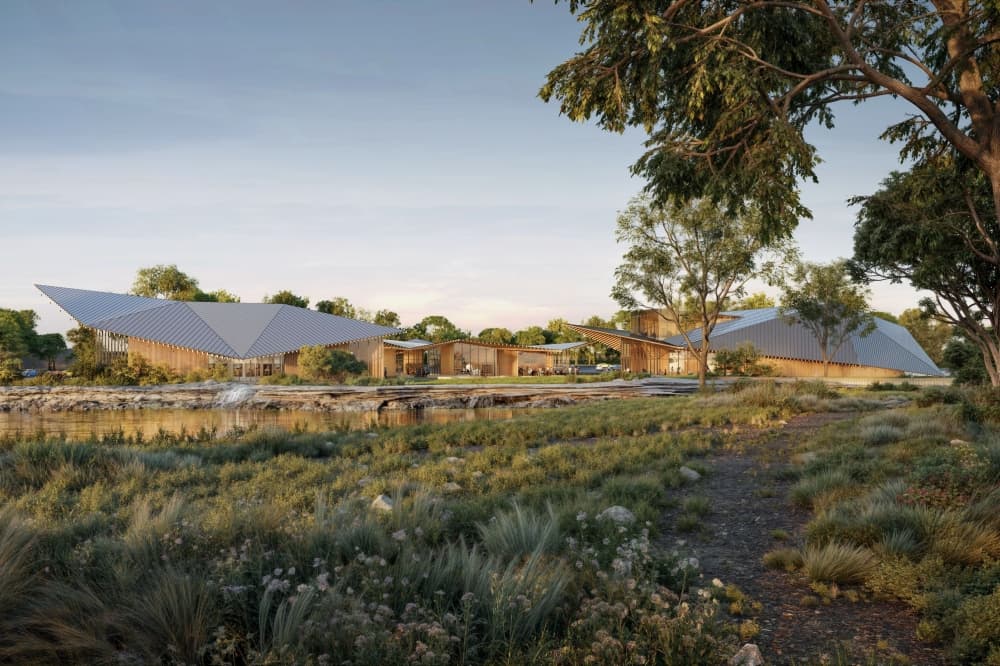
The city of Cedar Park is planning to build an arts center, including a theater, gallery and gathering spaces, at the southern edge of the Bell District development. (Rendering courtesy city of Cedar Park)
Editor's note: To view this story as it appeared in Community Impact's Cedar Park edition, click here.
The Bell District is a planned “walkable, mixed-use development” that local leaders say will become the city’s downtown and “the heart of Cedar Park.”
The overview
The idea for the Bell District began with a citywide comprehensive planning process in 2014, in which residents said they wanted to see the area revitalized and also expressed a desire for a unique gathering place in the city, according to the development’s website.
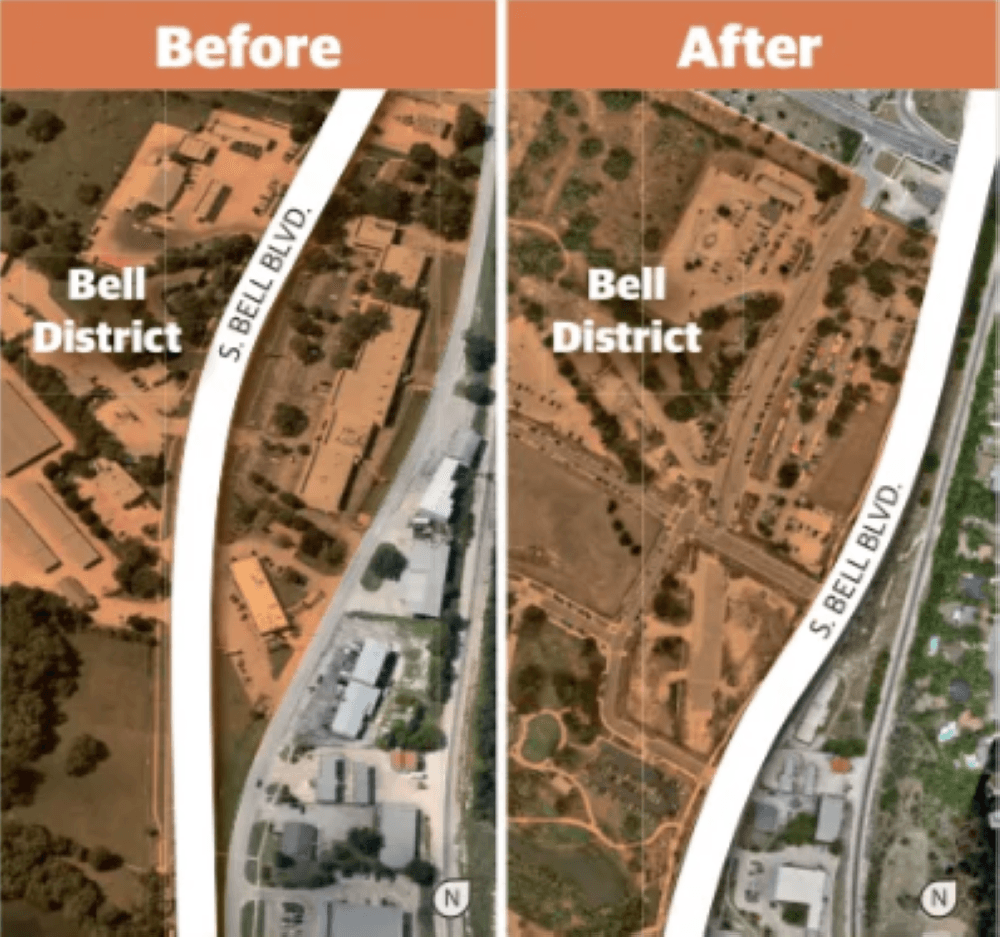
Construction of the Bell District kicked off with the realignment of US 183-Bell Boulevard to expand the area available for development, which was completed in 2022. Construction of the new Cedar Park Public Library and Bell Park followed. Both opened in late 2024, along with the Backyard, an open gathering space adjacent to the park and library.
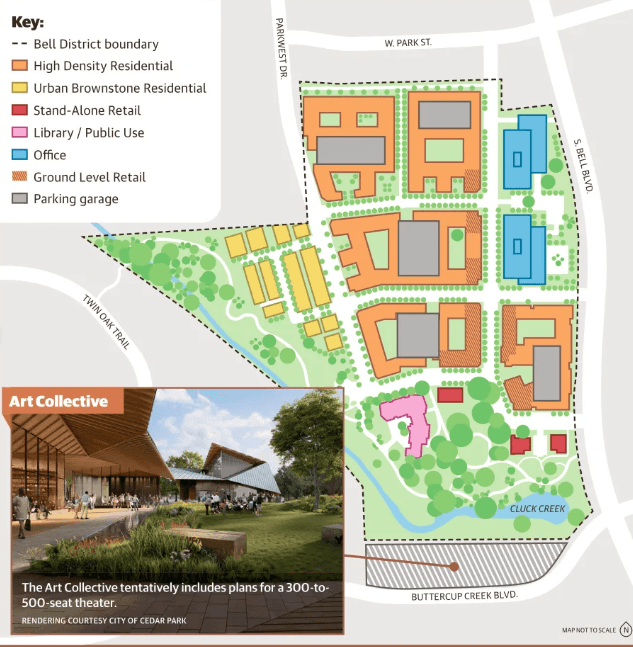
The district is being developed through a public-private partnership, in which the city shares costs and responsibilities with private developers, led by master developer RedLeaf. Plans for the Bell District include restaurants, office buildings, apartment buildings with ground-floor retail spaces, and townhomes.
“It’s going to be a really vibrant, exciting place to live,” Mayor Jim Penniman-Morin said.
Today, the library, Bell Park, the Backyard, and the trail along Cluck Creek are open to the public, and see a significant number of visitors. The rest of the Bell District, however, consists primarily of empty lots.
Private development is not moving at the pace the city or developers wanted or expected, Rob Shands, a partner at RedLeaf, told Community Impact, primarily due to broad economic factors. He specifically highlighted a lower demand in the Austin-area multifamily housing market.
“The softness in this market has really been challenging,” Shands said.
However, the city is moving forward with a project to build an art collective building, which would include a theater, gallery, classrooms and gathering spaces, city staff said.
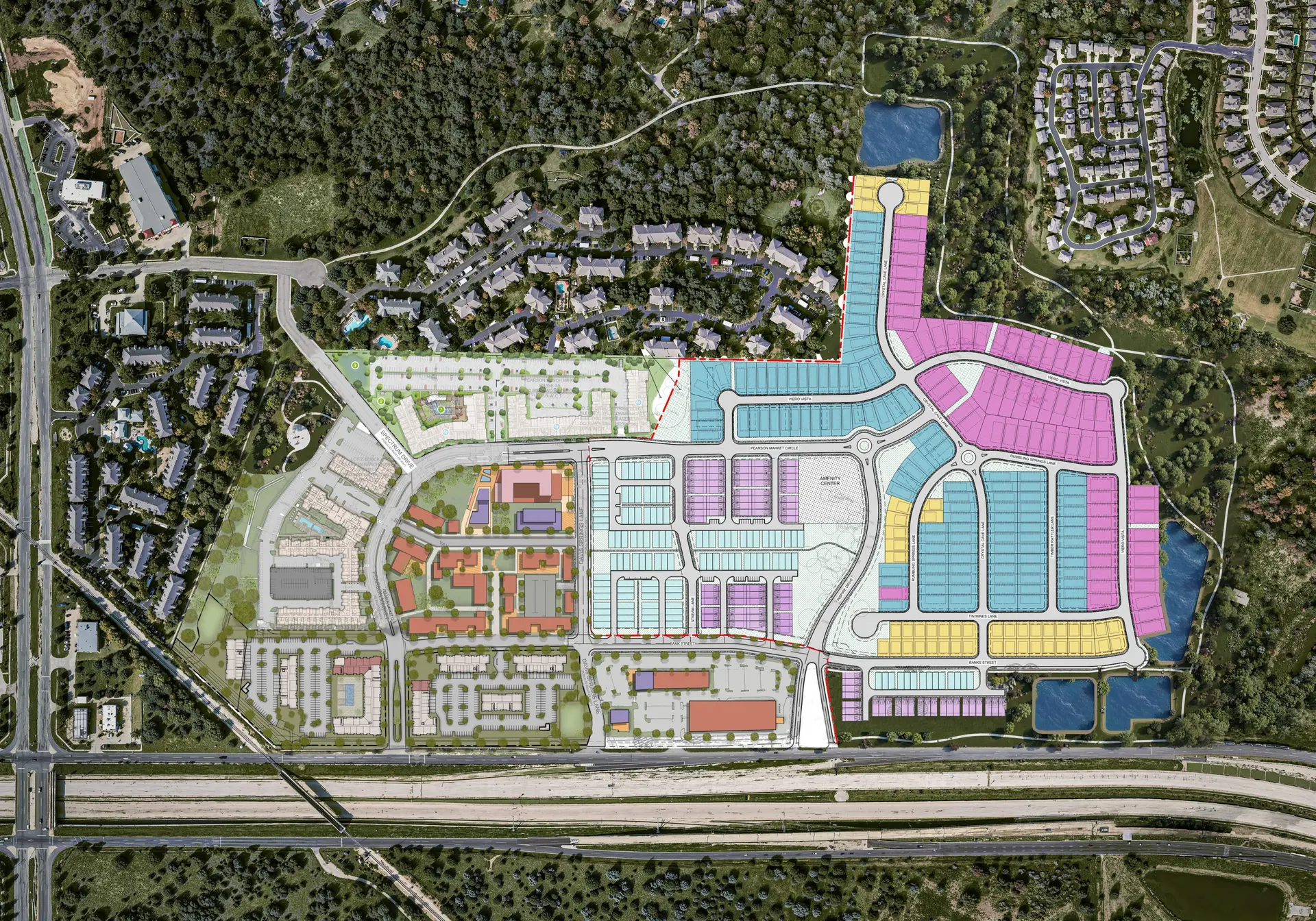
Plans for the Bell District include residential, retail, restaurant and office space. (Source: RedLeaf/Community Impact)
By the numbers
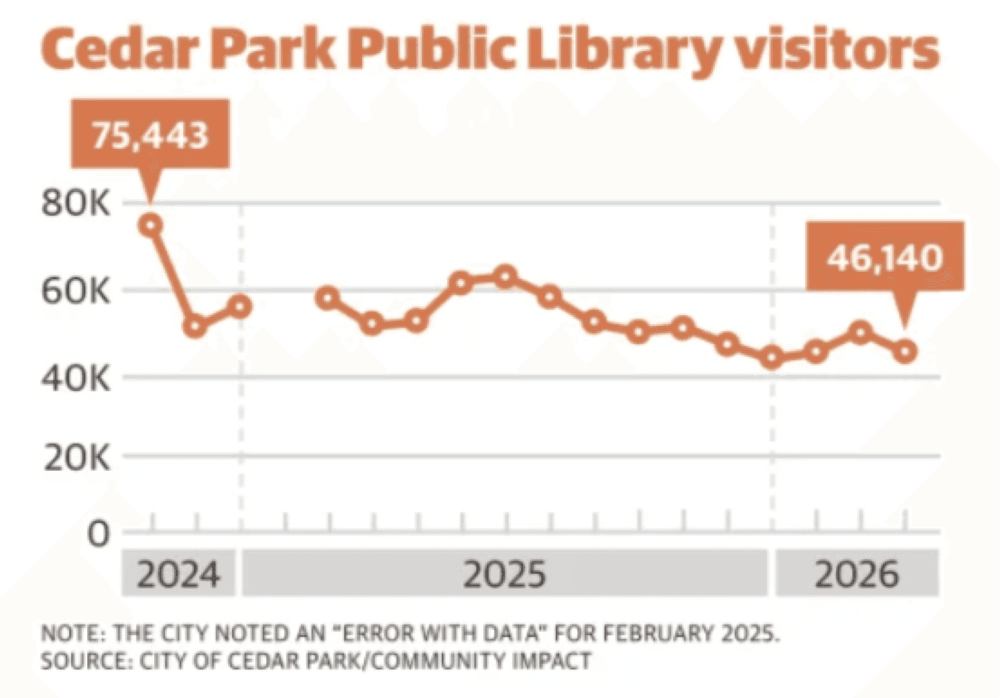
As of May 28, the Cedar Park Public Library has seen almost one million visits since the new library opened in November 2024, bringing significant foot traffic to the Bell District, according to Fran Irwin, director of communications and engagement for the city.
The library has close to 35,000 card-carrying members, about two-thirds of whom are Cedar Park residents.
Though the library has brought in significant traffic since its opening, Assistant City Manager Beau Falgout said the library was an unconventional choice to build the Bell District around. A more typical choice to anchor this type of development, he said, would have been a new city hall.
“In truth, a city hall doesn’t bring that many visitors, especially nowadays, post-COVID, to an area. I think [City Council and staff] smartly pivoted to the concept of the new library being located in the Bell District because it would be more of a community gathering place,” Falgout said. “When you look at the number of visitors, it’s sort of wild to think how many people come to that facility and the nearby park.”
Plans for the Bell District include residential, retail, restaurant and office space. (Source: RedLeaf/Community Impact)
What's coming
Cedar Park officials plan to build the art collective on a plot of land along the south edge of the Bell District, across Cluck Creek from the park and library. When finished, a pedestrian bridge would connect the building to the Bell District, Falgout said.
Resident feedback helped shape the city's decision to use the property for that purpose after acquiring the land in 2022, he said.
“It’s all about having a place for the community to be able to experience the arts,” Falgout said.
Plans for the arts center include a theater, gallery, classrooms, a kitchen that could be used for cooking classes or catering, and outdoor gathering spaces.
The city has designated $4.5 million for design of the art collective through the Community Development Corporation Type B board, which allocates sales tax revenue for community development projects, according to Falgout.
City staff are currently in the process of evaluating design proposals from architecture firms and expect to bring a design contract to City Council for a vote within the next few months, Falgout said. The city is targeting a fall 2029 opening date for the art collective.
The current situation
RedLeaf does not have a timeline for the private development projects in the Bell District that it is prepared to share publicly, Shands said.
“It really comes down to capital and the lenders. Both the debt lenders and the equity providers are by and large on the sidelines waiting for the market to show signs of stabilization,” Shands said.
Development firm General Investment and Development submitted permit paperwork to the Texas Department of Licensing and Regulation in March, indicating plans to break ground on a 194-unit apartment building in November. However, Shands said developers no longer expect to begin construction this year, and do not have a new groundbreaking date set.
Since the road realignment in 2022, the Bell District has seen the addition of the weekly Texas Farmers Market, the new Cedar Park Library and 15-acre Bell Park, featuring a giant mockingbird play structure. Additional phases are planned through about 2035, with future development tied to market conditions. (Source: RedLeaf/Community Impact)
On the other hand
Both Shands and Penniman-Morin expressed disappointment with the pace of private development, but said the current situation highlights an advantage of their partnership.
Because of the way the public-private partnership is structured, the city owns the land until private developers are ready to take it over and start building, Penniman-Morin said. That means private landowners are not paying property taxes on empty lots. As a result, they do not face the same pressure to revise their plans and begin construction as private developers working independently, allowing them to take a more patient approach.
“We’re not going to sell out early,” Penniman-Morin said. “We’re not going to scale back the plan just to get it done. People are going to get the vision that they’ve been sold on, but at the timeline that the market supports it.”