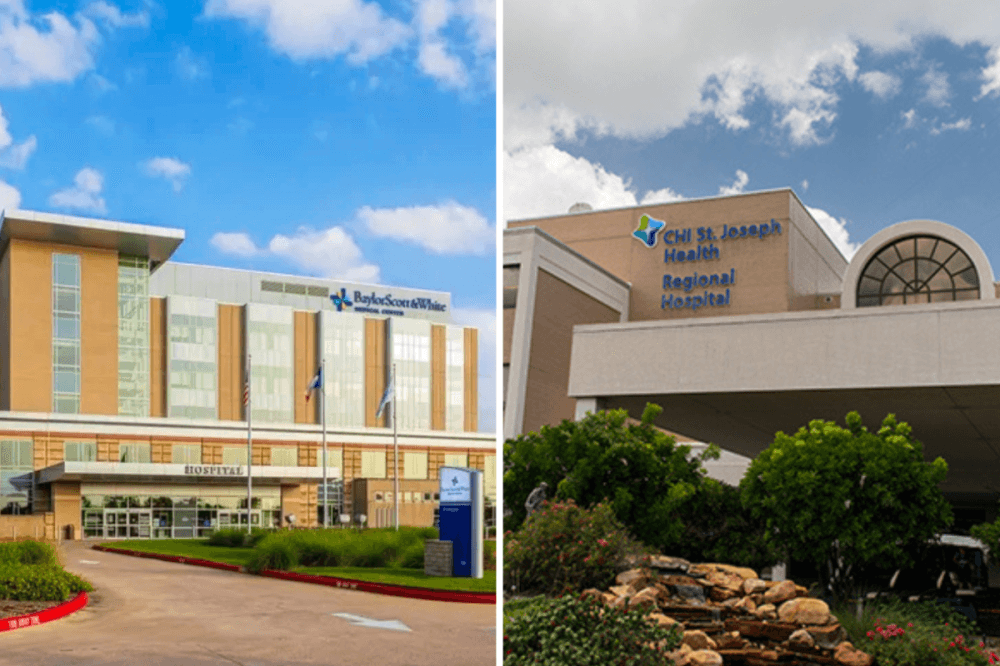
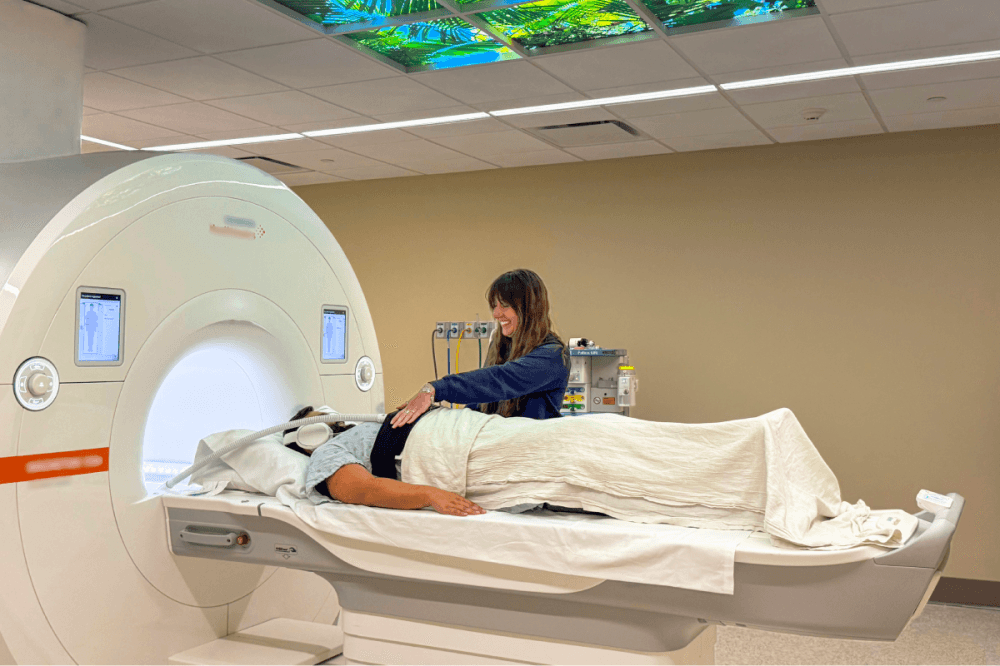
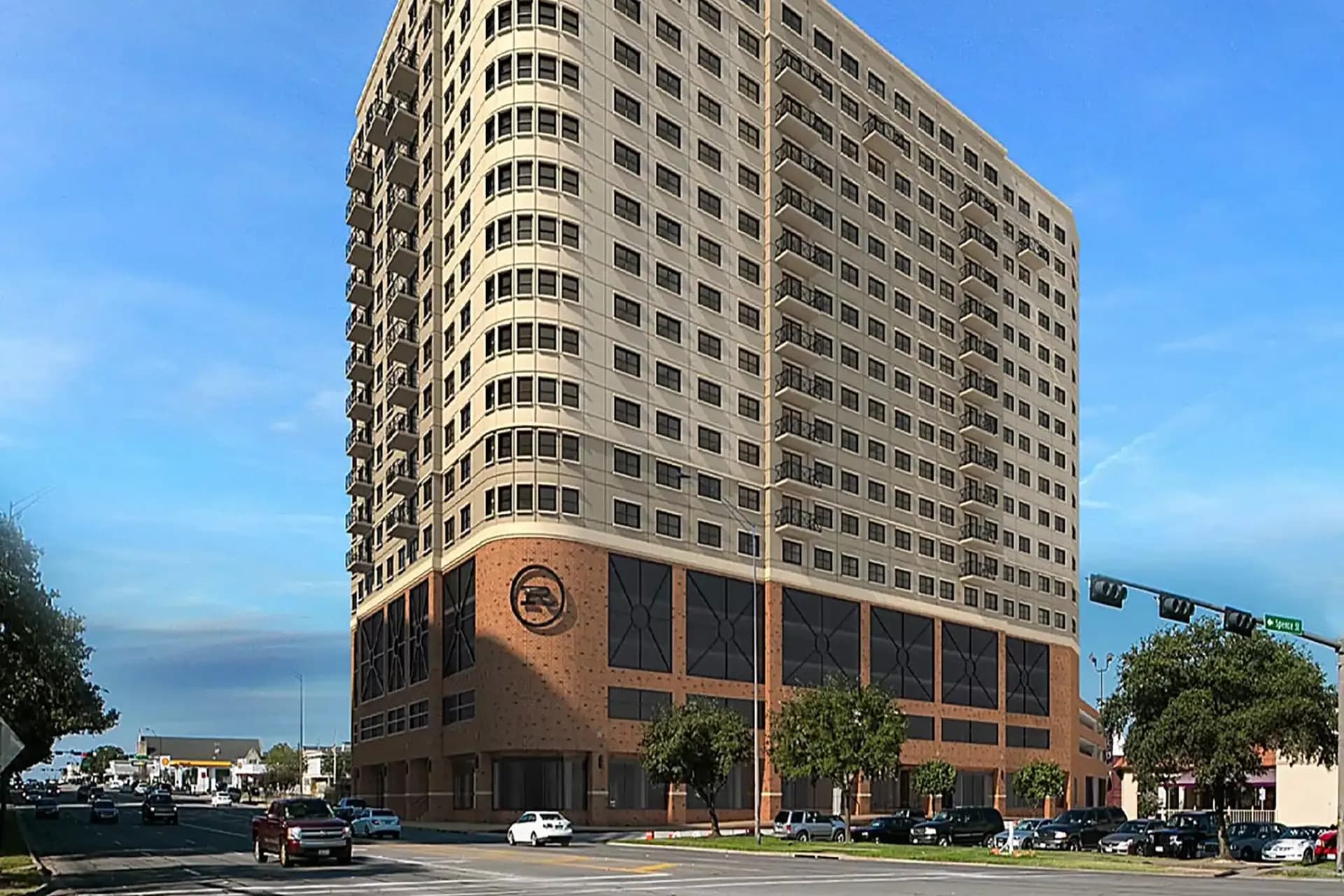
Baylor Scott & White introduced a 3T MRI machine, offering thorough imaging to local patients. (Courtesy Baylor Scott & White - College Station)
As Bryan-College Station continues to grow, so does its role in the health care landscape.
The goal is increasingly clear as local health care providers work toward expanding services, technology and workforce pipelines as more patients seek care in Aggieland.
Assessing the need
Driven by rapid population growth, expanding health care infrastructure and increasing demand for specialized services, local providers and public health leaders say the community is increasingly serving as a regional health care destination for residents across the Brazos Valley.
That growth is reflected both in patient volume and educational programs. Baylor Scott & White in College Station has reported increases in patients over the past several years, and Texas A&M University continues to expand its health-related academic programs through its colleges of medicine and nursing.
The colleges’ officials say those investments are helping more patients receive care closer to home.
“We’re really trying to move toward an academic medical center model for this community,” said Dr. Amy Waer, dean of the Texas A&M Naresh K. Vashisht College of Medicine. “The more you can keep health care local, the better for the community.”
She said resources and partnerships across the region have improved access to care while creating new opportunities for collaboration among physicians, researchers and community organizations.
That strategy is becoming increasingly important as the area’s population grows. Baylor Scott & White officials said demand is being driven not only by Bryan and College Station’s annual growth, but also by residents from surrounding counties who rely on the area for care.
Waer said those partnerships have helped expand specialty services locally, reducing the need for some patients to travel to larger metro areas for care.
The expansion
Jason Jennings, regional president of the Baylor Scott & White College Station/Brenham systems, said the local hospital system seeing fewer patients leave the community for specialized care.
“We commit not just physical assets, like hospital rooms or equipment, but also really making sure we have enough physicians and nurses and clinical staff,” he said.
Jennings said the hospital system plans to further expand patient capacity, dialysis services and build out a new medical office, which is expected to open in 2028.
The health system also recently installed a new 3T MRI machine, allowing patients to access advanced diagnostic services locally, and a level III neonatal intensive care unit to care for infants born as early as 22 weeks.
Those investments coincide with efforts by Texas A&M to strengthen the health care workforce pipeline.
In the classroom
Waer said the university has intentionally expanded medical education opportunities and residency programs because physicians are more likely to remain in communities where they train.
“We have seen strides in keeping and retaining our learners ... our Aggie doctors in the communities that we serve across the state,” she said.
While local health care leaders say Bryan-College Station is increasingly becoming a health care hub for residents who may have limited services available closer to home, challenges remain.
It identifies transportation as the region’s most significant barrier to care.
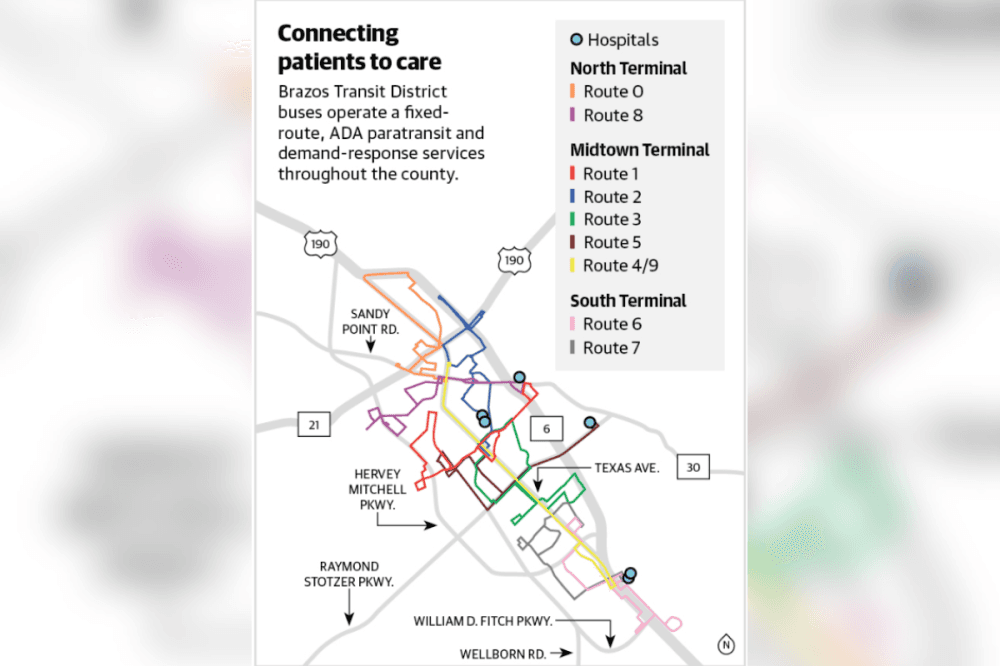
The Brazos Transit District told Community Impact it operates a fixed-route, ADA paratransit and demand-response services throughout the county. Chief Administrative Officer with the transit district Jo Marlow said health care access is an important transportation need, particularly for older adults, people with disabilities, veterans and residents without reliable access to a vehicle.
The Brazos County 2026-28 Community Health Improvement Plan identifies transportation as the region’s most significant barrier to care. (Courtesy Brazos Transit District/Community Impact)
Marlow also noted challenges can come up when health care appointments occur outside traditional service hours or when residents are unfamiliar with available transportation options.
Davila said the health district wants clearer bus stop signals and easier access to route information, especially for those who struggle with technology.
Keep in mind
Health care leaders acknowledge gaps but point to growing collaboration among hospitals, universities and community organizations as part of the solution.
The Brazos County Health District hosts several preventative care clinics throughout the week as well as other public education campaigns, physicals and three to five outreach events every month.
Walk-in STI clinic: Testing, treatment and counseling for sexually transmitted infections
Monday, 8 a.m.-1 p.m.
Wednesday, 1:30-4 p.m.
Friday, 8 a.m.-noon
The health district said it sees 25,000 clients each year with 18% with addresses outside of the county.
The impact
Local health care leaders who spoke with Community Impact agree those barriers illustrate an important reality: Expanding health care capacity does not automatically translate into health care access. That perspective has shaped much of the region’s public health planning.
As Bryan-College Station's health care system is growing alongside the communities it serves, the challenge moving forward, health officials say, will be ensuring growth benefits not only Bryan and College Station residents, but also the thousands of people across the Brazos Valley who increasingly rely on the area for care.