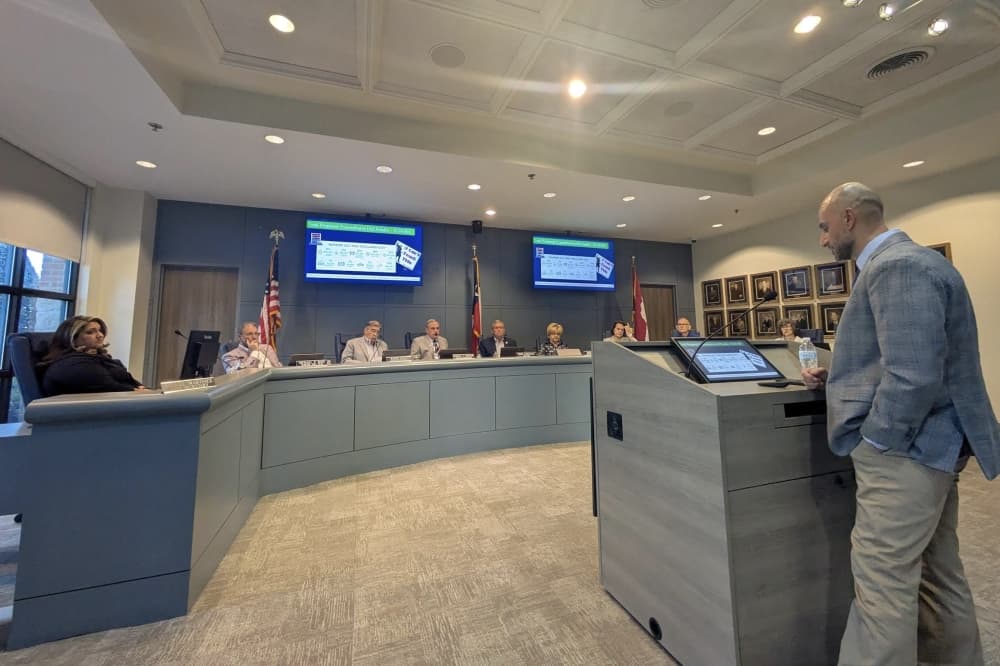
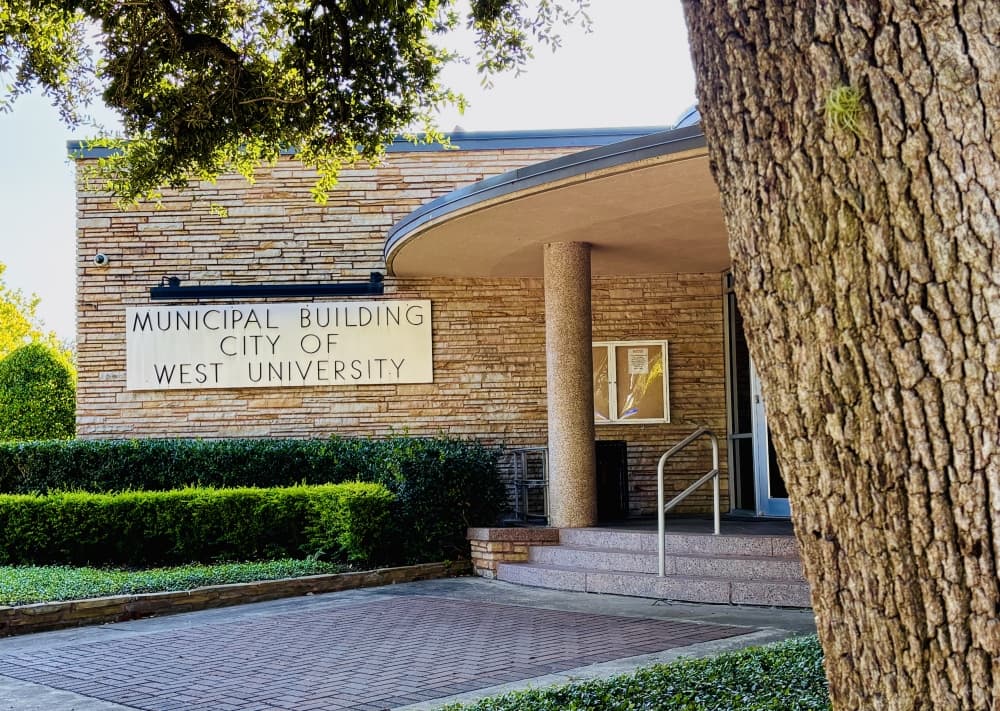
Talks of a new joint pilot program being created between the city of West University Place and CenterPoint Energy officially began July 27 at a City Council meeting.
If greenlit, the partnership would aim to reduce the frequency of power outages in the town’s residential areas through a task force specially designed to identify problematic vegetation in the community, according to agenda documents.
In a nutshell
Mayor Pro Tem John Barnes and council member John Bertini led the discussion about how the idea for a new joint venture came to be and its rationale. The pair then opened the floor to the rest of the council to receive feedback.
Barnes said that after attending a CenterPoint presentation for city staff in May, he found that the current methods residents use to report problems related to trees and vegetation in their neighborhoods have become fairly ineffective. Yet, residents still rely entirely on these methods to report incidents such as fallen vegetation lying visible in streets and overgrowth located at the rear of their properties.
Barnes reasoned to council that a partnership with the energy company would allow the city to more efficiently solve day-to-day problems residents experience and prevent larger issues from occurring during natural disaster events, such as power outages.
“The idea was ... to have us partner with CenterPoint to develop a way of identifying and addressing some of these issues with vegetation and other things that obviously are an ongoing threat to our power grid in the winter, ice storms, hurricanes and ... high-wind storms,” Barnes said.
The framework
Agenda documents from the July 27 meeting suggest that the joint pilot program could consist of a resident-led task force supported by the Public Works Department, CenterPoint representatives and other city officials as needed.
Task force personnel would be responsible for identifying and cataloging vegetation throughout the community that either poses an immediate threat to utilities and daily life or requires further monitoring before solutions are enacted, per the agenda memo.
However, Barnes said the working group’s design is still “up in the air” until further discussion is made.
Offering input
While Mayor Susan Sample gave no opposition to creating the program eventually, she expressed hesitancy to make any official plans without first discussing the logistics of the program and how it would work with CenterPoint representatives directly.
Sample said the city could invite representatives to future City Council meetings to discuss potential strategies, as well as hear what kind of vegetation management work the company has already been doing across West U before determining the next course of action.
“I’m all for it,” Sample said during council crosstalk, “but I’d like to have them here.”
Going forward
Public Works Director Michael Leech said that department staff will reach out to the utility company with a request for CenterPoint representatives to attend one of the council’s next meetings.
Leech said the department hopes to schedule CenterPoint's appearance for September, but mentioned that staff will need time to facilitate the company’s presentation and discussion.