


A 2019 study by the Texas Department of State Health Services projected that the demand for dental hygienists would outpace supply from 2018 to 2030. In Central Texas, the shortage of dental hygienists was projected to increase by 116.4% from 2018 to 2030, according to the report.
“As the population increases, new patients are coming into practices in Austin,” said Dr. Shailee Gupta, local dentist and member of Capital Area Dental Society. “Without the proper number of hygienists to go with these practices or community centers, there's no way to be able to meet that demand.”
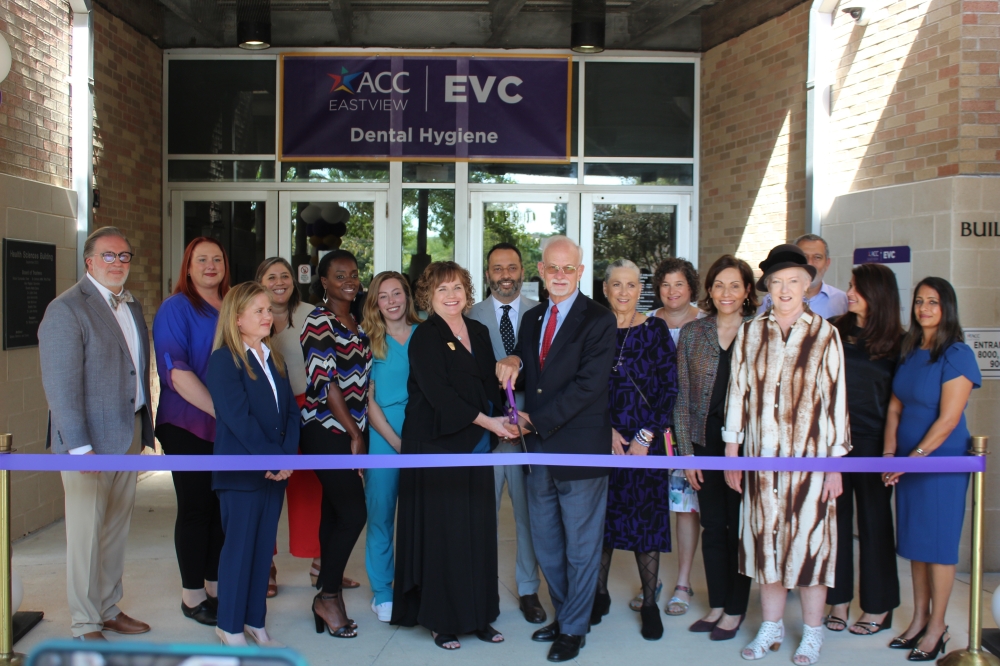
To help counteract this shortage, Austin Community College opened an expanded dental hygiene clinic at its Eastview Campus this fall, nearly doubling the program’s annual cohort of students from 18 to 34.
Some experts say joining an interstate compact could make it easier for Central Texas dental practices to attract dental hygienists from other states.
The impact
The United States began experiencing a shortage of dental hygienists following the onset of the COVID-19 pandemic in 2020, during which many practices closed and furloughed workers, Gupta said.
“We heard from dentists that ‘Hey, this is becoming a problem. We don't have that hygienist there in our practice to help keep up with the oral health demands of our patients,'” Gupta said. “That shortage was really creating a crisis in our state’s dental workforce.”
The number of dental hygienists in Texas decreased by nearly 22% from 2019 to 2022 before seeing a recent spike in 2024, according to data from the U.S. Bureau of Labor Statistics. In the Austin, Round Rock and San Marcos area, the dental hygienist workforce declined by 33% from 2021 to 2024.
The shortage of dental hygienists has made it more difficult for dentists to treat all of their patients, some of whom have critical dental hygiene challenges, Gupta said. Patients who do not receive a cleaning every six months are more prone to developing cavities and poor gum health, she said.
Many community outreach programs rely on dental hygienists to give community members cleanings and place sealants to prevent tooth decay, she said. Dental hygienists also share preventative care instructions with patients on how to best brush and floss their teeth.
“If there are not hygienists there to be able to keep up with being able to get regular cleanings, then it can create additional dental problems and financial problems for patients, because then your treatment is going to be more expensive,” Gupta said.
The approach
Despite receiving more than 100 applicants each school year, ACC was previously limited to accepting 18 students per cohort in its two-year dental hygienist program. By expanding the program, ACC can now train up to 34 dental hygienist students at the Eastview Campus, further enabling the community college system to address the need for these workers in Central Texas, said Michelle Landrum, ACC Dental Hygiene department chair.
“It had become very apparent that with our current enrollment we were not able to meet the workforce demand in Austin for dental hygienists,” Landrum said.
The $8 million project was funded by ACC’s $770 million bond election in 2022, according to ACC information. Austin-area dental leaders with the Capital Area Dental Society met with ACC board of trustees and advocated for the college to expand its dental hygiene program to help grow the dental hygienist workforce, Gupta said.
ACC dental hygiene student Lauren Hankins Smith said she plans to work at a local dental office in Austin or Round Rock after graduating from her program next year.
“Hygienists are needed in the field,” Smith said. “It’s helpful to understand what we're getting into at the beginning. The program does a lot of precaution with us as far as hoping to prevent us from burning out or leaving the field early.”
The new dental hygiene clinic has enabled students and faculty to provide low-cost dental and gum care to more community members. The number of patients served at the clinic increased from nearly 250 patients in the 2020-21 school year to more than 400 patients last school year, according to ACC data.
Zooming out
At least 12 states have joined the newly-established Dentist and Dental Hygienist Compact, including Arkansas, Colorado, Kansas and Tennessee, according to The Council of State Governments. The legally-binding, interstate agreement will allow dental hygienists and dentists to practice in states where they are not licensed.
Joining the compact could attract more out-of-state talent and help Texas dental practices fill open dental hygienist positions, said Vance Ginn, president of Ginn Economic Consulting and a former chief economist for the Trump administration’s Office of Management and Budget.
“That allows for the supply to really increase at a rapid rate or more rapidly than it otherwise would, because now you have more states that are joining this compact,” Ginn said. “Texas is prime to join this compact and have universal recognition because of the fast growing population. When you see the number of people that have been moving to Texas for jobs, for retirement and other things, we're also going to have a high demand for dental services.”
Capital Area Dental Society is working with the American Dental Association and other organizations to bring the compact to Texas, which state lawmakers would have to approve in a future legislative session. Some Texas dental leaders are aiming to redefine the compact to meet higher dental practice standards in Texas, Gupta said.
“The Dental Practice Act that we have in Texas is very protective for patients and dentists and not all states go or abide by all the right kind of dental practice acts that we would in Texas,” Gupta said.
Stay tuned
ACC is planning to launch a dental hygiene program at its Hays Campus in Kyle. The college is expected to soon break ground on a new health sciences building that is slated to open by 2028, Landrum said.
The ACC system may eventually consider offering its dental hygiene program at the Round Rock Campus, she said.