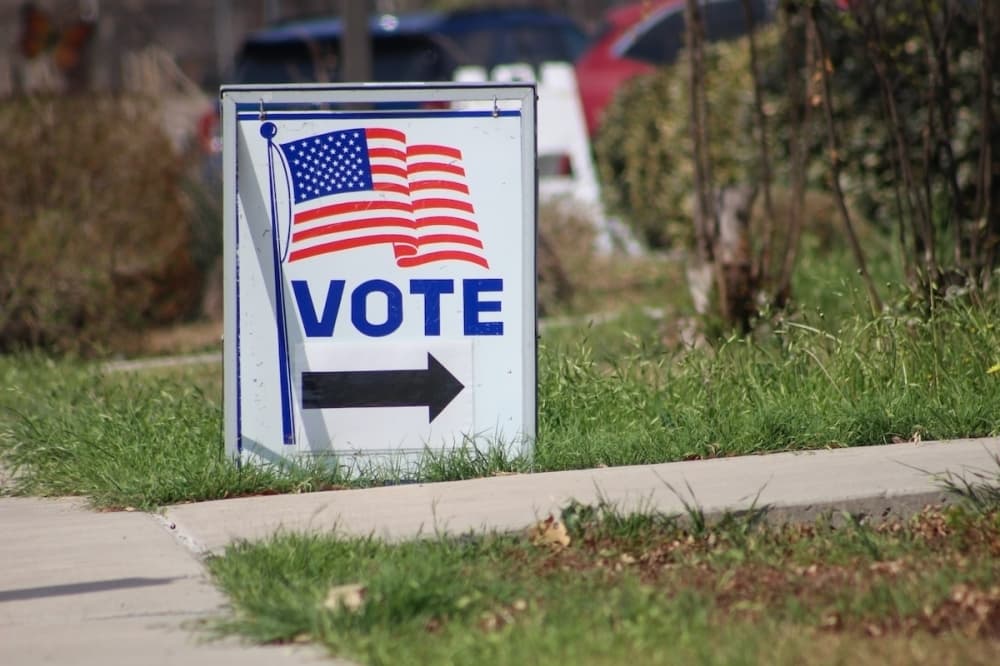
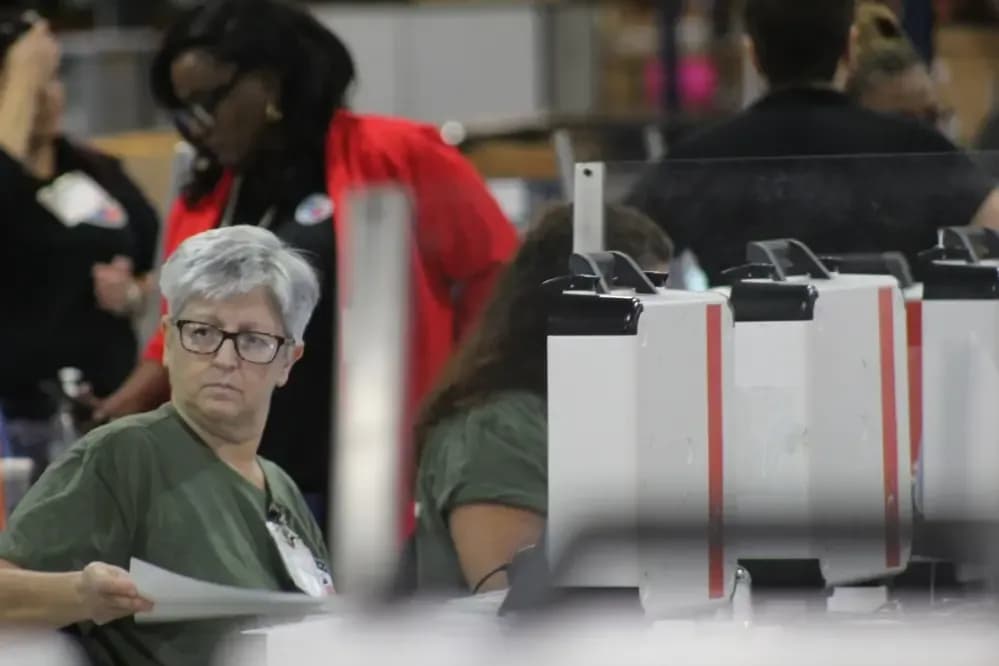
Dozens of federal, state and local primary campaigns will come to a close May 26 as Texas voters cast ballots in the Republican and Democratic runoff elections.
At a glance
Registered voters who participate in the runoff will select their nominees for various seats, determining which candidates will appear on the November ballot.
A record number of Texas voters cast ballots in the March 3 primary election, Community Impact reported, although runoff elections have historically been decided by a smaller group of voters. State data from previous election cycles shows that under 5% of registered voters cast ballots in the 2024 primary runoffs, and about 8% voted in the 2022 runoffs.
Final reports on early voting turnout from this year’s primary runoff were not available before press time May 22.
Here’s what Texans should know before heading to the polls May 26.
What is a runoff election?
Texas held its Republican and Democratic primary elections in March, with some races advancing to an overtime round, known as a runoff, after no single candidate picked up more than half of the vote.
State law requires that primary candidates receive more than 50% of the votes cast to advance to a general election, meaning a candidate must earn a majority of the vote—not just the highest number of votes—to win their primary outright. This rule means crowded Texas primary races frequently result in runoffs, which include the two-highest performing candidates.
On May 26, voters may see statewide offices, state legislative seats, redrawn congressional districts, the State Board of Education and county-level positions on their ballots. The winner of each runoff race will appear on the Nov. 3 ballot.
Who is eligible to vote?
The May 26 runoffs are an extension of the March 3 primaries. This means voters who participated in this year’s Republican primary are only allowed to vote in the Republican runoff, and those who voted in the Democratic primary can only vote in the Democratic runoff.
Registered voters who did not vote in the March primaries or participate in a third-party nominating convention are eligible to vote in either party’s runoff.
What’s on the ballot?
Republican voters will select their nominee for U.S. Senate, who will face state Rep. James Talarico of Austin in November. In a social media post May 19, President Donald Trump endorsed state Attorney General Ken Paxton over incumbent Sen. John Cornyn for the seat.
With Paxton running for the U.S. Senate, there is no incumbent in the Texas attorney general's race for the first time in more than a decade. Voters from both parties will make their picks for attorney general, and various U.S. House seats will be on the runoff ballot after state lawmakers redrew Texas’ congressional boundaries in 2025.
Meet the candidates in statewide Republican runoffs at the following links:
Meet the candidates in statewide Democratic runoffs at the links below:
Voters who reside in Community Impact’s coverage areas can find more races on their local ballot at communityimpact.com/voter-guide and read Q&As with runoff candidates at communityimpact.com/election.
Where and how can I vote?
Polling places across Texas will be open from 7 a.m.-7 p.m. May 26, according to the secretary of state.
On election day, voters in the following counties in Community Impact’s coverage areas can vote at any polling location within their county of residence through the countywide voting program: Bastrop, Bexar, Brazoria, Brazos, Collin, Comal, Fort Bend, Galveston, Guadalupe, Harris, Hays, Tarrant, Travis and Williamson. Registered voters in other counties are required to visit a polling place specific to their voting precinct.
Williamson County switched to precinct-based voting for the March 3 primaries at the request of the local Republican party, Community Impact previously reported. Voters in Williamson County will be able to vote anywhere in the county May 26, after some residents experienced longer-than-average wait times and other complications in March.
Registered voters can find precinct information on their voter registration certificate or by logging into the state voter portal. Texans can also search for polling locations through the voter portal or contact their local election office.
Voters must bring one of seven forms of identification to the polls:
- A Texas driver's license (issued by the Texas Department of Public Safety)
- A Texas personal ID card (issued by the DPS)
- A Texas handgun license (issued by the DPS)
- A Texas election ID certificate (issued by the DPS)
- A U.S. military ID card with the voter’s photograph
- A U.S. citizenship certificate with the voter’s photograph
- A U.S. passport
Texans without an approved ID can sign a “reasonable impediment declaration” at the polls and present an alternative form of identification, such as a birth certificate, a current utility bill or a paycheck. More information about voter ID requirements is available at votetexas.gov.
Voters may bring written materials, such as notes and sample ballots, to the polls to help them cast their votes, according to the secretary of state.
Texans cannot post or distribute written materials within 100 feet of an entrance to a polling place, as this is considered campaigning or electioneering under state law. Guns and wireless devices such as cellphones, tablets and smartwatches are not allowed at polling places.