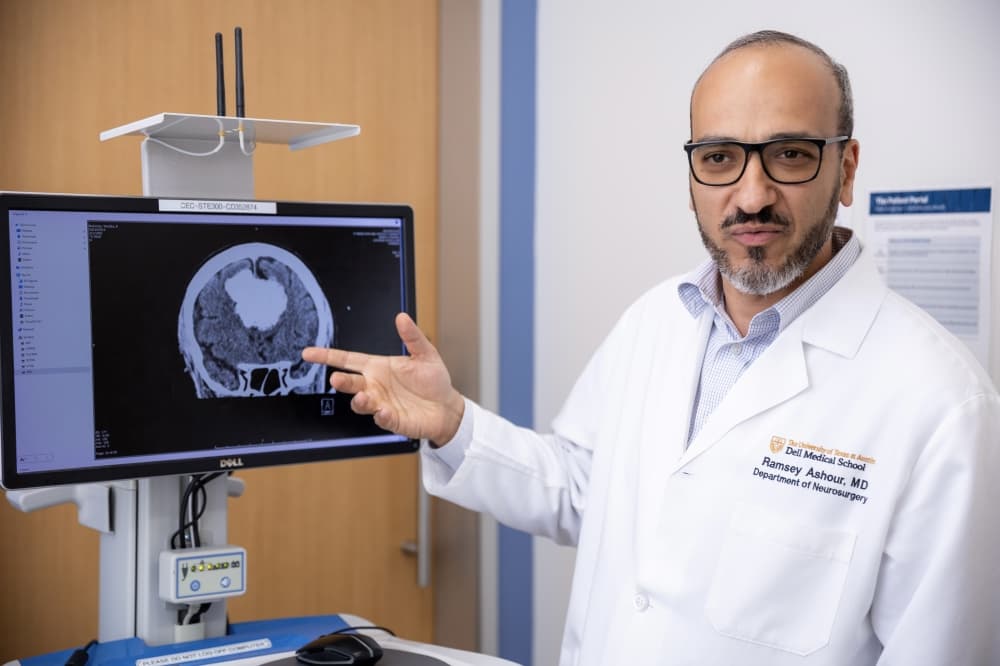
Dr. Akshay Yadhati, a surgeon with Austin Regional Clinic, performed two different high-tech spine surgeries this year that were both Austin-area firsts, according to a spokesperson for the medical group. Yadhati spoke to Community Impact about the procedures and what they mean for spine care in Central Texas.
The overview
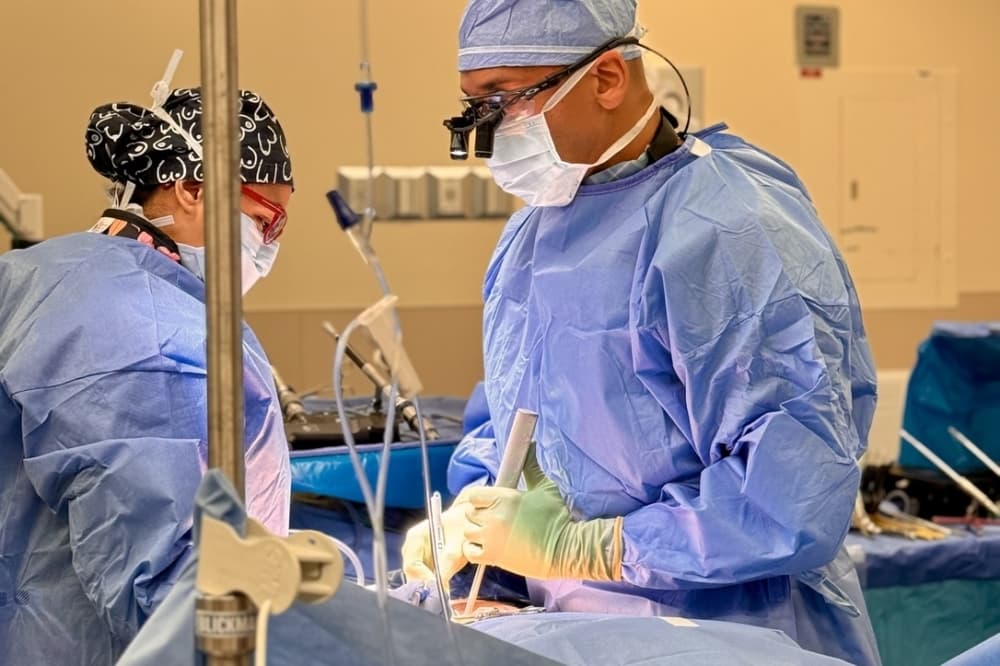
Yadhati performed a robotic navigated spinal interbody fusion on an adult patient and an endoscopic spine surgery.
Both techniques are significant steps forward in spinal care, he said, because they improve the safety and accuracy of the surgeries and minimize invasiveness and recovery time.
Diving in deeper
Before moving to Austin, Yadhati worked as a spine surgeon in Rhode Island for about seven years. He joined ARC in late 2025, bringing knowledge and experience with the robotic-assisted spinal fusion technique.
In that procedure, the robot scans the patient’s spine and creates a “very, very finely detailed bony road map to someone’s spine,” he said. Using that information, the surgeon is better able to plan the exact locations of screws and other implants to be placed in the spine, which allows the surgeon to minimize the size of incisions and the amount of muscle cut.
“We’ve kind of already done the surgery in some ways before the patient is even asleep in the operating room,” he said. “We know exactly where those screws are going to be.”
Endoscopic spine surgery, Yadhati said, is a minimally invasive technique to treat sciatica, or pinched nerves. Endoscopy involves inserting a tiny camera and light into the body allowing doctors to view the area in need of treatment.
The “old-school way” of doing these surgeries involved a 1-inch incision, he said, but the new technique gets that incision down to less than a centimeter. Yadhati said endoscopic spine surgery is a technique that he learned more recently and is glad to be able to offer his patients.
Why it matters
“If I were dealing with [these problems], these are the techniques I would want done on my back,” Yadhati said. “That’s the main theme that I try to anchor a lot of my decisions in. If I’m the patient, or my mom, dad, brother or wife is the patient, how do I want them to be going through a surgery?”
He said the accuracy and precision afforded by these techniques make the surgeries safer, less painful, and easier to recover from.
“I want my patients to be getting the absolute best and safest surgery time after time after time, and that’s what the technology has really afforded us,” he said.
What’s next
Yadhati said he believes these technologies will be a key part of further progress in spinal care in the years to come, and that Austin Regional Clinic is “at the helm and at the lead of it.”
“I think this is actually just the beginning of what we will be able to do over the next 10 [to] 20 years for patients,” he said.