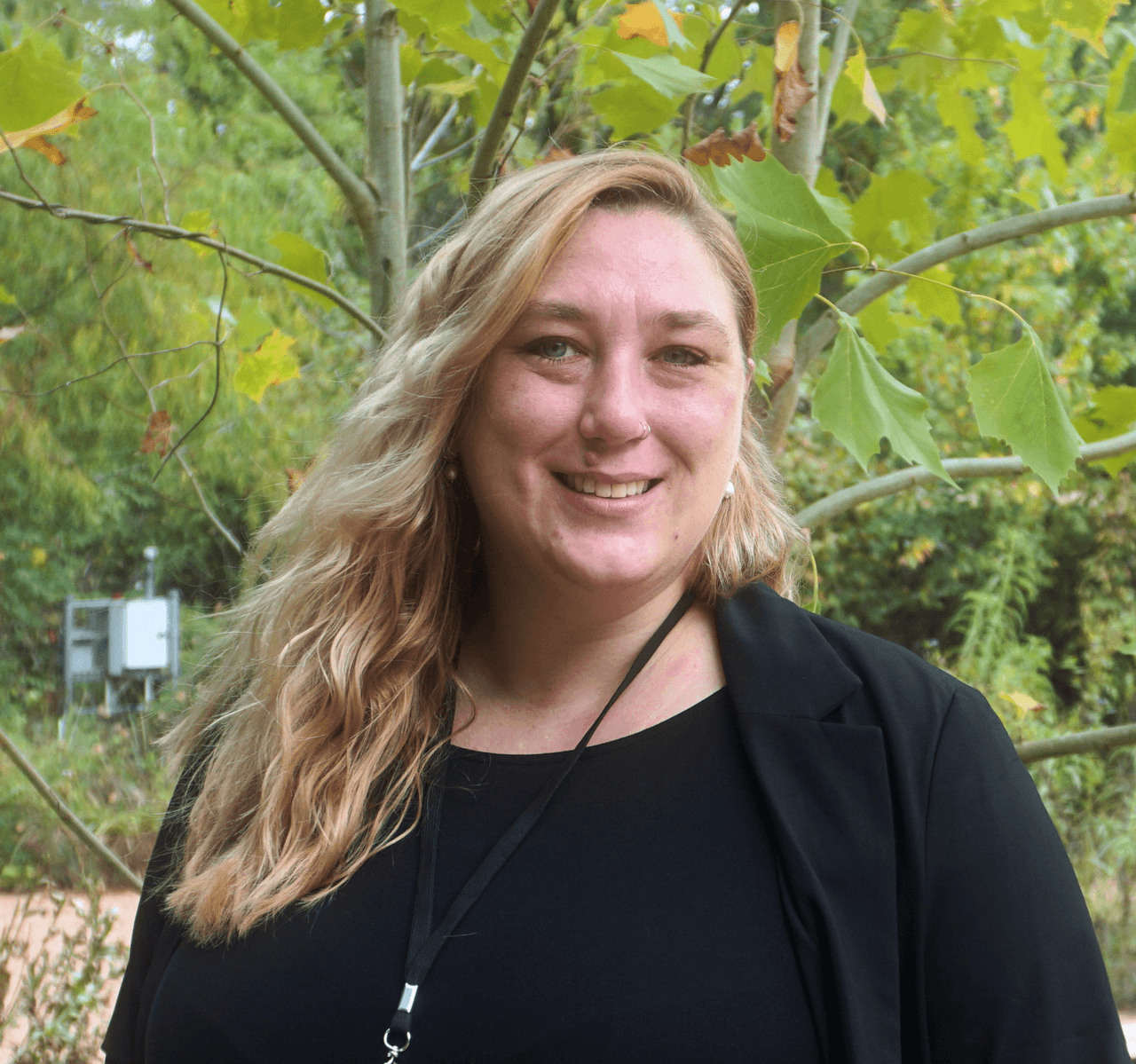
After Bayou Land Conservancy’s executive director of 10 years, Jill Boullion, retired earlier this year, Dr. Anna Weiss stepped into the role on Aug. 24 to continue upholding BLC’s mission—to preserve land along streams for flood control, clean water and wildlife.
Weiss interviewed with Community Impact about her time in Galveston working in community development and how that experience led to her position as BLC’s new executive director. BLC will celebrate 30 years at its Nov. 14 gala at Highland Pines Golf Club.
What’s your career background and what made you choose this role at Bayou Land Conservancy?
Prior to this, I was based in Galveston at a collective impact community development organization called Fishing Galveston, where I had the opportunity to work on a lot of projects that have to do with things like parks and green space, resilience, things like heat and flooding.
And ... we had moved back to Texas, and I ended up there. The reason, though, was I really want to be boots on the ground when it comes to doing this type of work. And so being able to see that Bayou Land Conservancy is actually physically setting the land aside and doing that, not just talking about it—that was very exciting.
What are some of the first goals you plan to tackle in your new role as executive director?
There's definitely a couple of things that I've sort of walked into that are really exciting opportunities. The first one is thinking about some of the land along the Spring Creek Nature Trail. We're definitely looking at a lot of land along that creek, and that could potentially come together to create an even longer system. That would be of use to the community [because] trails are providing space for recreation, space for socialization and it helps connect the region.
… But right next to that is also this proposed Scarborough development that is about 7,000 homes that they're proposing building on about 5,500 acres of flood plain and floodway. So [if] you're putting homes in an area that floods, you're putting those people at risk.
But on top of that, typically, when you've got, forested, wooded, natural areas, the ground acts like a sponge, and it helps to soak up the water, and the trees help slow it down, and all the plants help to slow that water down. It helps slow flooding and prevents flooding. When you put concrete and houses and things on top of that land, the water has nowhere else to go, so it's going to move. Now, not only is the area and the floodplain that you built in flooding, but all the homes downstream of that so you're basically creating a funnel for all of that water…
A lot of people are very concerned , so as somebody coming in new to this, I'm really just trying to learn as much as I can about the perspectives, about the viewpoints, what's been done, what's worked, what hasn't worked, and kind of see the best place that we can plug in to help with that situation and to work with the folks that have already been doing all of that work
How can the community get involved in supporting and protecting BLC?
There are some very direct ways that you can work with us to do your part and more indirect ways.
So some of the most direct ways are joining us for our work days out in the field. As part of our land preservation, we need to make sure that all of the good things about that land stay good, [like] the plants are still growing, the water's still flowing, we still have all the animals and things. We have volunteers that go out and help us do things like make sure that we don't have any invasives that are coming in. [They] make sure that the land is still in good condition. We have folks that help us build trails. We've got a trail crew, and so if you like to build things, you can come out and help us there. We have our invasives removal team and they get out and they pull out all of those plants that are choking out our natives. When it comes to these issues of land preservation and flooding resilience, these are policy issues at the end of the day as well. They're scientific issues, but the science is pretty cut and dry.
We know what helps, what works [and] what doesn't. At the end of the day, a lot of the issues of actually making those things happen come down to policy, and so it's really important for community members to know that they have a voice, that there are officials they are electing that they can speak to about how they're feeling about things like development encroaching on natural spaces or they can talk about how much better green infrastructure is compared to our gray infrastructure.
What are some major components of BLC that many people may not know about?
I think another important thing that sometimes can get lost in the land preservation conversation is the focus on the land, of course, but it's [also] the people's side of things.
And who are we helping when we're preserving this land? Who are we serving? Who gets the benefits? A lot of times [in] land preservation, people are doing it for tax reasons, financial reasons [and] you have to own land in order to do that. When you have people that don't have that same level of wealth to set aside land, are they actually going to be getting the benefits from upstream? [We’re] really making sure that we're looking at the whole picture, we're not just saying, this is good for one specific place and one specific property. When we're trying to assess where we're actually going to preserve land, one of the things we look at is, is there a broader community benefit that goes beyond just maybe sort of one little area? ... We have our equitable community engagement committee that works really hard to make sure that we're bringing in people of all backgrounds, all demographics, to understand that ... conservation and wildlife and outdoors is something that benefits everyone.
It's something that everybody should have a right to.
What led you to get involved in non-profit work?
I was in college… [and] I was studying anthropology to be a scientist and studied human evolution and all those fun things and superstorm [Hurricane] Sandy hit. [It] took my hometown. It was a big, big thing for a lot of people. And for me, it really was clear climate change is real. It's here. It's not something that's happening far, far away to other people. It is in my back yard, happening to my friends and neighbors, and so that really changed things for me. ... I love anthropology; I love ... knowledge for the sake of knowledge, but how can we use this knowledge and the science to help communities like the one that I grew up in?
And so that was sort of where I shifted my whole career track and idea and went to get a PhD in geology so I could get the credentials. … I worked as a professor for a couple of years, which was great … college education is really important, but it was not on the ground. I wanted to be in the dirt, so that’s eventually what brought me into the world of nonprofits.