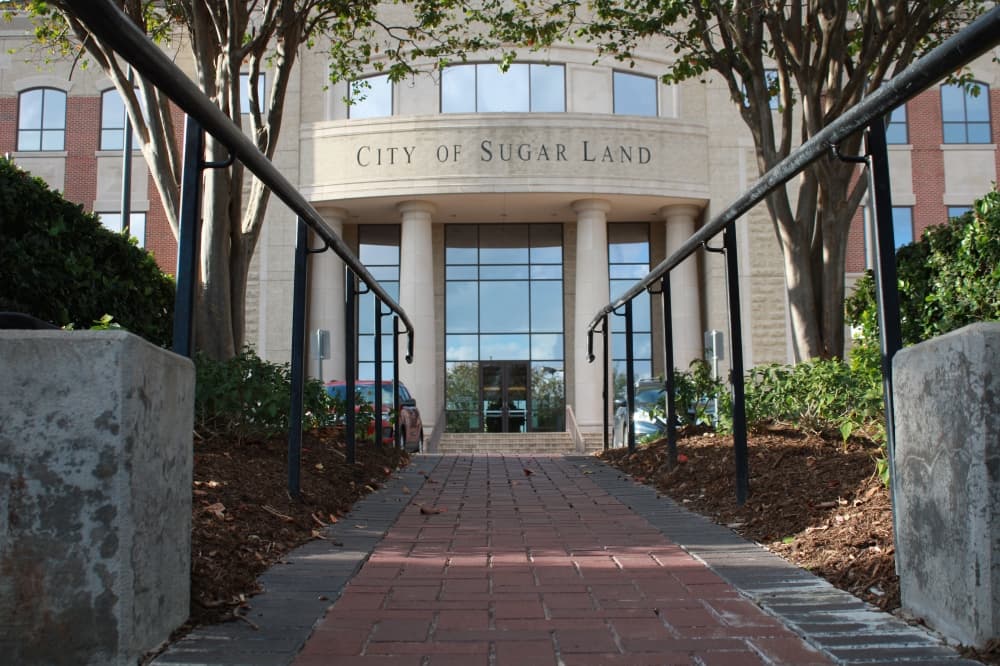
The city of Sugar Land is considering increasing the minimum requirements for companies to receive tax abatements.
The big picture
A tax abatement is a performance-based economic agreement that reduces a company’s property tax liability on the new value created by an investment for up to 10 years.
The agreements are used as an economic development tool by cities to attract new investment and support business expansion and retention, said Alba Penate-Johnson, the city’s assistant director of economic development, at a Sept. 1 City Council meeting.
The agreement only applies to new property value—specifically personal or real property and some repairs—and requires designation of a reinvestment zone by the city. School districts do not participate but counties may choose to participate separately.
Sugar Land’s targeted industries include:
- Information tech
- Advanced manufacturing
- Life sciences
- Business and professional services
- Tourism
The city’s policy was last updated in 2024 and is up for reconsideration as the city approaches the two year state statue for review, Penate-Johnson said.
What’s changing?
Businesses previously had a $4 million investment minimum with the option for the city to do the agreement through a Chapter 380 agreement.
Under the proposed revision, properties would need to have a $10 million minimum investment and the Chapter 380 agreement has been removed as it is a separate program, Penate-Johnson said.
“The intent of the changes is to focus the tax abatement program on larger more significant capital investments while maintaining a straightforward structure,” Penate-Johnson said.
Penate-Johnson said the city currently has seven active tax abatements with the last approval in 2021. She said she has not seen many projects under $10 million, so this move would likely not impact businesses as the city has other programs available.
Get involved
To apply, businesses can fill out a form on the city’s website or reach out to the economic development office, Penate-Johnson said.
Looking ahead
The item will come to the City Council for consideration in October, Penate-Johnson said.