





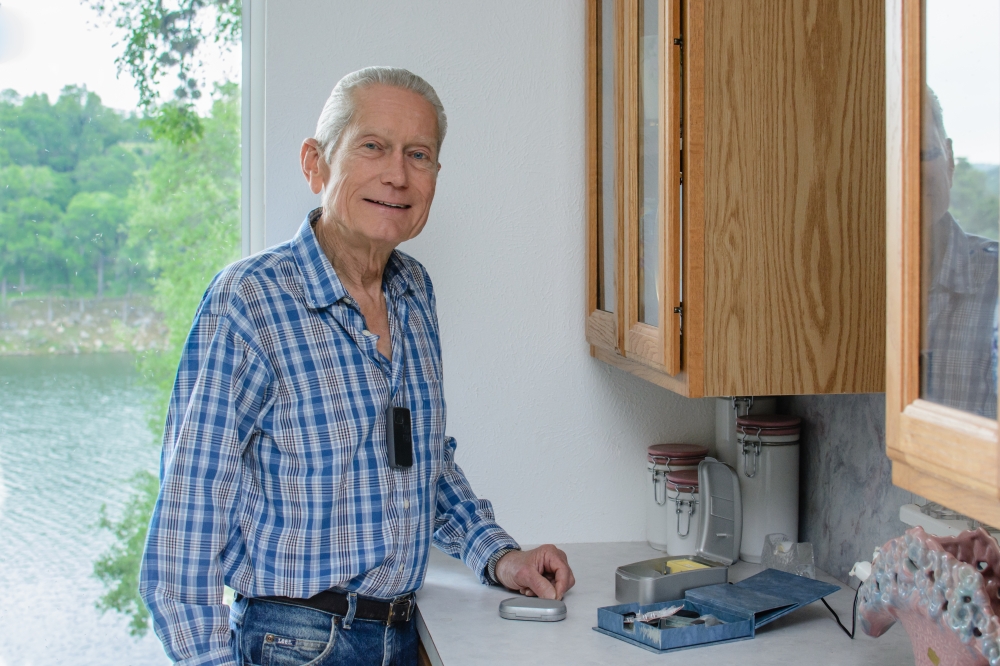
The ability to hear connects people to the world around them, and even mild hearing loss can lead to complications such as social withdrawal, reduced work productivity and an increased risk of cognitive decline. Today, over 38 million Americans over the age of 12 have some type of hearing impairment, but only a third of those individuals wear hearing aids.
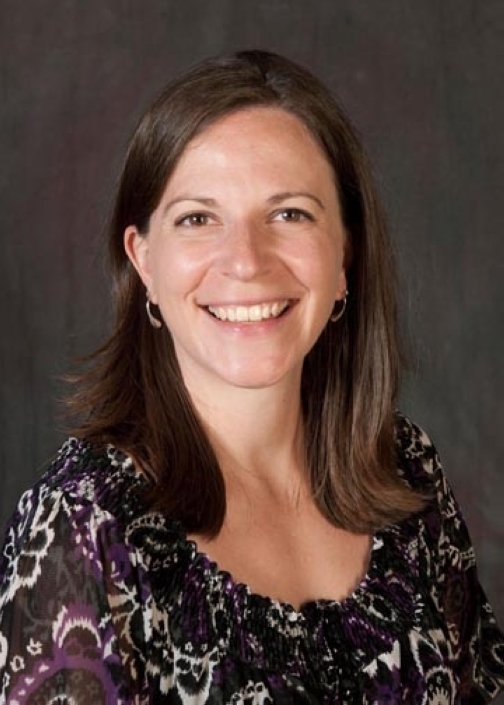
Austin Regional Clinic audiologist Heather M. Lamberth, Aud, FAAA, CCC-A has dedicated her life’s work to reconnecting people with others and the environment, knowing the best way to improve hearing and reduce the risk of impediments is by seeing an audiologist.
“When someone comes in for hearing loss, it’s evident that they’re having some communication difficulties—and the big thing about that is that it separates people from people and they become more withdrawn,” Dr. Lamberth said. “Family members are increasingly frustrated, and that leads to frustration for everybody. And in fitting [hearing] devices, we basically reconnect them. It’s an extremely rewarding experience.”
Dr. Lamberth said some of the most common signs of hearing loss are patients reporting that people speaking to them are mumbling, or that their family complains that they cannot hear them. Asking for repetition more frequently and having to turn up the volume on the television or the telephone are also telltale signs.
“The statistics out there are actually that people experience seven years of some trouble before moving forward with getting an evaluation,” Dr. Lamberth said. “So oftentimes, by the time we see individuals, they’ve been dealing with these difficulties for years and just reach a kind of threshold where they recognize that it’s time to find out what’s going on.”
Contributors to hearing loss include genetic predisposition, genetic disorders, birth defects and excessive noise exposure, as well as health factors like diabetes, high blood pressure, high cholesterol, nicotine use and alcoholism.
New legislation by the FDA allows for hearing aids to be available over-the-counter as early as this fall, but Dr. Lamberth warned of several limitations. Over-the-counter hearing aids will only be appropriate for a limited number of people who perceive a mild to moderate difficulty. The fitting and programming of the devices is done entirely by the user, and follow-up care remains limited.
“A good comparison could be like reading glasses. They serve a purpose for those who need just a little bit of help, and over-the-counter [hearing aids] will serve as sort of a similar entry-level type purpose,” Dr. Lamberth said. “But individuals who have hearing loss that’s greater than just a mild loss, over-the-counters are not going to be an appropriate option to consider.”
Because the type and degree of hearing loss varies, it is important to be formally evaluated by an audiologist as the first step in the process if symptoms arise. Some hearing loss is treated medically or improved by surgery, and some simply requires removing an excessive amount of wax buildup. However, Dr. Lamberth said most often, amplification through hearing aids is the best treatment method to address hearing loss.
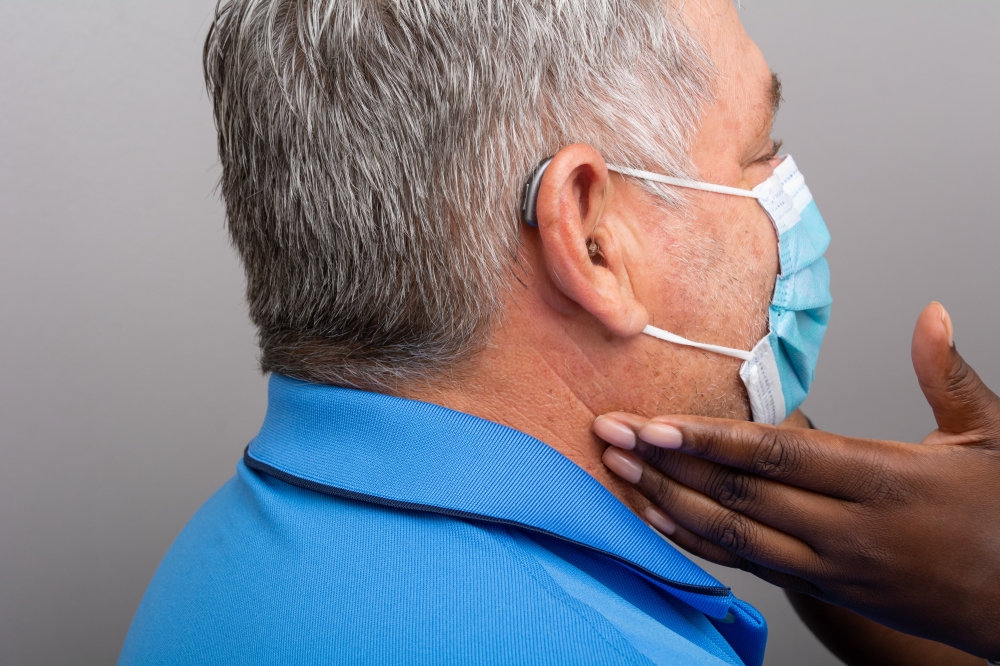
“Hearing aids are probably one of the most advancing technologies out there,” Dr. Lamberth said. “We’ve consistently seen significant improvements at such a rapid pace, from devices that keep getting smaller and smaller to general improved processing performance, to features like Bluetooth connectivity and rechargeability.”
There are several different types of hearing loss. With sensorineural hearing loss, the issue resides in the inner ear, or the cochlea, and behind the cochlea. It is most often associated with general age-related change, but is also seen in some children who have congenital hearing loss, which is hearing loss present at birth.
Another type is conductive hearing loss, which means the problem resides in the middle ear space: the tympanic membrane, eardrum and three bones behind the eardrum. Patients with conductive hearing loss often require an Ear, Nose & Throat (ENT) physician after being diagnosed by an audiologist.
“That type of hearing loss is potentially medically or surgically treated,” Dr. Lamberth said
Conductive hearing loss is quite common in children with ear infections, but tends to resolve once the ear infections are treated. Mixed hearing loss, which is a combination of both sensorineural hearing loss and conductive hearing loss, is far less common.
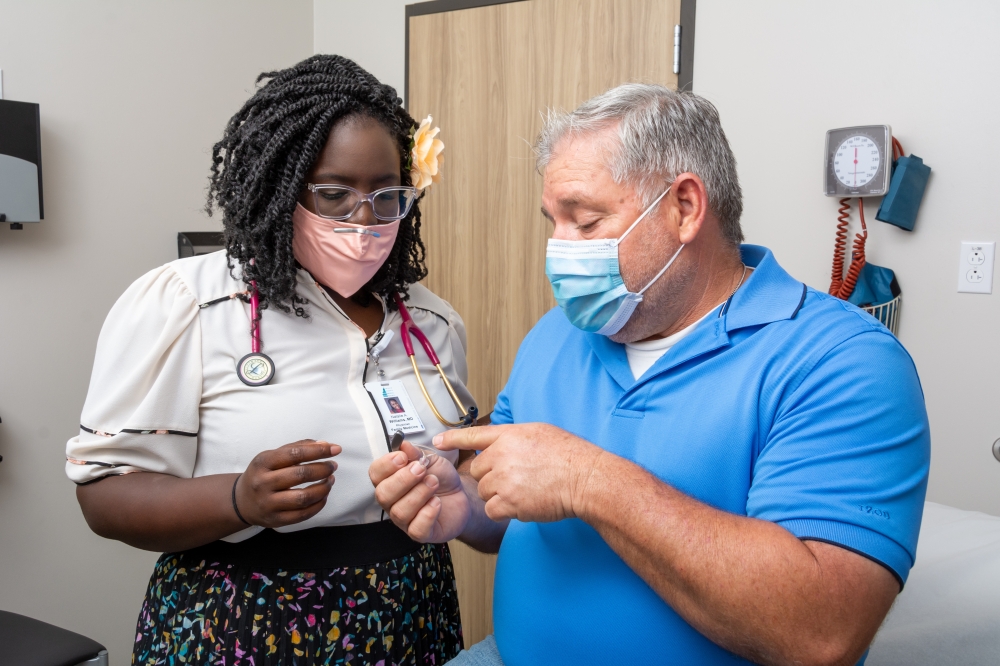
Once hearing loss is diagnosed, audiologists sit down with individuals to discuss all aspects of hearing aids, from style, size and design to distinctions in technology. The patient’s day-to-day routine is considered, as well as the individual sets of listening demands that a person may have.
“We take into account their hearing loss, the extent of that loss, what their unique listening situations tend to incorporate, and then talk about what would best meet those needs,” Dr. Lamberth said. “We’ll also do some objective testing to confirm that the actual programming of that device is appropriate, accounting for not only the hearing loss but also the anatomy of the ear canal.”
After a fitting, extensive discussion is required related to realistic expectations and the amplification adjustment process, which typically takes several weeks. Once completed, periodic follow-up visits are standard for troubleshooting, adjustments and general questions.
“I think one of the most common misconceptions is that it’s just a matter of the device itself, when in actuality, the transition into amplification is such a process that involves so much more than just the device—and that’s where the audiologist plays a really vital role,” Dr. Lamberth said.
For those who may be considering an over-the-counter option, Dr. Lamberth said seeing an audiologist is still the first step, as there is no way to know whether or not over-the-counter hearing aids would be a good fit before having a formal evaluation.
“The recommendation for trying to preserve your hearing or keep hearing as optimal as possible is to stay healthy,” Dr. Lamberth said. “The ears are a larger part of the system. So making sure that you maintain a healthy lifestyle, good diet, staying hydrated, minimizing noise exposure or using hearing protection anytime that you’re around noise, those things all promote healthy hearing.”
From Round Rock to Kyle, Austin Regional Clinic has five locations with audiology departments across the Austin metro. Make an audiology appointment online or visit their website at www.austinregionalclinic.com to learn more.
The above story was produced by Community Impact's Storytelling team with information solely provided by the local business as part of their "sponsored content" purchase through our advertising team. Our integrity promise to our readers is to clearly identify all CI Storytelling posts so they are separate from the content decided upon, researched and written by our journalism department.