In recent years, Hays County has experienced a population boom. Dripping Springs, once a small town in the northwestern area of the county, has grown by over 500% since 2010, according to the U.S. Census Bureau. The city has been working to increase service capacity as the population has grown. Since 2015, the number of wastewater customers served by the city of Dripping Springs has increased by approximately 600%.
After a seven-year legal setback, the city is making progress on expanding the South Regional Wastewater Reclamation Facility, the city’s main treatment plant. The expansion will increase the facility’s treatment capacity from approximately 162,500 to 822,500 gallons per day—a 406% increase.
The overview
In the 2010s, Dripping Springs officials noticed the area’s increased growth, and in 2015 they applied for a Texas Pollutant Discharge Elimination System permit, or TPDES, from the Texas Commission on Environmental Quality. The permit was granted in 2019, but an environmental advocacy group, the Save Our Springs Alliance, sued TCEQ over concerns about wastewater being discharged into Onion Creek.
After seven years of litigation, the Texas Supreme Court sided with the TCEQ and the city in 2025. Now, the city is making progress on expanding wastewater infrastructure, more than 10 years after the need was identified. Costs have risen since then, and the city needed an additional $51.5 million for the project, which it secured through a loan from the Texas Water Development Board.
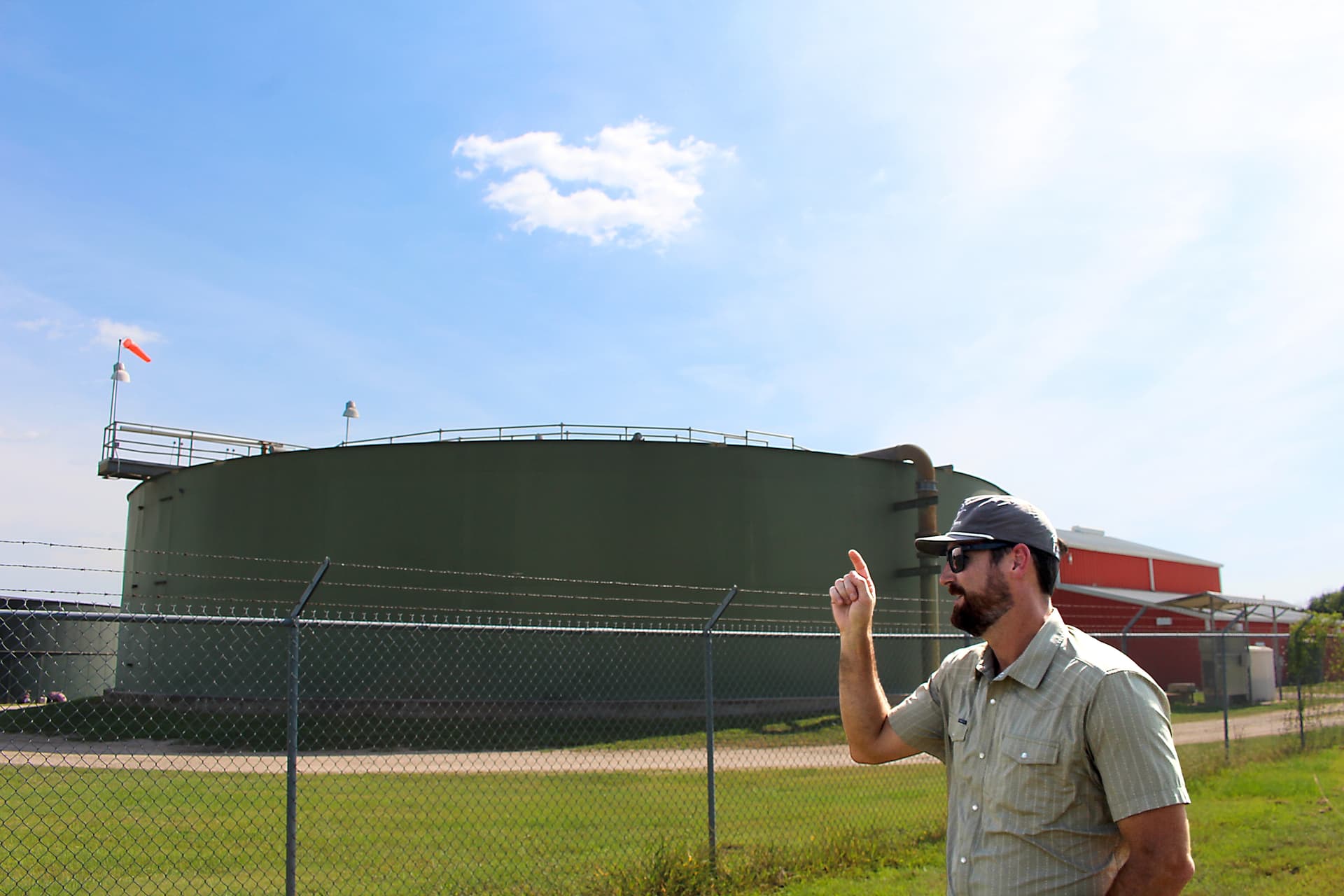
For several months, the South Regional Wastewater Reclamation Facility, or SRWRF, has been near capacity and unable to accept most new large connections.
The current facility uses a Texas Land Application Permit, which allows treated wastewater to be used for irrigation. Under a TPDES permit, treated wastewater may be discharged into waterways, provided it is treated to a higher standard and meets the other requirements.
Diving in deeper
Utilities director Gray Lahrman said that despite the permit, the city has no intention of discharging wastewater into Onion Creek.
“[The permit] allows us to do it in case of emergencies, and that would be the only time it ever happened,” Lahrman said. “The environmental impact would be nil in my opinion.”
The TCEQ permitting process is designed to ensure that no facility is allowed to discharge wastewater that causes aquatic toxicity, endangers the drinking water supply or results in the bioaccumulation of toxic substances that threaten human health, according to TCEQ spokesperson Laura Lopez.
“The effluent limits in the draft permit will maintain the existing uses of the surface waters along the discharge route and preclude degradation of water quality,” Lopez said in an email to Community Impact.
The discharge permit allows the city to expand the south regional facility without acquiring additional land. Lahrman said the city will store treated wastewater that cannot be otherwise used for irrigation.
The local impact
Dripping Springs city council issued a temporary development moratorium from 2021-2022 due to a lack of wastewater availability. The moratorium was lifted in September, when the city was still in litigation regarding the SRWRF expansion. City officials warned that applicants would still face challenges to their projects. Developers have had to find other solutions for wastewater, such as building their own temporary wastewater treatment plants. Another option is pump-and-haul, a wastewater storage tank that is periodically emptied and hauled away for treatment elsewhere. The city has only approved three pump-and-haul plans in recent years.
Several ongoing and upcoming developments that are implementing alternative wastewater solutions will add over 3,800 lots or units to the Dripping Springs area. Additionally, the New Growth subdivision is waiting to proceed with the project until the SRWRF has additional capacity.
Deputy City Administrator Shawn Cox said that despite the treatment plant being near capacity, the city has been able to accept some new connections. Lahrman added that the city would not add most new large residential connections, except in special circumstances, such as an existing agreement.
“It hasn’t stopped developments from being able to tie in,” Cox said. “It’s just we’re not going to tie in a large subdivision to it because it can’t handle that.”
The projections
In May, city council voted to increase wastewater service rates for the first time since 2022 due to rising operational costs. The base fee was increased from $28.88 to $43.32, and the usage rate was increased from $4.05 to $5.67 per 1,000 gallons for residential customers.
The new rates, which will be reflected on September bills, will increase bills by $20-$30 per month on average, depending on usage. The average residential customer uses 6,578 gallons per month, and will see their bill change from $55.52 to $80.62, more than a 45% increase.
Commercial wastewater customers will also see rate increases, including a $5.99 usage fee. Based on the scenarios presented to council, commercial customers could see their bills increase by $80 to $400 on average, depending on usage.
Cost to the city
The plan includes an increase in the general fund contribution from $980,000 to $2.5 million through 2030 to offset the cost of providing wastewater services and to mitigate customer fees.
"The primary driver of these increased costs has been the significant growth in the city’s wastewater customer base and the corresponding increase in system operations and service demands,” Lahrman said in an email to Community Impact.
Looking ahead
City officials have been working to expand wastewater infrastructure for more than a decade. By December, the city plans to issue a notice to proceed for the first phase of the project to the contractor with the winning bid.
Community Impact reached out to the Save Our Springs Alliance for comment, but did not hear back before press time.