On the heels of what proponents have called “historic” property tax relief, some Texas lawmakers are questioning whether the state can afford to continue increasing the tax exemptions passed during the 2023 and 2025 legislative sessions.
The big picture
The state of Texas does not charge property taxes, meaning homeowners are taxed by local entities such as school districts, cities, counties, hospital districts and municipal utility districts.
However, lawmakers can place limits on how much local governments can increase taxes each year and require tax exemptions for certain groups. When the state creates or expands tax exemptions, it is often constitutionally required to send money to school districts to ensure they do not lose revenue as a result of the lower taxes.
Texas is spending $51 billion on property tax relief in fiscal years 2026 and 2027 alone, previous Community Impact reporting shows. Unless the legislature rolls back existing tax exemptions, the state will be required to spend that much or more on tax relief every biennium, lawmakers said.
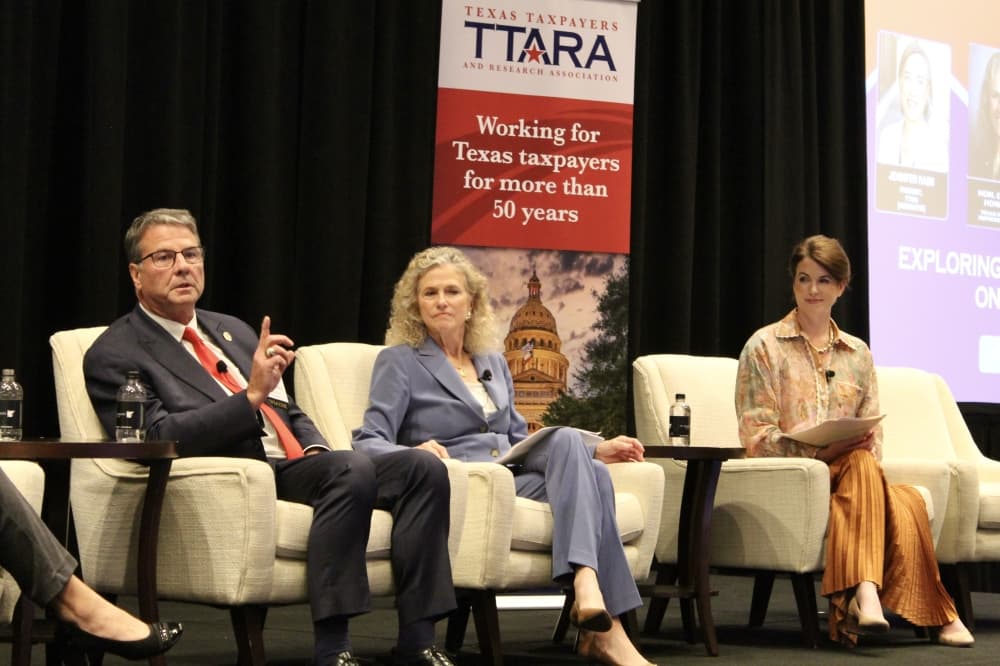
“We're kind of maxed out at what we can do for property tax reform, from a budget perspective,” said Sen. Charles Perry, a Lubbock Republican and member of the Texas Senate Finance Committee, during a Nov. 20 event hosted by the Texas Taxpayers and Research Association.
In June, Gov. Greg Abbott told reporters he believed Texas could afford to spend $51 billion on tax relief because of the state’s “robust economy,” citing the nearly $24 billion budget surplus that was available this year. Rep. Donna Howard, D-Austin, said Nov. 20 that Texas has seen high surpluses in the past two legislative sessions due to federal funding from the COVID-19 pandemic and high sales tax revenues, adding that “the money is not still coming in.”
“I do have a lot of concerns, as the senator does, about how in the heck are we going to pay for this going forward?” Howard, a House Appropriations Committee member, said. “$51 billion ongoing, it's a huge amount to continue to support. And to think about doing anything more seems very fiscally irresponsible to me.”