The Kyle City Council approved an agenda item requesting options for a third-party forensic audit to evaluate potential financial misconduct, fraud or misappropriation of funds. (Michael Milliorn/Community Impact)
The city of Kyle is projected to face a budget shortfall at the end of fiscal year 2025-26. As outlined by city staff in a May 16 presentation, the city will need to make up a projected $14.2 million shortfall in its general fund, according to previous Community Impact reporting.
Multiple factors contributed to the shortfall, including an increase in expenditures, a decline in revenue, economic conditions, significant city growth, expanded staff and rising operational costs, according to previous Community Impact reporting.
At a June 2 meeting, the City Council approved an agenda item requesting options for an independent third-party forensic audit to evaluate any financial misconduct that has resulted in the budget shortfall.
What happened
The council approved the request for forensic audit options, including proposed scope, costs and timelines, with a 5-2 vote. The audit’s scope may include a review of potential fraud, misuse of taxpayer funds and financial transactions related to credit card expenditures, procurement practices, payroll and contract awards, according to agenda documents.
“We do believe it is our responsibility as elected officials to ensure that our taxpayer dollars are being managed appropriately, transparently and in accordance with all applicable policies,” said District 2 council member Melisa Medina.
Medina, along with Mayor Yvonne Flores-Cale and District 1 council member Courtney Goza, brought forth the agenda item to request the audit, according to agenda documents.
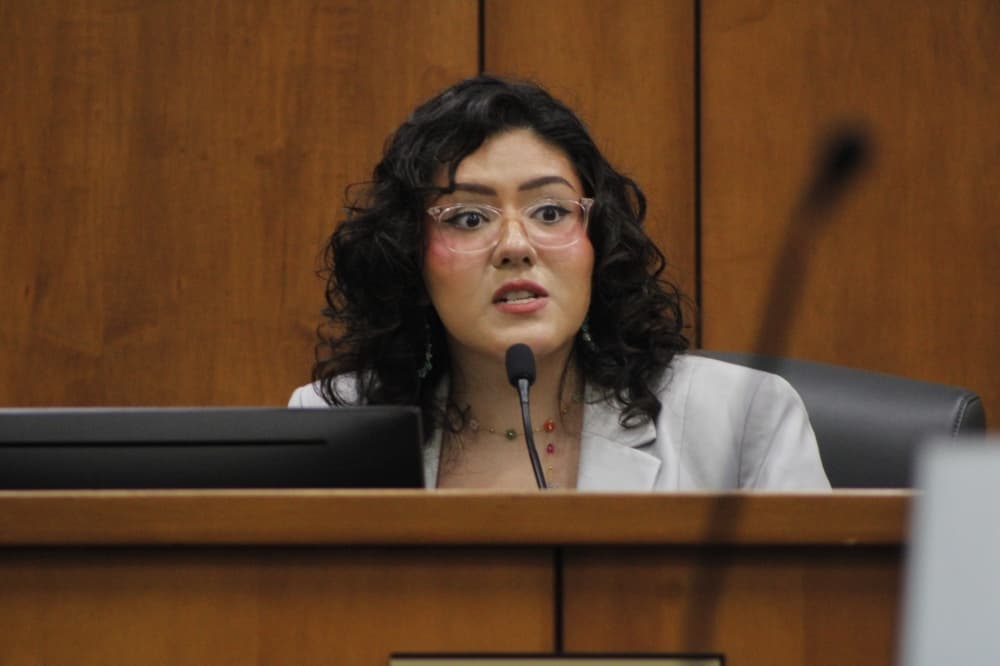
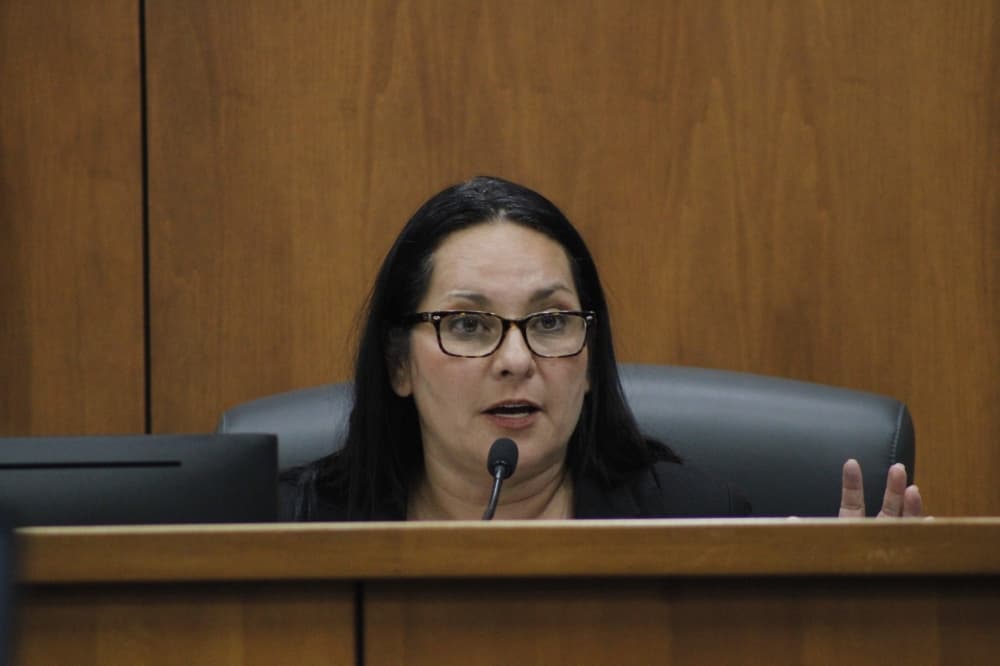
Mayor Yvonne Flores-Cale voices her support for a forensic audit at a June 2 council meeting. (Michael Milliorn/Community Impact)
The city undergoes an independent financial audit each year to review financial records, internal controls and accounting standard compliance, according to the city’s website.
A forensic audit would specifically search for financial irregularities and any misuse of funds, unlike the standard financial audit, said Flores-Cale.
“As elected officials, we have a duty to not only ask whether our financial statements balance, but also whether our systems are functioning as intended, whether safeguards are effective and whether taxpayers can have confidence that every dollar entrusted to the city is being managed responsibly,” Flores-Cale said.
The discussion
Medina, Flores-Cale and Goza emphasized their desire to approve the forensic audit in an effort to determine any wrongdoing and provide transparency to residents.
They assured the public that the agenda item was not meant to presume wrongdoing, draw conclusions or target an employee or department, but simply verify that proper safeguards are in place and strengthen public confidence in the city’s operations.
“Our residents expect accountability and transparency from their local government,” Medina said. “When questions arise regarding financial practices, one of the best ways to address them is through an independent review conducted by qualified professionals.”
The other side
District 4 council member Dr. Lauralee Harris and District 3 council member Claudia Zapata pushed back on the agenda item, questioning its necessity and the intentions behind its proposition.
A forensic audit would be used to gather information on accusations of a specific crime related to fraud or misappropriation of funds, Harris said. She voiced her confidence in the financial department’s ability and trust in the yearly financial audits.
“I am not aware of any legal actions that have been filed that necessitate a forensic audit,” Harris said. “This is not an audit to provide information for a prosecution; it is an exceptionally expensive fishing expedition.”
Zapata echoed Harris’ sentiments, referencing a lack of triggering legal events that would necessitate a forensic audit and stating her confidence in the finance department’s reporting.
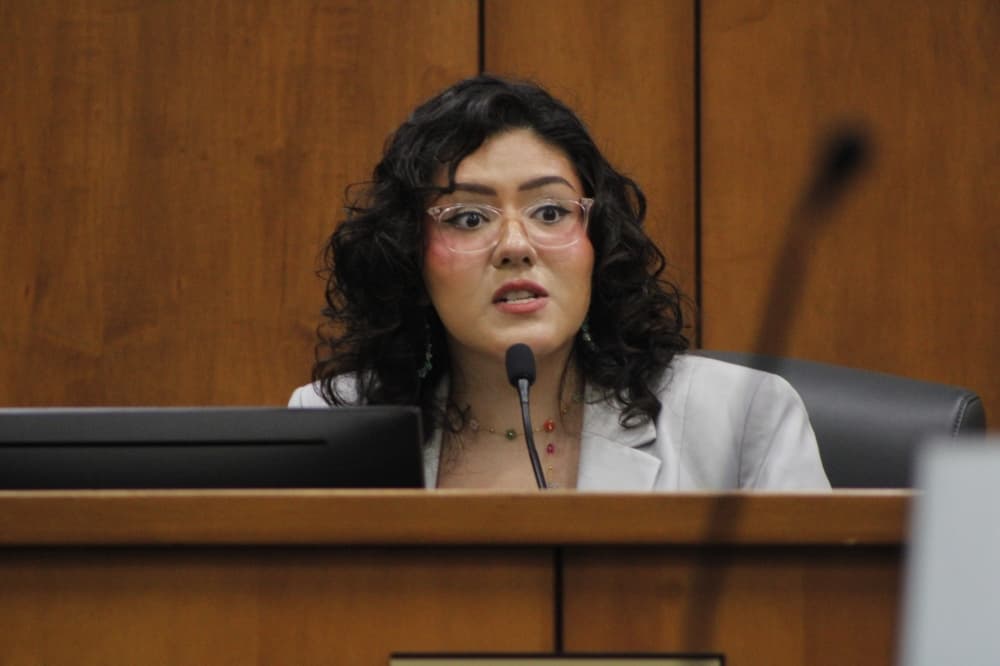
District 3 council member Claudia Zapata voices her opposition to a forensic audit at a June 2 council meeting. (Michael Milliorn/Community Impact)
Harris and Zapata both stated that the $14.2 million budget shortfall was a result of declining city revenues and is not a justification for a costly forensic audit.
“A forensic audit is hundreds of thousands of dollars with a scope this large,” Zapata said. “With a $14 million budget [shortfall], you are being asked to spend hundreds of thousands of dollars going on a goose hunt that our own finance director is not even giving credence to.”
Looking ahead
The agenda item was approved in a 5-2 vote. Flores-Cale, Medina, Goza, District 5 council member Marc McKinney and District 6 council member Michael Tobias voted in favor of the audit. Harris and Zapata voted in opposition.
City staff will now work to bring the council options for retaining an independent third-party firm to conduct the forensic audit. The options will include a proposed scope of what the audit will evaluate, potential costs and timelines, according to agenda documents.
“At the end of the day, accountability is about ensuring that the public's trust is earned, protected, and enforced through transparency and independent review,” Flores-Cale said.
San Marcos animal shelter to serve Hays County as Kyle reevaluates new facility plans