One year after flooding destroyed more than 300 homes and killed 11 people in Hays County, local cities are focused on finding ways to prevent similar damage in the future. In San Marcos, those ways include how to regulate new developments, what to do with a $25 million disaster-recovery grant the city was awarded in February and how to help residents affected by the floods get back on their feet. “We had all this pain that is still lingering,” San Marcos City Council Member John Thomaides said. “Now there is uncertainty. That is one of the keywords of the day. If I was living in [one of the flooded neighborhoods], I would be very uncertain of, ‘Am I going to flood again?’”
 Regulating building

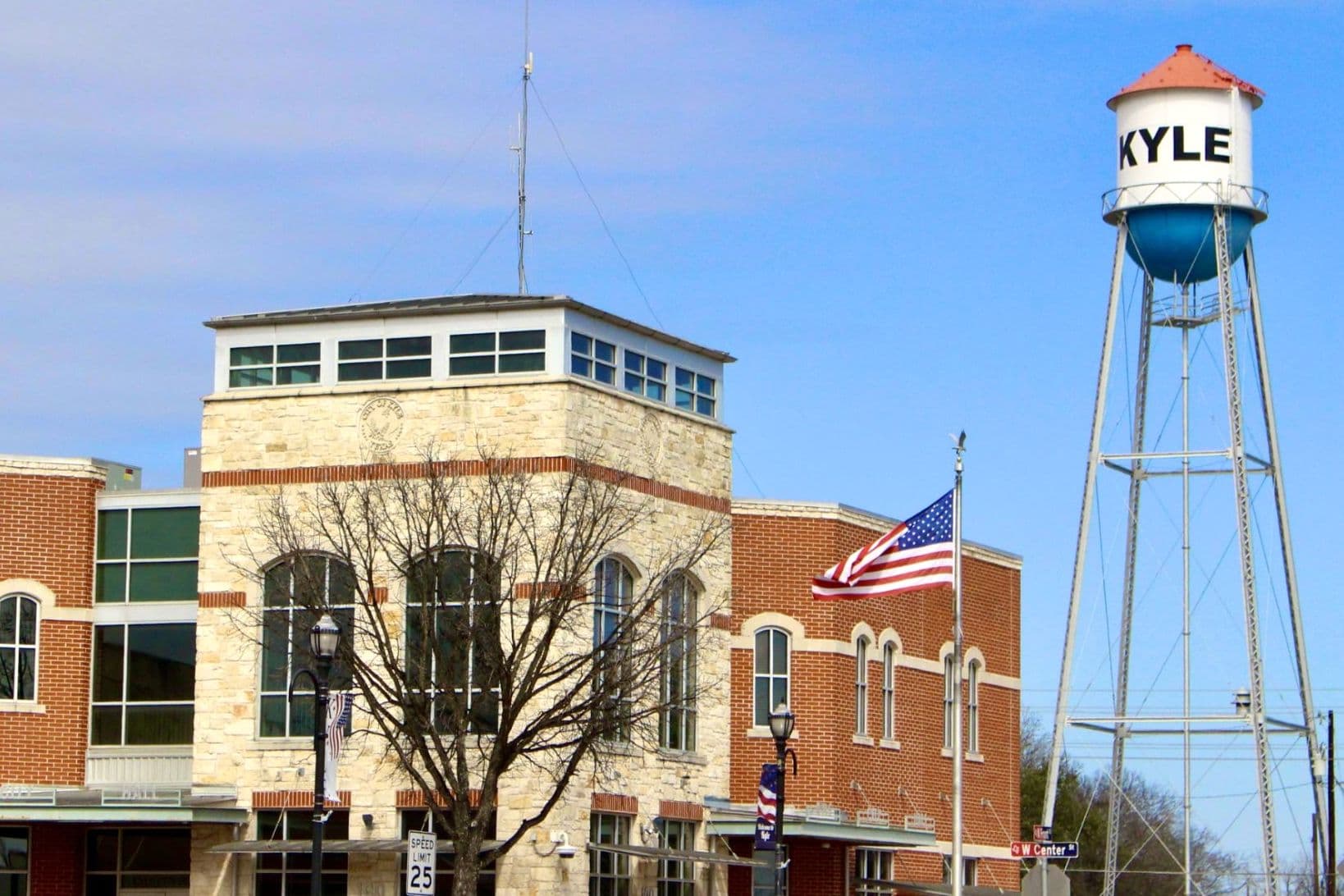
The Memorial Day weekend and All Saints’ Day floods in May and October 2015, respectively, highlighted the dangers of building structures in flood plains—areas prone to flooding. [polldaddy poll=9420653] Blanco Gardens, Fairlawn, CM Allen Homes and other neighborhoods in the flood plain were some of the hardest-hit in San Marcos during the two floods. San Marcos City Manager Jared Miller said the city is planning a variety of measures to make it more difficult to build in or near flood plains in the future. The city currently requires new developments be built at least 1 foot above the base flood elevation, or BFE—the lowest level that the Federal Emergency Management Agency determines structures can be built at and still qualify for flood insurance. Later this year the city will consider amending its flood plain ordinance to require new structures be built either 1.5 feet or 2 feet above the BFE. City Council Member Scott Gregson said discussions about requiring new structures to be built at or above the BFE determined by FEMA ignore the issue that the BFE continues rising. “We’re dealing with the symptoms,” Gregson said. “We’re not dealing with the problem.” Gregson said the city needs to closely examine development patterns in San Marcos and cities upstream of San Marcos on the Blanco River. As areas get developed and concrete is poured over the ground—for roads, sidewalks and driveways, also known as impervious cover, for example—where grass or other natural surfaces once were, less water is soaked into the ground during heavy rain events. That water instead falls on the concrete or asphalt and eventually finds its way to the river. City Engineer Richard Reynosa estimated the BFE in the city has risen as many as 3 feet in the past three decades, meaning a home built at the BFE in the ’80s would now be 3 feet under that level. “The Blanco River watershed is so big that [building] one Wal-Mart 50 miles away won’t make a big difference,” Gregson said. “You won’t really see [a change in the BFE]. But 1,000 Wal-Marts between here and 50 miles away, you’ll probably see a difference.” Increased development in Kyle, Wimberley and unincorporated areas of Hays County near the Blanco River could contribute to more rain finding its way to the river, which eventually passes through San Marcos. Cypress Forest, a 340-home neighborhood under construction near the intersection of North Old Stagecoach Road, West Center Street and Cypress Road in southwest Kyle, is one example of development occurring on a site that formerly allowed rain to soak into the ground. “There will be quite a bit of development [in southwest Kyle] and impervious cover that comes out of that,” Miller said. “Probably more there than anywhere else upstream of us in that [Blanco River] basin.” Miller said the city of San Marcos hopes to have conversations with upstream communities such as Kyle and Wimberley about implementing stronger flood plain regulations that would result in “no upstream or downstream impacts” on the flood plain. “I would be definitely interested to see what they’re proposing,” said Leon Barba, city engineer with the city of Kyle. “We’re ready [to have these conversations].”
Effect on homeowners
The rising BFE is a matter San Marcos residents Johnnie and Celia Rosales are well acquainted with.
During the 1998 flood, which has been classified as a 26-year flood—meaning that amount of rainfall in that period of time has about a 4 percent chance of occurring in a given year—according to the city of San Marcos, the Rosales family’s home took in 2-3 feet of water.
The Rosales family used federal funds administered by the city to elevate their home 32 inches—to the level of the 500-year-flood.
During the Memorial Day weekend flood—a 150-year flood, according to the city—the water crept 29 inches up the Rosales’ foundation.
“At the time [after we elevated our home] we were at the 500-year-flood,” Johnnie Rosales said. “Now we’re closer to the 100-year flood.”

Flood mitigation options
Aside from changes to its flood plain ordinance, the city of San Marcos is considering how to use a $25 million disaster-recovery grant that was awarded to the city by the U.S. Department of Housing and Urban Development in February. Among the potential uses for the funds are buyouts of property owners in flood-prone areas such as the Blanco Gardens and Fairlawn, assistance to residents to elevate their homes out of the flood plain and large-scale engineering solutions such as a proposed overflow channel for the Blanco River. “Our best value position is going to be in some type of diversification—a range of projects that we’re going to take in the short term as we analyze larger projects,” Miller said. The overflow channel would take the river east of its current alignment during flood events before rejoining it with the San Marcos River. According to a 2007 study by the city of San Marcos, the channel would cost more than $60 million to build. Land acquisition was not factored into that cost estimate. The city has not committed to the project yet and is awaiting the completion of a study by the Army Corps of Engineers examining the bypass’s feasibility. If the Corps of Engineers study determines the bypass is the best way forward, construction could begin as soon as winter 2018 or early 2019, according to a presentation given to City Council at its April 25 meeting. If the project moves forward it could be funded by the city, the Corps of Engineers, the Guadalupe-Blanco River Authority and other partner entities. A formal action plan will be created after the federal government releases the Federal Register, a document laying out the rules for how the city can use the $25 million. Once that document is released the city will have 90 days to formulate an action plan spelling out in broad terms how it will use the money. The action plan must be vetted and approved by HUD before any of the funds can be used.