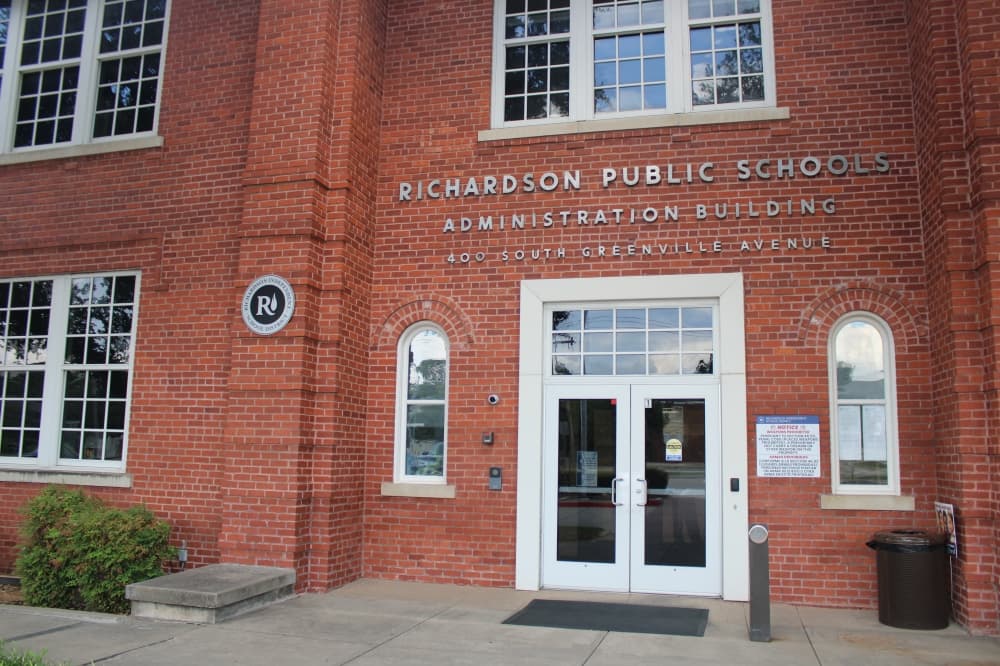
Richardson ISD will launch two microschool models in 2027-28 that will offer alternative learning structures in a smaller environment.
The board of trustees discussed a model for fourth and fifth grade and a program for kindergarten and first grade at the Oct. 29 meeting. The microschools will particularly target families who homeschool or attend a private school, or who may be considering other options outside of the district, Superintendent Tabitha Branum said.
The overview
The microschool programs were recommended initially by the district’s budget committee as a way to grow enrollment by offering educational models not currently available in RISD, Branum said.
“As we are seeing some declines in enrollment from multiple factors, we want to ensure that we have competitive programming that will allow us to recruit, retain or recover students,” Branum said.
The Studio, a hybrid model for fourth and fifth grade, will blend on-campus and at-home learning days with a project-based, hands-on curriculum. Lumen Academy is a holistic program with traditional education methods for kindergarten and first grade.
The RISD-led microschools will follow the same state standards and accountability measures as the rest of the district, said Morgan Cave, executive director of instructional technology and innovation.
Branum said the programs follow a tradition of choice programming within the district, including its magnet programs and Two-Way Dual Language Immersion Program, a microschool at Stults Road Elementary and Northwood Hills Elementary.
“When we think about the history of choice programming, Richardson ISD was one of the early districts who did it and did it remarkably well over 39 years ago with the investment of our magnet programs,” Branum said. “That has continued to be part of the heart and soul of what we do as a district.”
The district plans to launch the microschool pilots at campuses that have the capacity and leadership commitment for the program, Branum said, with one section at each grade level. Following the pilot in the 2027-28 school year, the district hopes to scale up the program to more campuses or grades.
More details
The Studio will use a hybrid model of on-campus and home learning days to offer project-based learning with immersive experiences aimed at developing student agency and leadership skills.
“This is really a living laboratory where we want to bring learning to life,” Cave said. “Student agency is the foundation.”
Monday, Tuesday and Thursday will be on-campus days with a focus on direct teaching, new content and collaboration.
Wednesday and Friday will be asynchronous learning days when students will complete work on adaptive platforms from home, work on projects and have off-campus experiences. Students will move through content based on mastery and can work at the pace that is best for them, Cave said.
“On [asynchronous] days our students would be really focusing on individual learning, and when they’re on-campus, that really high-energy collaboration and people-centered experience,” Cave said.
Cave said that the district will still be able to capture student attendance data on asynchronous days in order to continue receiving full state funding.
“We want to be clear that those are still learning days,” Cave said. “We’re not just in school for three days, we have five learning days. The difference is where does that take place.”
A closer look
Lumen Academy will offer a holistic education option for kindergarten and first grade that will include foundational academics, fine arts, daily movement and practical skills, Cave said. The program also prioritizes screen-free learning and real-world exploration.
“Kindergarten and first grade all over the district have a strong focus on social connections and interactions,” Cave said. “What makes [Lumen Academy] different is really the curriculum and the programming that goes alongside that.”
Lumen Academy will take a classical approach to its curriculum, with a focus on classical literature, fairy tales and myths, structured word studies and memorization and repetition.
A typical daily schedule in Lumen Academy would include literacy, word study, math, science and humanities, as well as:
A morning meeting with character habits, poetry recitation and greeting practice
Dining manners practice and unstructured movement at lunch and recess
Piano instruction and fine arts rotation
Run club or other fitness circuit during physical education
Diving deeper
Students for both programs must reside within the RISD boundary and will be selected through an application and lottery system.
For The Studio, Cave said the district will be targeting families looking for flexibility and personalized learning options, particularly families who are currently homeschooling, attending a private school or considering one of those options. Cave said the district will also be looking for highly motivated, curious and collaborative students who will be successful in the hybrid model.
“This is of course not a model for everyone,” Cave said. “We are looking at this as an opportunity to provide something for families that might potentially be looking at other options or choosing something else.”
Students in Lumen Academy should be receptive to teacher-guided learning, thrive on routines and enjoy mastery and repetition, Cave said. The district will target families who value classical literature, traditional learning methods and a screen-free experience.
Looking ahead
RISD is still working on developing the microschool curriculum and identifying and finalizing the elementary campuses for the pilot programs, Cave said. Additional next steps include recruiting and selecting staff, refining the program application process and marketing to potential families.
Branum said the microschools will not require significant added financial investment in next year’s budget, as the infrastructure and platforms for both models are already in place.
“[Microschools are] a part of creating more tailored opportunities for students but it’s not going to be at the cost of continuing to invest in our strong neighborhood schools,” Branum said.