Celina residents could see a number of changes to the city’s landscaping guidelines in the coming months, including possible limitations on the use of turf and potential year-round watering restrictions.
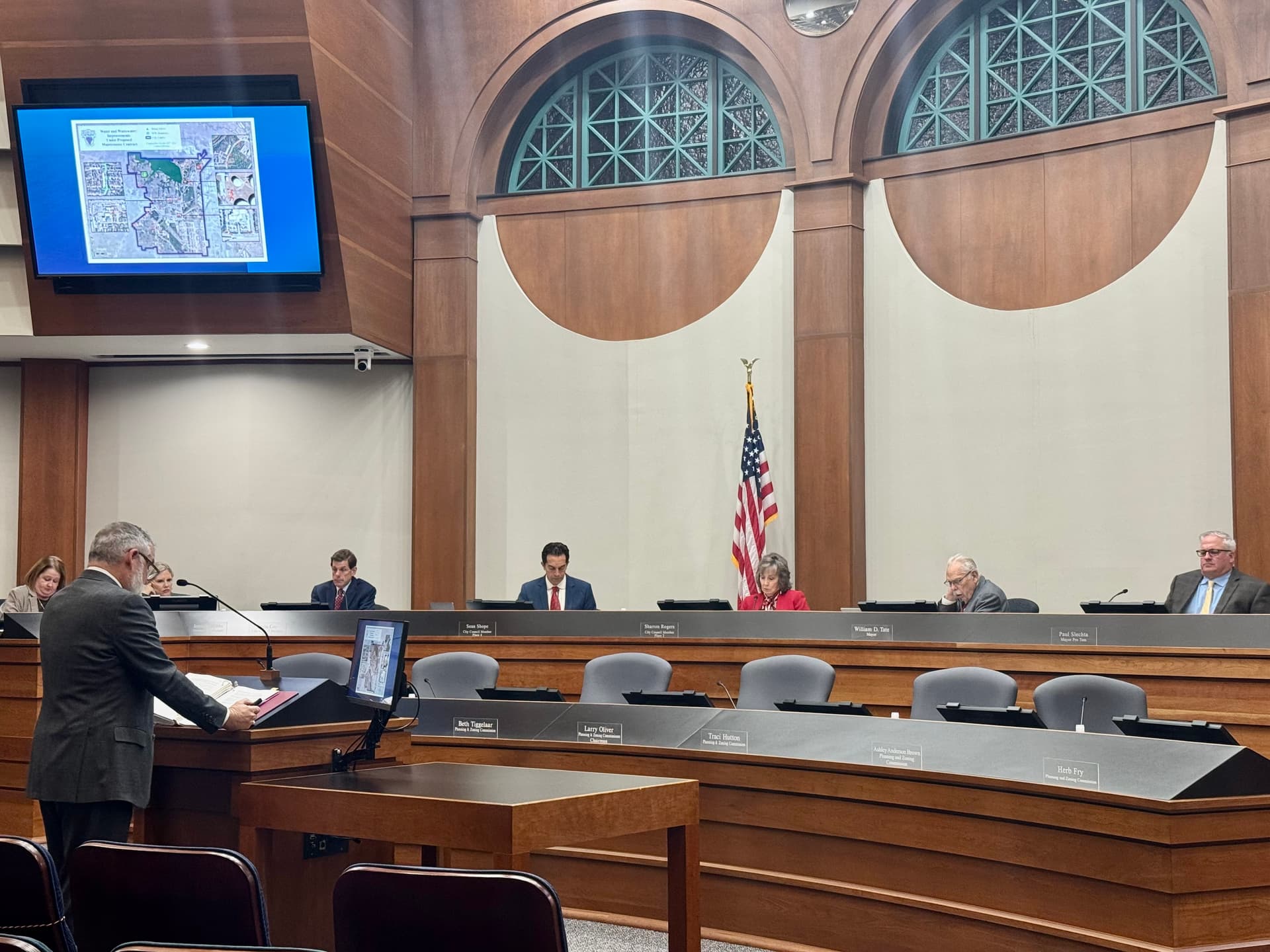
Celina City Council discussed making changes to city ordinances to encourage water conservation at a July 14 meeting.
Explained
The council’s discussion largely focused on the use and irrigation of turf, which is one of the city’s biggest water users during peak summer periods, Development Services Director Dusty McAfee said.
Unlike trees and shrubs, which are watered with drip lines or bubblers that deliver water directly, turf is generally watered with sprinkler systems that create water waste through evaporation, he explained. Alternatives to watering turf include xeriscaping, a landscaping method that uses native and drought-tolerant plants, or keeping turf but limiting irrigation, which can cause the grass to go dormant.
Council members already approved landscaping guidelines for medians on four- and six-lane roadways that will mandate xeriscaping for future construction instead of turf at a June 9 meeting.
The discussion
City officials plan to modify potential landscaping restrictions based on the type of property being regulated, according to the council’s discussion.
Council members were largely in favor of encouraging or requiring xeriscaping for commercial and multifamily developments but were concerned about the potential impact of regulations on single-family homes.
Council member Philip Ferguson, who used to live in Las Vegas, expressed support for requiring a certain percentage of lawns at single-family homes to be xeriscaped.
Ferguson and McAfee both emphasized that within xeriscaping regulations, the city can add design requirements to preserve Celina’s high design standards while still reducing water use.
“It’s xeriscaping, not ‘zero’-scaping,” Ferguson said.
Council members also favored exceptions for “functional” turf, which can include parks, sports fields, playgrounds and golf courses, according to the presentation.
Quote of note
When Celina’s Planning and Zoning Commission held a similar water conservation discussion at a June 18 meeting, members of the commission noted other places with stricter water conservation requirements like Las Vegas did not implement them until it became absolutely necessary, McAfee said.
Some council members leaned the other way and advocated for proactive policies to get ahead of potential water capacity issues in the future.
“I say we should set the regional standard. We’re in a water situation here, so why follow the crowd?” Ferguson said. “We’re going to be the biggest city in Collin County. Might as well put our big boy pants on and start doing it right now.”
One more thing
City officials may also consider implementing year-round water use restrictions, a consultant from Freese and Nichols said.
Right now, Celina uses a three-tiered Drought Contingency Plan that aims to reduce water use as drought conditions intensify:
- Stage 1: 5% reduction goal
- Stage 2: 10% reduction goal
- Stage 3: 20% reduction goal
Under the current framework, the city is supposed to operate without water use restrictions until drought signs begin to emerge and the Drought Contingency Plan is activated.
In reality, Celina often transitions between Stage 1 and Stage 2 restrictions without removing restrictions completely to accommodate the city’s water capacity issues, based on previous reporting and the city’s social media.
If officials decide to move to year-round restrictions, residents would be in a constant mandatory “conservation” stage akin to Stage 1 of the current guidelines, according to the consultant’s presentation. The three tiers of the Drought Contingency Plan would each intensify, with the goal of Stage 3 restrictions increasing to a 30% reduction in water use, per the presentation.
Next steps
Based on the council’s feedback, city staff will work with consultants to draft specific ordinances related to development and water usage.
Staff anticipates those ordinances will go before city council for approval later this fall, McAfee said.