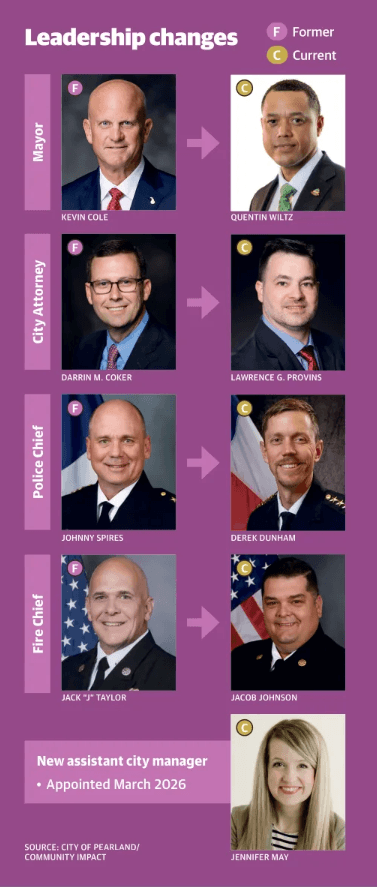
A new mayor, police chief, fire chief, city attorney and assistant city manager are among the leadership changes Pearland recently underwent.
What's happening?
While leadership has several new faces, most have already served the city in similar roles.
Newly appointed Police Chief Derek Dunham has served in the police department since 2009, according to city documents. Meanwhile, interim Fire Chief Jacob Johnson has served within the fire department since 2007. While the newly appointed Fire Chief Lewis Harris has not previously served within Pearland's fire department, he is a 28-year veteran with the Tucson Fire Department, according to city documents.
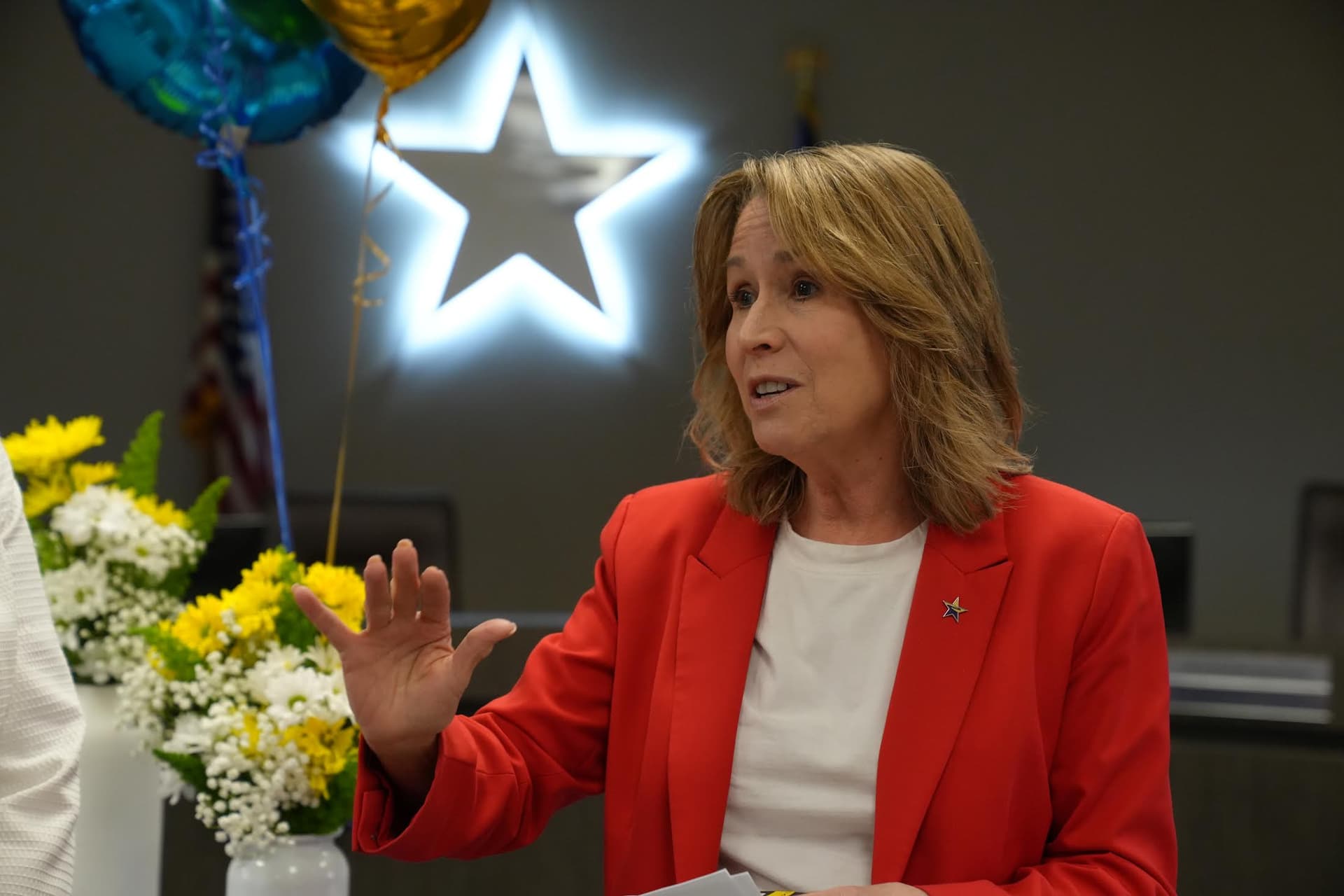
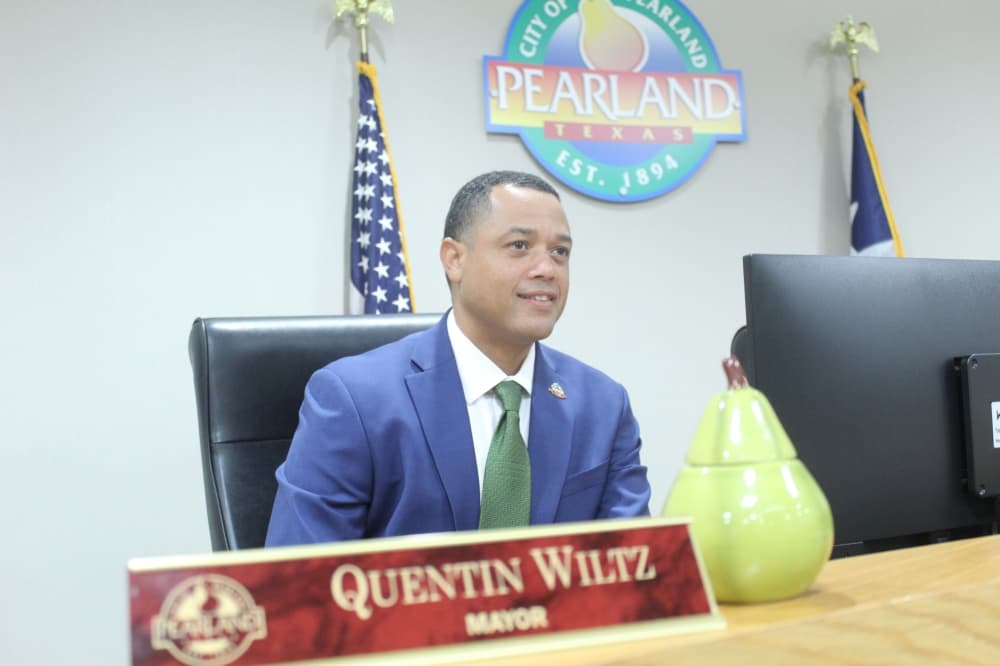
From the city government standpoint, Mayor Quentin Wiltz is the third mayor to serve Pearland in a six-year timespan. Before Wiltz was elected in May, former Mayor Kevin Cole served the city from 2020-26, and before Cole, former Mayor Tom Reid served from 1993-2020.
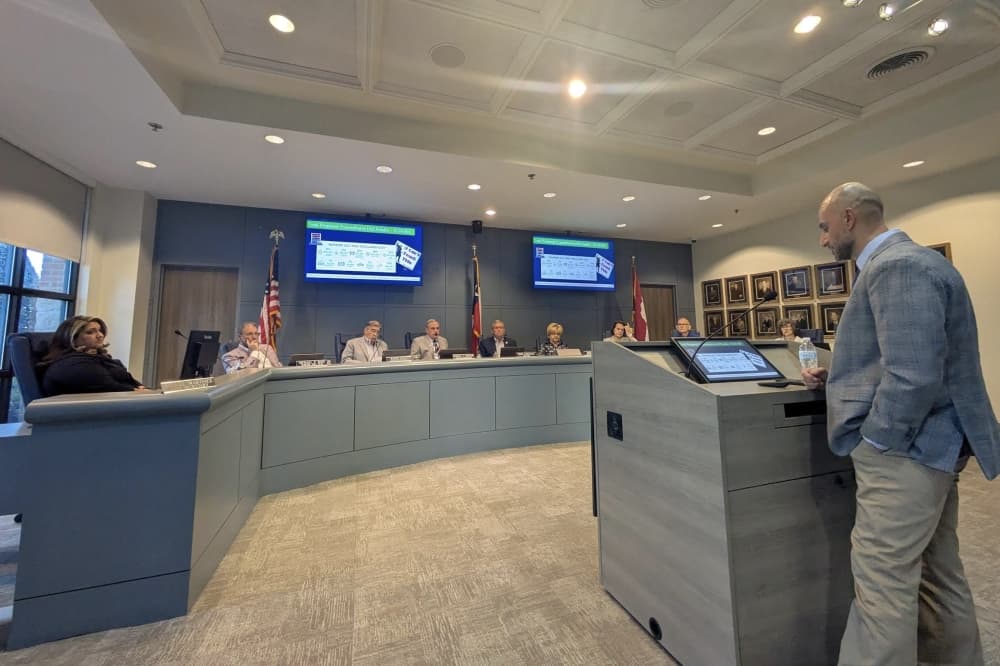
Wiltz’s transition, however, has not been without challenges. During their June 22 meeting, council members debated whether Wiltz should continue the longtime practice of the mayor representing Pearland on the Houston-Galveston Area Council.
Council member Rushi Patel, who eventually motioned to postpone the vote until October, cited concerns over the newly elected mayor’s lack of experience.
“Don’t think just because you have a title of a mayor you’re a proven leader,” Patel said at the meeting.
Despite the ongoing leadership transition, city officials say they remain focused on preparing Pearland for continued growth.
“As Pearland continues to grow, we must continue investing in leadership development at all levels of the organization,” Johnson said.
How it works
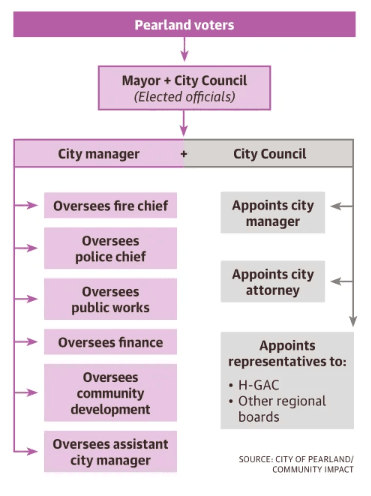
Pearland operates under a council-manager form of government, where elected officials establish policy and appoint key leadership positions, while the city manager and staff oversee day-to-day operations.
“The local government ecosystem requires input and effort from a diverse group to operate effectively, and we work hard to find the balance between community expectations and available resources," Pearland City Manager Trent Epperson said.
Police department changes
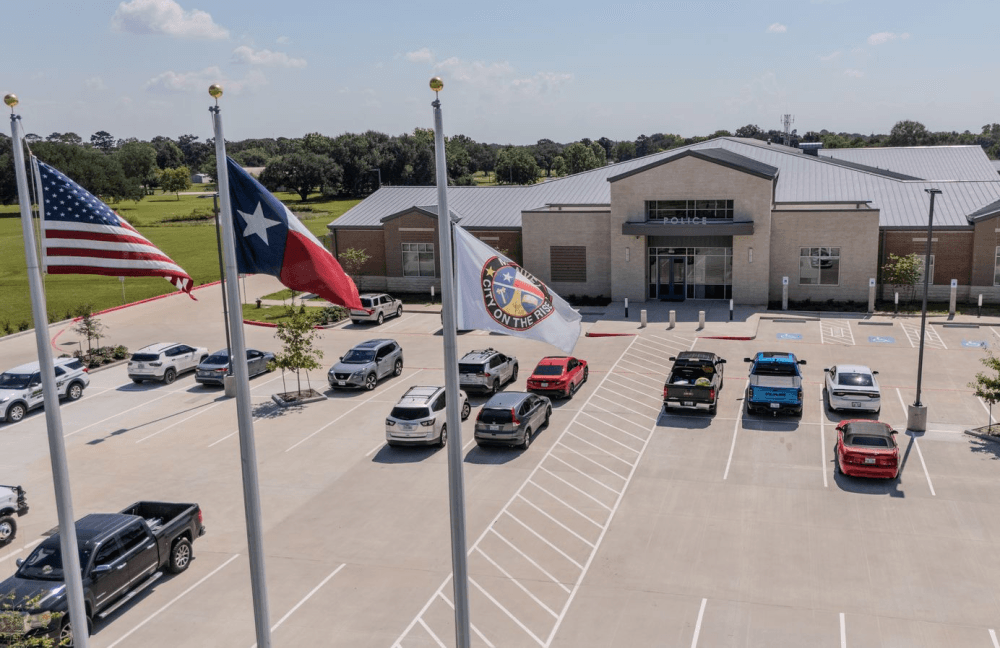
As Pearland’s population has grown by more than 10% since 2021, the police department has increased its staff by roughly 12%. In former Chief Johnny Spires’ tenure, he said the city’s growth has changed the challenges officers face.
“Thirty-five years ago, not many people came to Pearland unless they lived here,” he said. “Now we have shopping opportunities, events and industry that adds to our daily population, [and] brings in a criminal element to prey on our citizens and guests. In addition, having [Hwy.] 288 as a major thoroughfare allows easy access in and out.”
Fire department changes
As Pearland continues to grow, Johnson said the department must expand alongside it through staffing, facilities, technology and long-term planning.
“The primary challenge is ensuring that our resources keep pace with growth while being fiscally responsible with the taxpayer’s dollar,” he said.
Johnson said future priorities include planning for staffing needs, future firehouses, technology improvements and succession planning to prepare the department for continued growth.
Looking ahead
As Pearland looks ahead to future years, Community Impact sat down with Wiltz to discuss the future of the city.
What city services do you think will face the greatest demands over the next 10 years?
I think the most important city service is going to be expectation. Right now our tax burden is heavily leveraged towards rooftops. We’ve got some parts of the revenue that we get from investments, whether it be business or retail ... based on where we see our planning in the past, where that’s taken us now, where we’re going to go in the future and what our expectation is to deliver the quality of life that we anticipate, how much of that is going to be placed back on residents and businesses? I think the most critical part of services is going to be how we as electeds and the city deliver on the level of expectation that we’re setting upon ourselves.
What decisions made in the next few years will have the biggest long-term impact on the city?
We’ve made some big investments with water. Water is the driver of life around the globe, and how we see ourselves delivering that to residents, whether they live within the city or not, and our place in providing access to these natural resources. The next piece is housing accessibility. In the Houston region, we know we are going to expect a population surge at some point. Understanding what we look like and how we deliver access to safe housing, traditionally or non-traditionally, what is that going to look like for us?