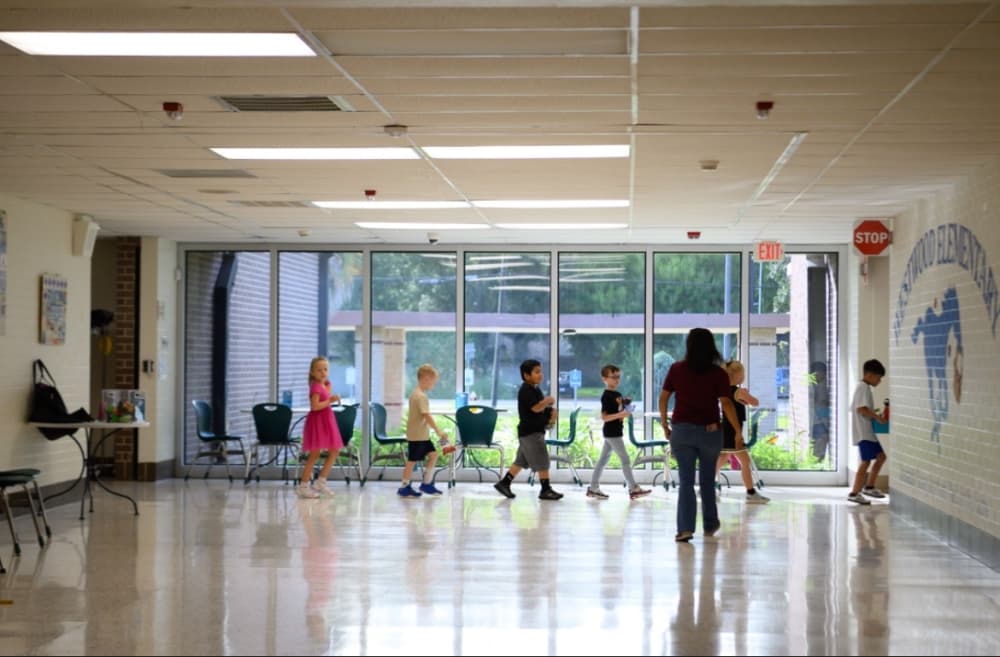
Classroom discussions, teacher and peer feedback, as well as public school funding are tied to the importance of attendance rates at Alvin and Friendswood ISDs, officials with both districts said.
What you need to know
In Texas, school districts are primarily funded through basic allotment, and additional funding is layered on for programs, such as special education, career and technical education, gifted and talented, as well as support for at-risk students.
Those formulas ultimately pay districts based on average daily attendance, or ADA, not on how many students are enrolled, AISD’s Chief Financial Officer Daniel Combs said.
“Theoretically, if a student is only in attendance 95% of the time, the school district only receives 95% of the funding for that student, based on what state law says the district should get,” Combs said.
Diving in deeper
FISD officials said a main challenge with attendance is students missing school, and replacing in-person learning with technology-based instruction instead.
“Technology based instruction during COVID sent the message to students and families that learning can happen on a screen,” FISD officials said. “Whereas we acknowledge, learning can happen, it is not the quality of instruction we hope to provide in FISD. It lacks collaboration, interaction, feedback, and access to meaningful discourse.”
One last thing
As attendance rates steadily increase for local school districts, FISD officials said they monitor attendance rates weekly to ensure students are enjoying school, and instructional resources are being utilized efficiently.
“This data helps us determine how our resources are supporting teachers in engaging students in their instructional experiences,” FISD officials said. “We want students to ‘want’ to come to school.”