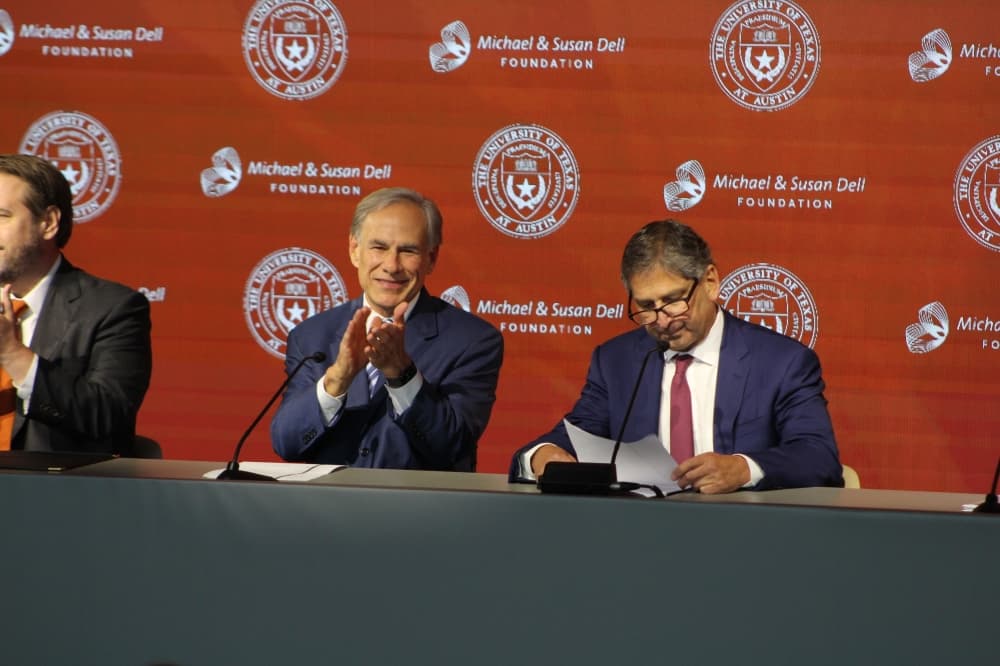
Officials with the University of Texas and MD Anderson announced plans for the UT Dell Medical Center and Campus for Advanced Research at an event April 21, supported by a $750 million donation by Michael and Susan Dell. (Chloe Young/Community Impact)
A new medical center and advanced research campus is on track to open in Northwest Austin by 2030.
University of Texas at Austin officials announced the opening of the UT Dell Medical Center and UT Dell Campus for Advanced Research at an event April 21.
The new Dell Medical School facilities follow $750 million in new investments from the Michael & Susan Dell Foundation. The couple behind Dell Technologies have become the first donors to invest more than $1 billion into the university, according to UT Austin information.
"This is a defining moment for The University of Texas," said Kevin Eltife, chair of the UT System board of regents. "We are at a new frontier. We are transforming this site into a new campus the world has never seen before—a place where discovery, education, artificial intelligence, advanced computing all come together to advance human health and life sciences innovation."
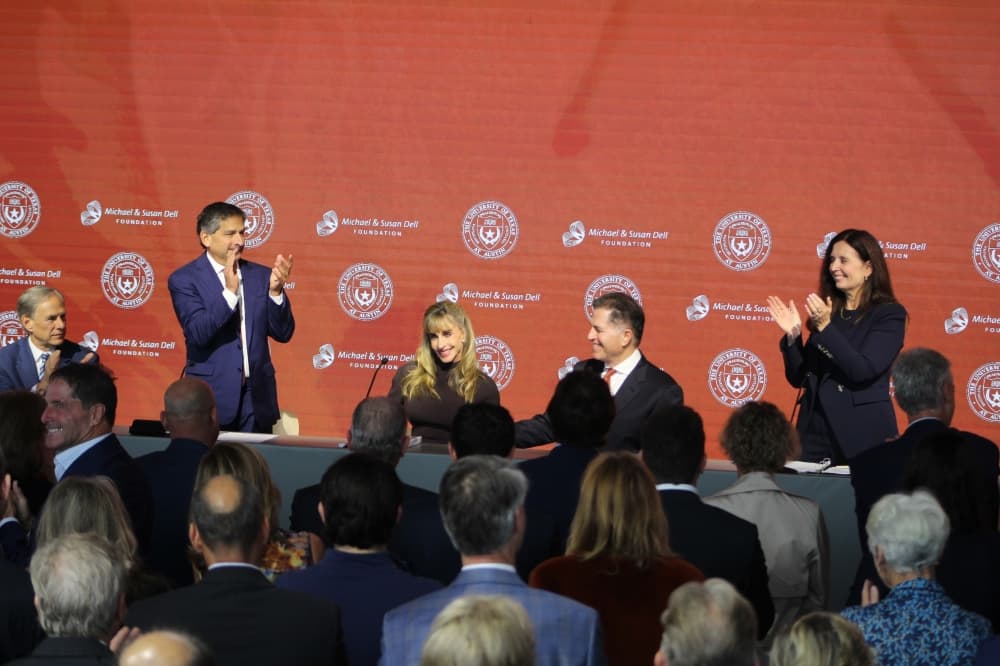
Michael and Susan Dell of Dell Technologies have become the first billion-dollar supporters of The University of Texas at Austin. (Chloe Young/Community Impact)
The details
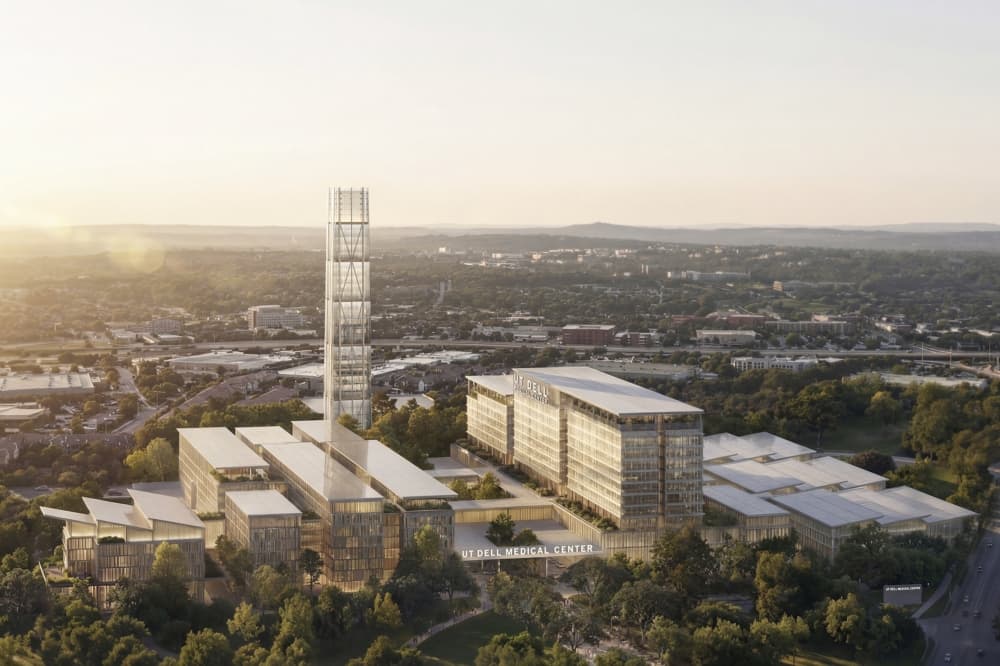
The UT Dell Medical Center will encompass 27 acres of a 300-acre advanced research campus that is aimed to position Texas as a leading center for life sciences, according to UT information. Located off MoPac and West Braker Lane near The Domain shopping center, the Campus for Advanced Research will absorb UT's current J.J. Pickle Research Campus.
The academic medical center will include a 300-to-500-bed hospital in partnership with UT MD Anderson Cancer Center and incorporate artificial intelligence technology to train Dell Medical School students and serve patients. The center will provide advanced, specialized inpatient and outpatient services for a range of serious medical conditions, including cancer, neurosciences, cardiovascular disease, multiorgan conditions and other high-complex or rare illnesses.
UT expects to break ground on the center in late 2026 for a targeted opening date of 2030, including a hospital tower, outpatient facilities and a full-service emergency department.
Phased expansions of facilities and advanced specialty programs will continue through 2032. Details around the size and scope of the medical center are still being finalized, according to UT information.
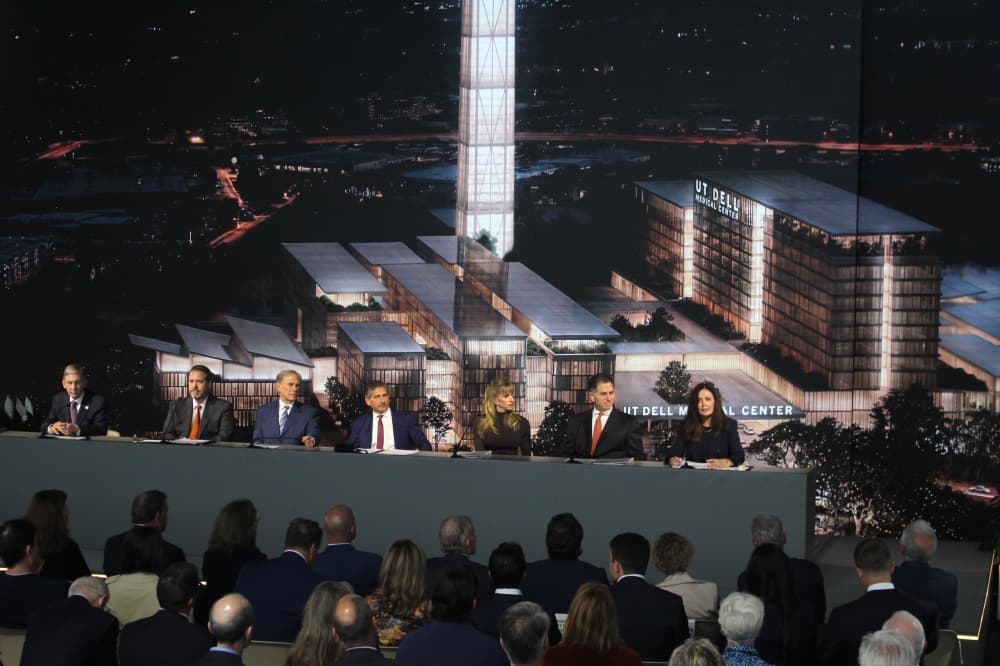
The 300-acre UT Dell Medical Campus for Advanced Research and Medical Center is slated to begin opening in 2030 off MoPac and West Braker Lane. (Rendering courtesy UT Austin)
The impact
The new medical center and advanced research campus are anticipated to stimulate long-term economic growth in the region, according to UT information. While Gov. Greg Abbott said he believes Texas leads in technology, energy and finance, these new facilities will allow the state to "lead America and health care innovation as well," he said.
"The future of health care is right here, right now," Abbott said. "Next generation medical breakthroughs will take place in Central Texas."
Families may soon receive advanced cancer care in Austin instead of having to travel to Houston, said Dr. Peter Pisters, UT MD Anderson president.
Gov. Greg Abbott and Kevin Eltife, chair of the UT System Board of Regents, gave remarks at an April 21 event to announce updates for the new UT Medical Center. (Chloe Young/Community Impact)
Also of note
The latest donation by the Michael & Susan Dell Foundation will support the Texas Advanced Computing Center and student housing as well as scholarships and support for undergraduate students.
The university will rename the Dobie residence hall where Michael Dell lived as a UT student as The Dell House, Eltife said.
How we got here
The project, first announced in 2023, was originally planned for the former Frank Erwin Center site on 19 acres of UT Austin's downtown campus off I-35. However, UT system officials stated last fall that the medical complex could instead be built in Northwest Austin, where the university already owns hundreds of acres of land, including its J.J. Pickle Research Campus.
The university opted to relocate to the Northwest Austin site to allow for future expansion and better accessibility for patients, Eltife said in response to a question asked by Community Impact.
"We looked at all the demand and the need for expansion in the future," Eltife said. "This just this was just common sense. ... We realized we really needed to be out here."
On March 26, Austin City Council approved rezoning five tracts totaling 373 acres that currently hold industrial, public and mixed-use zoning to Research and Sciences Mixed Use, or RSMU. RSMU allows for high-density development with a mix of life science, lab and biomedical spaces alongside varied businesses, industrial and civic uses, and mid- and high-rise residences.
University-owned land in that area includes The Shops at Arbor Walk retail plaza, an office building at Braker Lane and MoPac, and undeveloped land off Braker and Stonelake Boulevard, according to previous Community Impact reporting.