When Dr. Jeffrey Shilt arrived at Texas Children’s Hospital a decade ago, he saw a gap in care for young elite athletes. Shilt believed Texas Children’s could offer something few institutions could: comprehensive care for athletes at every stage of life.
The background
Shilt serves as the pediatric sports medicine liaison to the United States Olympic and Paralympic Committee. He previously served as the residency director for Wake Forest University Orthopaedic Surgery, and served as team physician for the USA triathlon at two world championships and for a professional cycling team.
Upon arriving at Texas Children’s about 10 years ago, Shilt said he noticed there was a need for younger athletes to get care, and there was no pediatric hospital partnered with the USOPC.
Shilt approached the Texas Children’s CEO and proposed a partnership with USOPC. At the time, there were two other hospitals partnered with USOPC, but Shilt said the challenge was they did not provide comprehensive care for athletes.
“I thought that Texas Children’s would be a good partner to them because we could offer everything,” Shilt said.
Pediatric specialists Texas Children’s are best suited for Paralympians, Shilt said, because about 60% of Paralympians have a pediatric or congenital diagnosis.
About the program
At the end of 2019, Texas Children’s became one of three national partners caring for Olympic and Paralympic athletes.
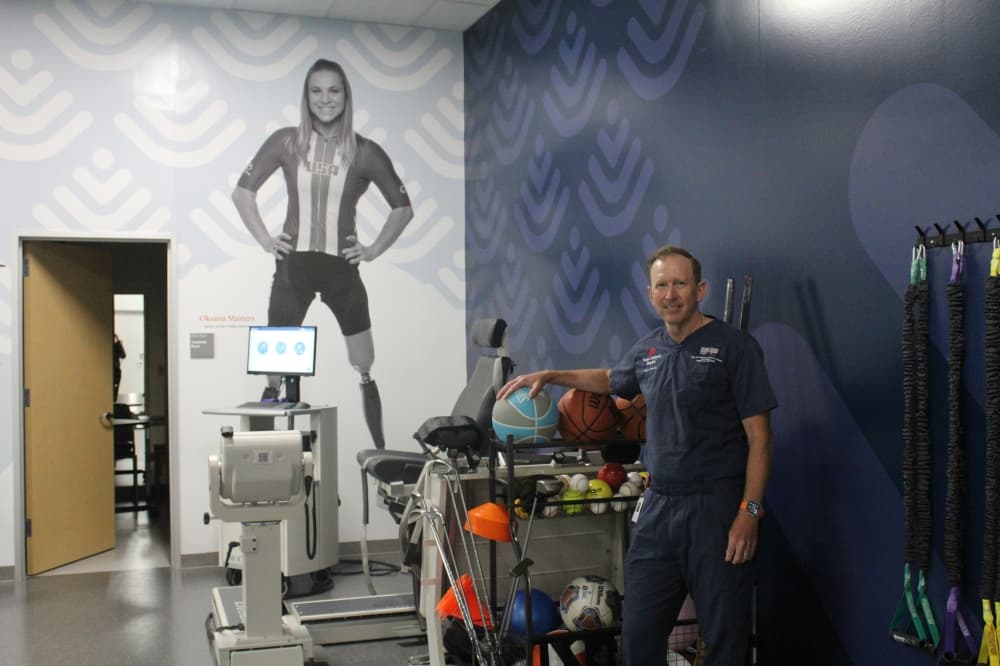
Shilt said they have treated hundreds of athletes, many of whom have earned medals at the Olympics and Paralympic Games, including Jenna Prandini, Solomon Simmons, and Oksana Masters, who is one of the most decorated Paralympians for Team USA.
“Our whole program is set up to care for athletes and Paralympic athletes and Olympic athletes from the youngest age in that developmental period all the way up to adulthood,” Shilt said.
Shilt said his role is interesting because he cares for professional athletes, but on the other end of the spectrum, he takes care of kids with cerebral palsy. He said treating both of these types of patients goes hand in hand.
“The biomechanical principles that are necessary for treating each end of the spectrum—the most elite athletes in the world and the most disabled patients ... are the same across that biomechanical spectrum. So that's really kind of an unusual practice, but one that I found to be very fulfilling and a lot of fun to do.”
One more thing
Shilt has traveled to Rio, Tokyo, Beijing, Paris and Milan for the Olympic Games, and said caring for these athletes has been a highlight of his career.
“One of my most fond experiences is caring for the Paralympic athletes,” Shilt said “They're very inspirational. They have so much grit and to be able to accomplish the things that they do, you feel like you're really beneficial to their success.”