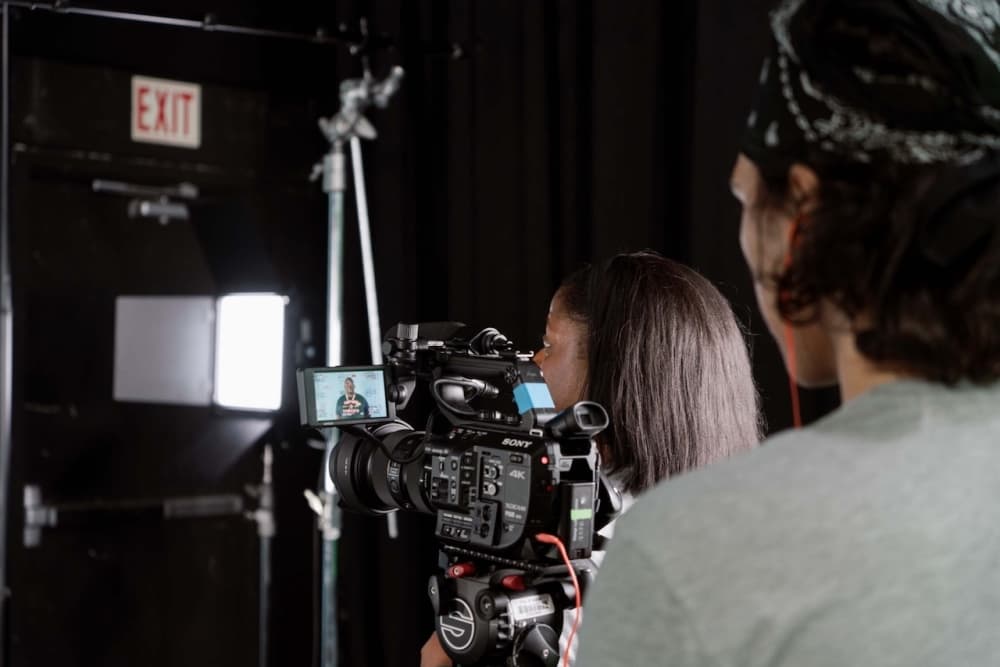
Austin will soon offer increased incentives for local film, TV and other media productions. (Courtesy Yvonne Uwah)
Austin leaders approved updates to a city incentive program for film, television and digital media projects early this fall. The move is expected to spark the local creative economy following recent state legislation aimed at Texas-based productions.
The setup
For more than a decade, Austin has supported various local productions through the city's Creative Content Incentive Program, or CCIP. Through the program, projects like movies, TV shows and video games receive incentives in exchange for following local pay and hiring guidelines, and highlighting the city in production credits.
TV series like the second season of Paramount's "Yellowstone" prequel "1923" and multiple seasons of CW's "Walker" and ABC's "American Crime" have used Austin's CCIP. A "Call of Duty" video game and the Richard Linklater-directed film "Apollo 10½: A Space Age Childhood" have also participated.
Those projects spent tens of millions of dollars in the Austin area including at least $61.78 million paid to nearly 2,200 local workers, and they received about $550,000 in total city incentives. Final reporting on the impacts of two "Walker" seasons and the second "1923" season wasn't available as of press time.
Beyond city limits, Texas is also a longtime backer of media projects throughout the state under the Texas Moving Image Industry Incentive Program, or TMIIIP. That initiative has also funded many Austin-area productions as Central Texas' creative sector has become more prominent. Dozens of projects, whether participating in incentive programs or not, have been estimated to generate billions of dollars for the area economy since the early 2010s.
“It's going to immediately create more jobs, and we're going to put a lot more Texas residents to work. Texans who've had to leave the state for work are now going to return because the work will be here,” McConaughey testified at the Capitol in April.
Following Texas' funding increase, Austin leaders voted Sept. 25 to revise the local CCIP for the first time since its creation in 2014 to capitalize on the state-level changes. The city now projects increased activity within the film, animation and video game sectors, bringing expected benefits for the "creative and overall economy," Austin Economic Development spokesperson Carlos Soto said.
"AED anticipates the incentive to help bring productions to Austin that may have otherwise gone elsewhere in Texas," he said in an email. "The TMIIIP will support bringing the productions to Texas, while the CCIP will bring those productions to Austin."
Following City Council approval last month, revised CCIP applications were made available in October and the program update will be effective Oct. 9. There's already a pipeline of interested productions awaiting Austin's new incentives before getting their projects off the ground, Soto said.
Upping maximum city grant payments from 0.75% to 2.5% of all wages paid to local workers
Changing credit requirements to allow either a "Made in Austin" logo, or the language "Produced with the support of the City of Austin"—replacing the current attribution "Thank you to the City of Austin for its generous support of this production. Filmed on location in Austin, Texas, U.S.A."
Requiring productions to provide images and other marketing materials for their projects
Setting new program application timelines and removing Texas Film Commission approval as a program qualification
Projects participating in Austin's Creative Content Incentive Program must recognize the city in their production credits. (Courtesy city of Austin)
Additionally, direction from council member Mike Siegel set higher pay rates for workers on local productions under the program. His amendment to the CCIP will see participating projects pay their staff either union wages or Austin's current living wage, whichever is more, as well as benefits equal to union provisions.
That change was crafted with input from city staff to make CCIP an "investment in Austin’s creative workforce," Siegel said, by ensuring creative industries' best pay and benefits are offered locally.
“The program update brings a bigger grant opportunity to film, TV and video game projects that are made in Austin, that proudly represent Austin and employ people from Austin," he said Sept. 25. "Film and television industry is a vast majority gig workers or intermittent employees, commercial shoots are often between one to three days, films are a matter of weeks. So workers strive for consistent employment but they do have gaps between their projects, so good hourly wages are very important to make up that time between jobs."
Hannah Norton contributed to this report.
Austin moves to strengthen construction workforce training program