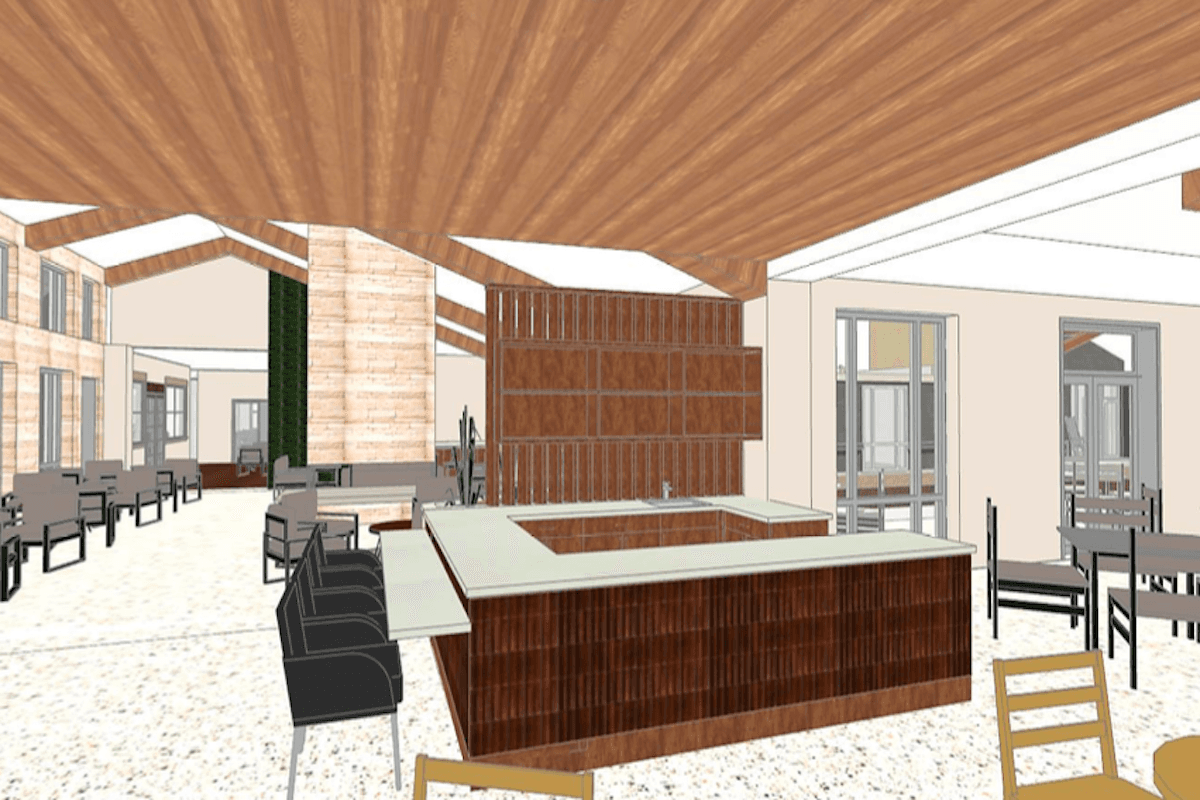
University Health's Milk Bank is a $5.6 million project. (Rendering courtesy University Health)
Construction on the first milk bank in South Texas is underway.
Construction on University Health's Milk Bank, an 8,000-square-foot milk bank located within the hospital's main campus, began in early 2026.
University Health’s Milk Bank will be the first milk bank in South Texas. Right now, families in New Braunfels and San Antonio rely on the Mothers’ Milk Bank at Austin, which is located in the North Austin area.
“San Antonio and the broader South Texas region doesn’t have a milk bank yet, but the University Health Milk Bank will change that,” University Health Milk Bank Director Maciel Ugalde said. “It will be the first milk bank in the city and the first in South Texas, closing a major gap in access."
Explained
A milk bank operates similarly to a food bank, but instead of handling canned goods, doctors are caring for “life-saving nutrition,” Ugalde said. Donors will be required to go through a screening process to ensure that mothers donating their milk are healthy.
Once donor milk is received, doctors process and pasteurize it. Pasteurization is a gentle heating process that removes harmful bacteria and viruses while keeping most of the natural nutrients and immune-boosting properties needed for medically fragile babies. Only donated milk that passes each checkpoint is clear for distribution, Ugalde said.
“At its core, a milk bank is a community safety net, families helping families, supported by rigorous food safety handling practices that protect the health of our most vulnerable newborns,” she said.
University Health's Milk Bank is being funded by various donors, including The John R. & Greli N. Less Charitable Trust, Charity Ball Association, Nancy Smith Hurd Foundation and Blue Cross Blue Shield. (Rendering courtesy University Health)
To make donating accessible, there will be several drop-off points where the milk can be collected throughout the hospital.
The pasteurized donor breast milk will support infants, particularly those in the neonatal intensive care unit, or NICU, Ugalde said. Not only do milk banks support babies, but they also support breastfeeding mothers. Ugalde said having access to safe, donated breast milk can ease stress for mothers who have complications or have lost their baby.
“For some mothers, it’s an opportunity to help them in their grieving process,” she said.
Ugalde said there is not one milk bank per state, so donor milk is consistently in short supply.
“Having a local milk bank matters because it increases access, it shortens the distance that milk has to travel and also helps ensure that medically fragile infants in our community can receive the support that they need,” Ugalde said.
Ugalde said the milk bank was a "natural next step" since University Health is one of two hospitals in the region with a Baby-Friendly USA designation, which is awarded to hospitals that support evidence-based maternity care. The hospital system also has a Level IV NICU designation, which is the highest level of care available for premature and sick babies.
The University Health Milk Bank is anticipated to open in spring 2027.
St. David's Round Rock Medical Center offers new procedure for artery blockages