New Braunfels City Council received an update on the city’s downtown paid parking program, Park NBTX, including usage data, revenue and possible changes to the program at a meeting Feb. 23.
By the numbers
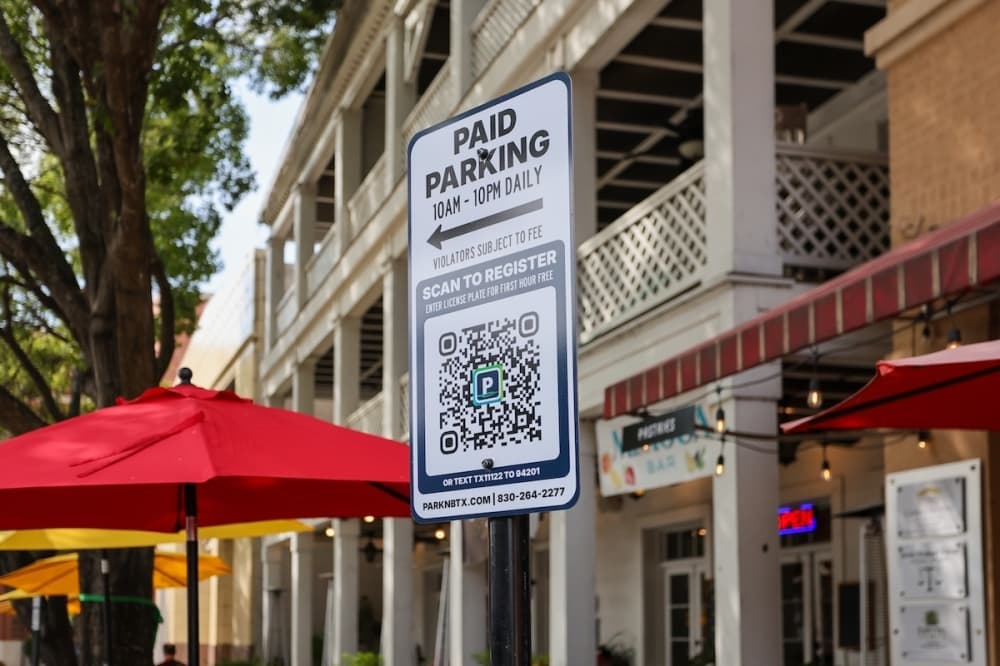
Park NBTX has been in effect since July 7, as previously reported by Community Impact. The program requires drivers to register their parking sessions. The first hour is free, and subsequent hours are $2 per hour, capped at $10 per day.
Between July and December, the program generated net revenue of $154,369, according to the meeting presentation. Gross revenue totaled $316,039, including parking sessions and citation fees for those who did not register their session. Operational, enforcement, and credit and debit card expenses totaled $161,670.
Revenue from the parking program will be used in the continuing operation and enforcement of the program, as well as reinvestment into the downtown area, as previously reported by Community Impact.
Jeff Jewell, director of economic and community development for New Braunfels, said the program has led to a tangible increase in turnover and visitation in the downtown area.
Visits increased 2.6% year over year, with the average length of stay increasing by four minutes, according to the presentation. Visits from New Braunfels locals also increased 2.2%, making up 55% of visits, or about 1,222,096.
Digging deeper
Tony Janowiec, CEO of Interstate Parking—the company tasked with implementing the program—said the program is operating well. The goal for cities that use managed parking systems is to have 93% natural compliance, with New Braunfels seeing a 96% compliance rate. This means visitors who use paid parking spots register for sessions without needing citations before compliance, Janowiec said.
“In the municipal parking industry, these are industry-best metrics. Even in our own portfolio,” Janowiec said.
Most users chose only to use the first free hour, with a drop off occurring once payment is required to stay in the spot. Longer stays were recorded on nights and weekends, with more than 73,500 users staying longer than two hours, according to the presentation.
The background
The city of New Braunfels transitioned its downtown on-street parking from a free two-hour system to a paid model in summer 2025, following City Council approval in May, as previously reported by Community Impact.
The program covered 253 of the more than 750 downtown on-street spaces, but has since expanded to 258 spaces, and more than 1,000 free parking spaces since implementation, Janowiec said.
Public input
In the presentation to City Council, public feedback was presented with several common themes.
Comments included:
- Extending the free stay to two hours
- Implementing a resident parking pass to forego registration
- Eliminating the need for a smartphone to register a parking session
- Implementing free employee parking in the downtown area
Dave and Christina Cinotto, owners of Bootleggers Pizza Parlor and The Oyster Bar in downtown, said while one free hour may work for other businesses, it could hinder business to their establishments.
“One hour may be enough for a bank or a coffee shop, but people usually spend more than an hour at a restaurant or at a bar,” Dave said.
New Braunfels resident David Ozuna said he believes the resident parking pass would help alleviate issues for residents.
“A majority of people use this for two hours. I think the expansion of the resident parking pass would solve that issue,” Ozuna said. “It would still allow us to generate revenue for everyone who doesn’t sign up for the [resident pass].”
What’s next
The newly appointed Downtown Parking Revenue Advisory Committee will begin collecting data on the impacts of implementing a resident parking pass and the expansion to two free hours of parking after registration.
The committee is expected to meet March 23. The city's downtown board would also need to meet to discuss any potential changes. No definite timeline was detailed for when the data would be presented, but any changes to the program would need to be read and approved by council before implementation, according to city officials.