Officials with Comal County’s Emergency Services District No. 7—which services much of the extraterritorial jurisdiction of New Braunfels—shared an update on governance, finances and future planning during a presentation to Comal County commissioners at a meeting Jan. 29.
The details
Several ongoing and upcoming partnerships are in the works in ESD 7, including coordination with the Mayfair development on the future construction of Fire Station No. 8, according to the presentation.
Efforts also include collaboration with the New Braunfels Fire Department on a phase of a training facility near Station 7 along FM 306, and joint efforts with the Lower Colorado River Authority and the city of New Braunfels to improve emergency radio communications, New Braunfels Fire Chief Ruy Lozano said.
New investments have also been made to bolster support in ESD 7, including the purchase of a new emergency response truck and a “blocker,” which protects emergency crews from traffic on roadways, both of which were added to the fleet within the last year, according to the presentation.
By the numbers
Investments such as these are needed as the area continues to grow. ESD 7 responded to more than 1,500 calls in the past year, a roughly 20% increase driven by commercial and residential growth. Response times remain within the district’s six- to seven-minute goal, though call volume and coverage areas are closely monitored to determine when additional stations will be needed, Lozano said.
Once an area reaches approximately 60% of the average call volume of existing stations, planning for a new station begins, Lozano said. This benchmark has been met, prompting preliminary planning for Fire Station No. 8.
The process can take up to three years due to land acquisition, staffing, apparatus purchases and construction, according to the presentation.
Roughly $6 million has already been invested in civil drainage and concrete work for a fire training facility near FM 306, according to the presentation. The facility is critical for maintaining the district’s Insurance Services Office rating of 1, the highest available, which helps lower insurance rates for residents. ISO standards require firefighters to complete annual training hours in certified facilities, making local access a priority.
The district also recently supported the installation of an LCRA communications tower to address radio dead zones in developing areas. Improved communications ensure first responders remain in constant contact while responding to emergencies, Lozano said.
Emergency medical services account for approximately 76% of the district’s call volume, a trend consistent nationwide, Lozano said. Firefighters are trained to a critical care level, allowing them to perform advanced medical procedures, including cardiac interventions and blood transfusions, before patients reach hospitals.
Something to note
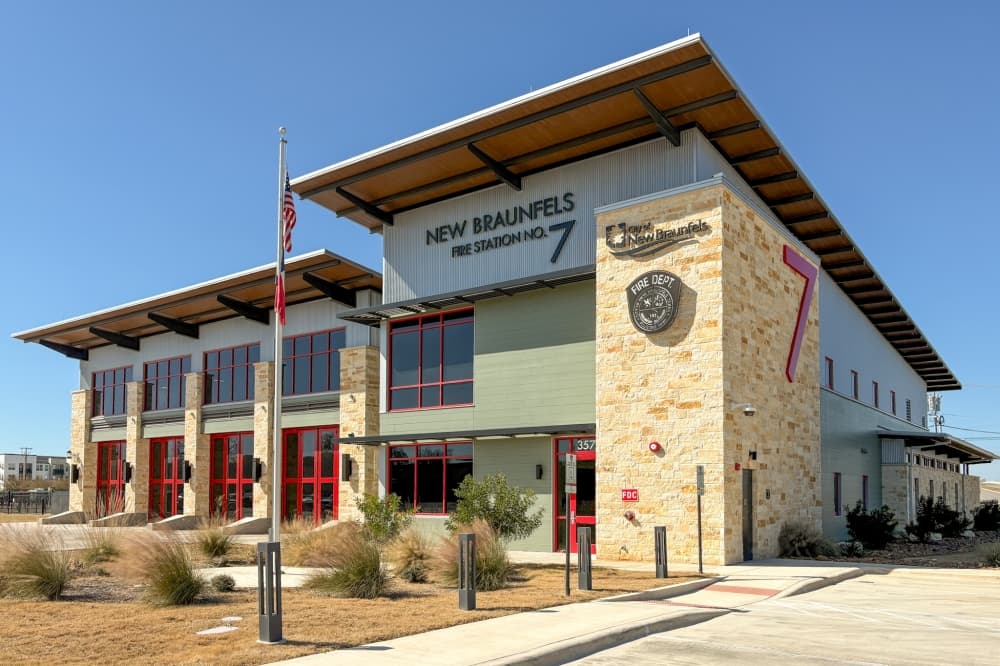
Additional response capabilities include hazardous materials operations, water and dive rescue services, wildland firefighting and technical rescue. Station 7—located at 357 FM 306—is the district’s primary rescue station, according to the presentation.