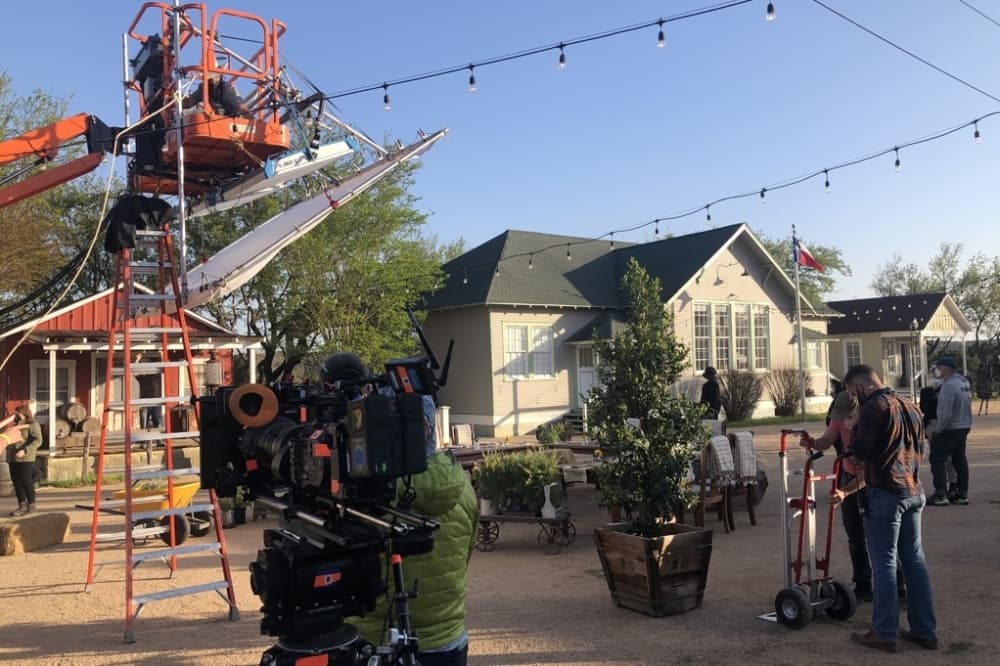
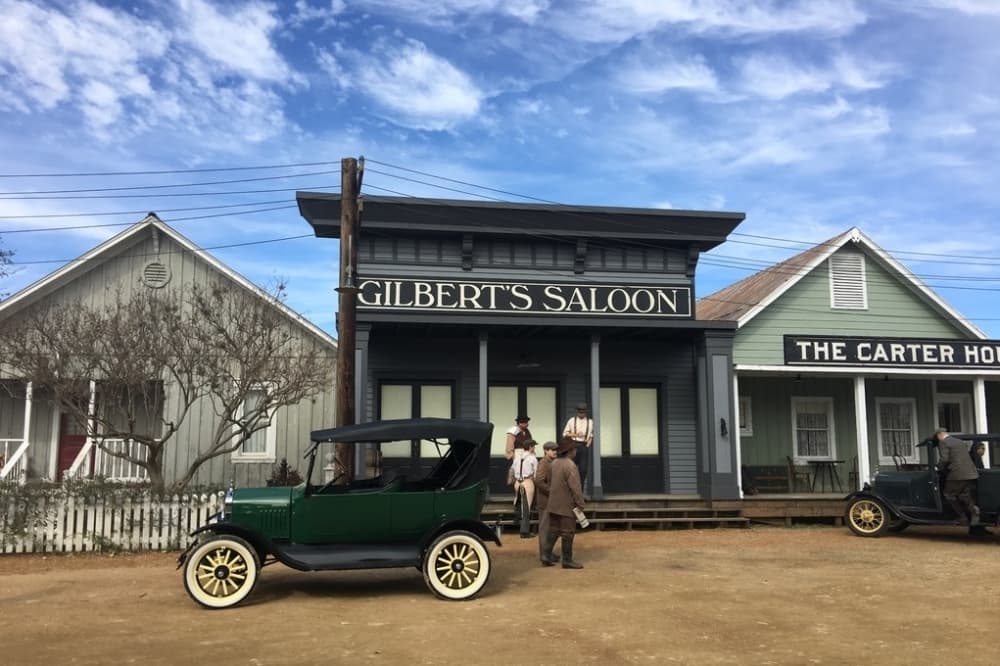
Star Hill Ranch has become the site of several film and TV production in recent years. (Courtesy Star Hill Ranch)
Travis County, specifically western Travis County’s Hill Country, has become a hot spot for filming as 2,415 movie and TV productions have been filmed in the area in the past 30 years, according to the Texas Film Commission.
In response to production companies continuing to consider the Hill Country for potential filming sites, cities such as Lakeway are embracing the industry as both an economic development strategy and a way to showcase the region.
“We think Lakeway has a lot to share with people,” Lakeway Mayor Thomas Kilgore said. “Anything we can do to provide greater sales tax, greater business opportunities, is a benefit to our residents.”
As neighboring communities explore similar efforts and established filming sites like Star Hill Ranch continue to attract major productions, the Hill Country is emerging as a destination where filmmaking and local economic growth go hand in hand.
The framework
As more film crews begin to show interest in various locations around the Hill Country, cities such as Lakeway are moving to become certified as “film friendly” by the Film Friendly Texas program through the Texas Film Commission.
Certified communities are featured on the Texas Film Commission’s website and receive ongoing training surrounding media industry standards.
Lakeway received its film friendly certification from the Texas Film Commission in March.
To accommodate the film friendly label, the city established a framework that allows production companies to work with property owners and city staff to ensure regulations are being followed.
By attracting film productions to the communities, the film friendly certification also has an economic benefit. Communities benefit from the direct injection of spending in their areas not just during the production but beyond, according to the Texas Film Commission.
“Production companies run on logistics. ... We get the benefit of hotel stays, other short-term lodgings, restaurants, catering materials. ... They run on food and supplies,” Kilgore said. “Even a small production can meaningfully add to the community and drive the economy.”
In May, Rollingwood officials also began discussing implementing film regulations in response to several inquiries regarding filming in the city.
The TMIIIP is a cash grant designed to encourage job creation in the film production industry across Texas as well as generate a positive economic impact in communities by attracting media production to the state.
The incentive provides qualifying productions the opportunity to receive grants based on a percentage of a project’s eligible expenditures spent in-state, including eligible wages paid to Texas residents.
In order for productions to be eligible for the incentive, 35% of paid cast and 35% of paid crew must be Texas residents, and 60% of total production must be completed in Texas.
Texas also provides up-front sales tax exemptions on most items rented or purchased for direct use in production, refunds of the state occupancy tax on hotel rooms occupied for more than 30 consecutive days and refunds on fuel tax paid on fuel used off-road.
Almost 200 projects have successfully completed the TMIIIP program and produced all or part of their project in Travis County in the past 10 years, according to the Texas Film Commission.
Between 2015-2025, Texas Moving Image Industry Incentive grants helped generate:
$1.18 billion in gross value added
$696.5 million in total labor income
1,200 full-time equivalent jobs per year
Some context
Beyond local communities in west Travis County receiving film friendly certifications, the Hill Country is also home to Star Hill Ranch, an event venue that hosts a replica town of a Texas Hill Country community in the early 1900s.
Star Hill Ranch opened in 2001 by brothers Matt and Adam Woolley. The facility is modeled after their great grandfather’s homestead town of Industry, Texas, co-owner Matt Woolley said.
The brothers have collected and moved 21 historic structures from around the state to Star Hill Ranch to encapsulate an “authentic slice of Texas” with Western European architecture to symbolize the early days of Americans in Texas, Woolley said.
These structures were built from 1853 to 1935 and consist of three old homes from Rainey Street, two structures from Industry, the original Bee Cave post office and general store, the original Pontoc, Texas, church and other historic spaces from the Austin and Hill Country areas.
In recent years, Star Hill Ranch has served as a backdrop for several major productions, including “Waiting for the Miracle to Come,” season two of “The Son,” “Fear the Walking Dead” and seasons six and seven of Bobby Flay’s “BBQ Brawl.”
Star Hill Ranch has 21 historic structures from around the state, which have served as a backdrop for several major productions. (Courtesy Star Hill Ranch)
Woolley believes that film productions are “vital” to the local economy.
“In addition to generating revenue for filming locations like ours ... these projects will bring dozens to hundreds of film-related staff into the area,” Woolley said. “They always hire lots of staff from the local pool of talent, meaning thousands of dollars in income generated for local residents with film expertise.”
Beyond the economic impact film productions have on local communities, established filming locations like Star Hill Ranch help attract production crews to the area, Woolley said.
“We are very connected to the film community across the United States,” Woolley said.
Stay tuned
In conjunction with Star Hill Ranch, the Woolley brothers also own The Relic Source, a prop company specializing in period and Western items and set dressings.
The Relic Source opened in 1992 in Industry and is now located at Star Hill Ranch.
With over 15,000-square-feet of inventory, prop items include juke boxes, oil and gas signage, furniture, wagons, wine and whiskey barrels, along with a growing collection of vintage cars.
Having both Star Hill Ranch and The Relic Source available to production companies makes the location more attractive to filmmakers, Woolley said.
“We have the largest movie prop and set decoration operation in the central United States,” Woolley said. “[Film crews] don’t have to do nearly as much sourcing to bring the film production to life.”
As the film industry continues to evolve, Star Hill Ranch is ready to evolve with it, Woolley said.
“While it is our hope to continue to support big productions, we are actively working in new channels to bring more episodic, documentary and small format content production to Central Texas,” Woolley said. “Film productions have an unquestionable positive economic impact on the local economy.”
Here are some of the productions in which props from The Relic Source can be seen: