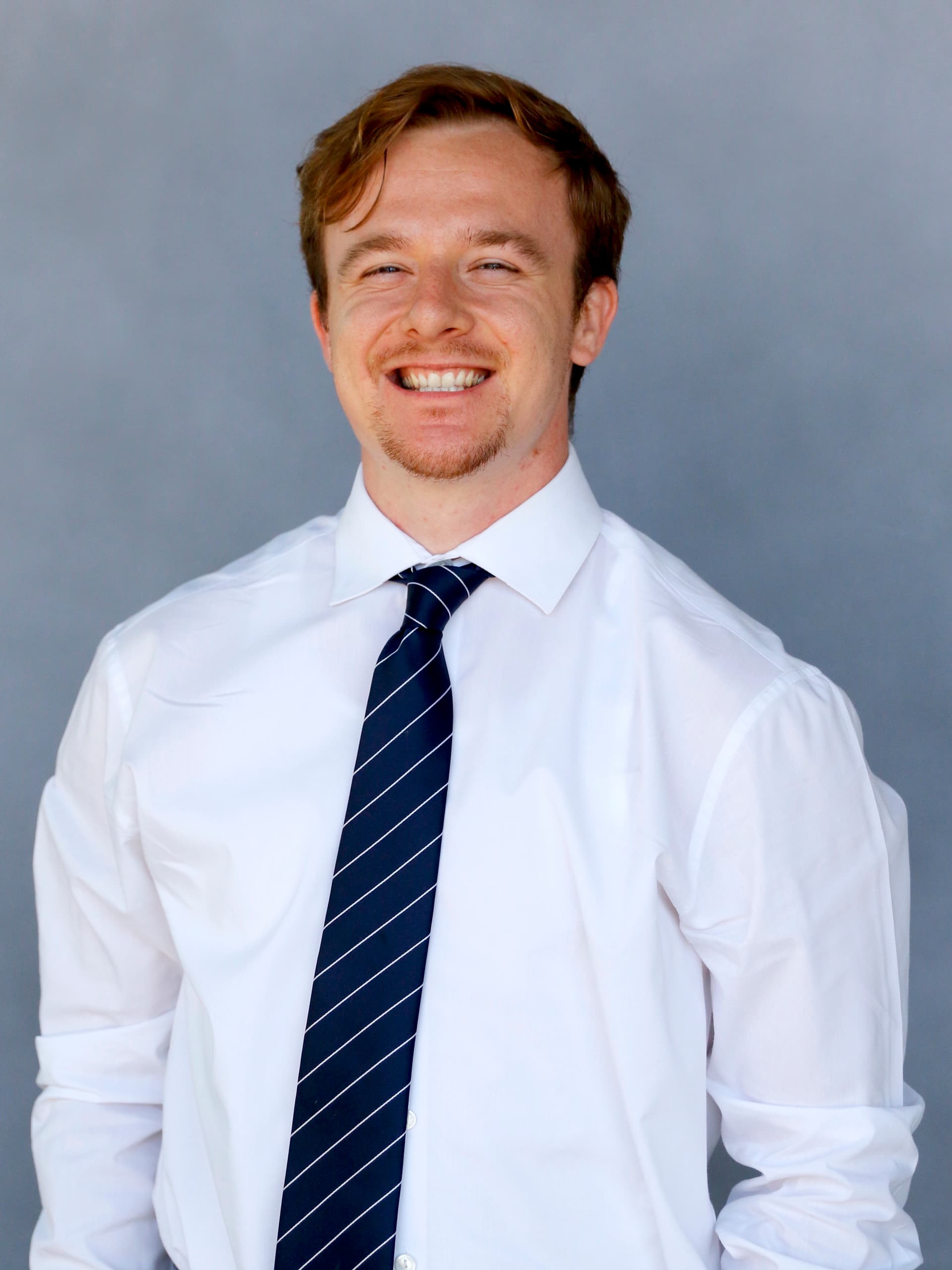
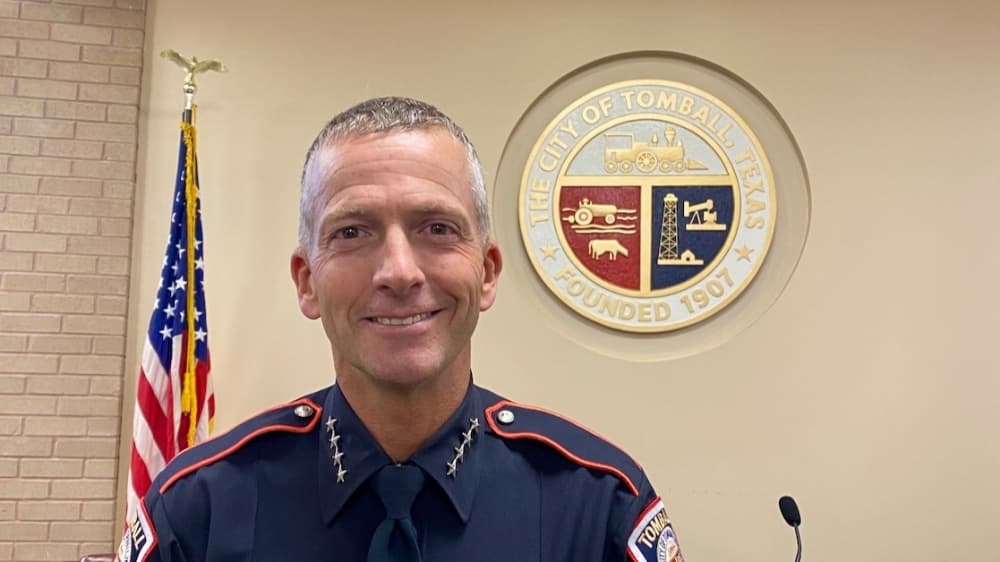
Jeff Bert took over as Tomball’s police chief June 29, 2020, after serving with the Los Angeles Police Department since 1996, Community Impact Newspaper previously reported. Bert replaced former Chief Billy Tidwell, who resigned in January 2020.
Bert served as a commander in the LAPD before coming to Tomball. He oversaw the risk management legal affair group, where he ensured the department's compliance with state laws and training changes.
In an interview with Community Impact Newspaper on Aug. 26, Bert shared about his experiences with LAPD and his transition to Tomball.
This interview has been edited for length and clarity.
What did you do before you started with LAPD?
I grew up in Coos Bay, Oregon. It's a small logging and fishing town. In 1988, I graduated from high school and went to Boulder, Colorado, for most of my undergraduate degree. Then I went to junior year abroad. I had the opportunity to go study graduate work at St. Andrews in Scotland. I was an English major. I got a degree from Boulder in four years. In 1992-93 I went to D.C. at George Washington [University]. I was in their school of international affairs. It was a two-year master’s [degree]. I backed out of that master’s and went to King's College. I returned to the United Kingdom and got my master’s in English dramatic literature. I taught for a year at a community college up in Oregon while I applied to Ph.Ds and I got into a program at University of British Columbia for English literature. I drove up there and thought, "I don’t want five more years. I don’t want to write books." I’m kind of a dreamer. There’s a whole bunch of things I wanted to do in life, and being a cop was one of those resounding [things].
What did you learn from your time in Los Angeles?
I think the hallmark of the LAPD is professionalism. The men and women of the LAPD treat the job of law enforcement as a profession, not unlike a doctor or a lawyer or a teacher. That was the LAPD I walked into, absolutely with its flaws. Integrity and the reputation of a law enforcement agency takes a lifetime and a career and everyone to build, and it takes a moment and a couple of dirty cops to fracture and ruin. I really [came] here with the understanding that above all else, a law enforcement agency has to be a professional organization where our policies, our rules, our regulations for each other mean something beyond just "this badge is a symbol of my public faith." Professionalism is the thing that takes you from a rag-tag organization to being a leader. What that leadership in law enforcement means is having that compassion for people that you serve.
What brought you to Tomball?
I had no intention of retiring. I thought I’d be one of those guys who die in their chair as a two-star chief. I absolutely loved [LAPD], but late in 2019 my friend, [former Tomball City Manager] Rob Hauck, he had been my partner in LA, he reached out and said, ‘Hey I know Tomball is small. Would you be interested?’ I always knew I wanted to be a chief, and I had an inkling for the last couple of years that I didn’t want to be a chief in a huge town. I’ve done 25 years in a big city. I grew up in Coos Bay, Oregon. I’m OK with small towns.
What has your time in Tomball been like so far?
When I came here, I was told that it had been a very long time since a chief of police had been to a crime scene or been to a barricaded suspect or a bomb call. The men and women of Tomball Police Department understand community policing at its guttural level. What was challenging for me was some of the unawareness that some of the things we’re doing are tactically unsound and some of the things we’re doing are not best practices.
What are some of your priorities right now?
Tomball is going to have 2,200 new homes in the next few years. That’s three or four more people per house. So if you go from a population of 12,000 right now, in three years we may have 18,000 people living here. Crime will rise. I absolutely intend to ask a supportive council for more officers. As this city grows, I think it makes sense that the department grows. I really have focused on improving the technology we have. We need roads that are safe; we need roads that are maintained. I’m focusing on the traffic driving behaviors that cause very bad accidents.