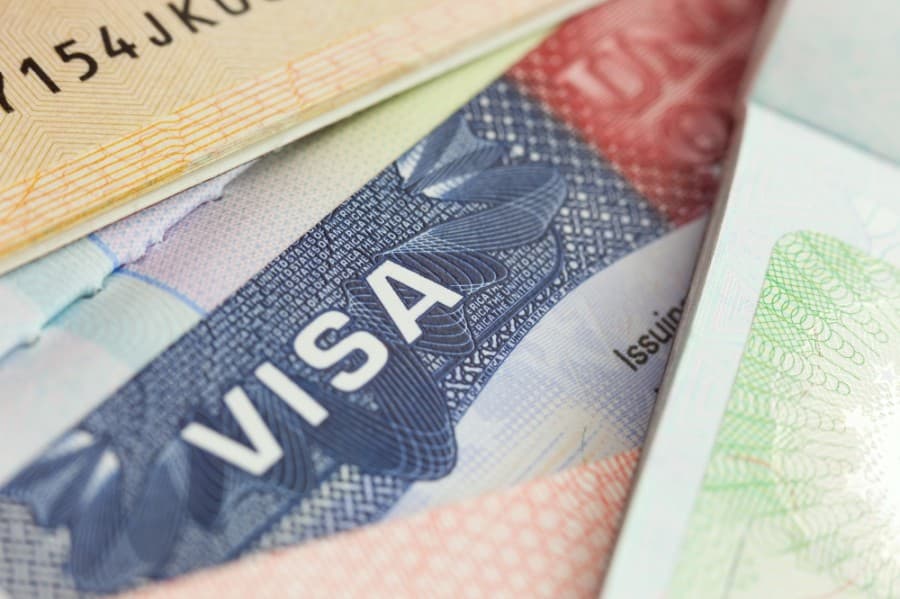
On June 22, President Donald Trump announced a new suspension of temporary, nonimmigrant worker visas through the end of 2020.
A White House statement said the measure moves to increase access to jobs by American workers or unemployed amid the ongoing coronavirus pandemic through the temporary suspension of H-1B, H-2B, H-4, J and L visas. Trump's June 22 proclamation is set to expire Dec. 31 but may be extended.
The affected visa categories include specialized workers, temporary or seasonal nonagricultural workers, foreign students or exchange visitors and foreigners transferring within their company, according to U.S. Customs and Immigration Services. Spouses and children of workers are also included.
Specialized workers
According to several Houston-area immigration experts, these visa holders—especially those in the H-1B category—often fill specialized positions in energy, medicine, academics, technology and research that cannot be successfully staffed with domestic talent.
While the new policy is aimed at preserving jobs for American citizens, according to the White House, the immigration experts said the visa pause may end up having a negative effect on the area’s economy, workforce and businesses.
“There aren’t native-born American workers available in some of these very specialized fields to hire and fill these open jobs. And that’s exactly what the H-1B visa was created to address,” said Steven Scarborough, manager of strategic initiatives at the nonprofit research and community engagement organization Center for Houston’s Future. “There just aren’t enough native-born workers to keep growing the economy here in the Houston region. ... We’re going to need to continue immigration if we want to continue having the robust economic growth the Houston region has sustained over a decade.”
According to the latest available information from the U.S. Department of Homeland Security, 570,368 admissions on H-1B visas occurred in the U.S. in fiscal year 2018-19, including 44,562, or 7.81% of the national total, in Texas. In FY 2017-18, 531,280 such admissions were tallied, including 41,650 in Texas, and 534,365 H-1B admissions were recorded in FY 2016-17, including 45,023 in Texas. Those figures represent total admission events, not unique visa holders, meaning the same person may be counted in multiple admissions, according to the DHS.
Trump said the new suspension is designed to cut down on competition in the job market between Americans and foreign workers and their family members while addressing unemployment in key industries during an uncertain time for employers across the country.
"Under ordinary circumstances, properly administered temporary worker programs can provide benefits to the economy. But under the extraordinary circumstances of the economic contraction resulting from the COVID-19 outbreak, certain nonimmigrant visa programs authorizing such employment pose an unusual threat to the employment of American workers," Trump said in his June proclamation.
Tony Payan, director of the Center for the United States and Mexico at Rice University’s Baker Institute for Public Policy, said that while the suspension is being billed as an attempt to steer hiring toward American candidates rather than foreign workers, the domestic talent pool, including those newly unemployed as a result of coronavirus-related closures, may not be willing or qualified to fill roles currently held by skilled, specialized visa holders.
“I’m not certain that the White House has done its research ... to figure out if those unemployed individuals, many of whom come from the service sector—restaurants, bars, clubs, and such things—do they possess the skills to then go and write software, research biotechnology, do engineering work and things like that?” Payan said. “If there is no match between the skills required by that kind of visa and required by these companies and the workforce that’s currently unemployed, then it’s not going to happen.”
Geoffrey Hoffman, director of the Immigration Clinic at the University of Houston Law Center, also said he believes the suspension may not result in accomplishing the White House’s stated goal of preserving jobs for Americans. Visas such as H-1Bs are often granted to fill roles that cannot be staffed domestically, and a decrease in H-1B workers could leave many companies that traditionally utilize those employees without necessary workers.
“Especially during the COVID-19 shutdown, you want to have an ability to grow the economy and not the other way around. And unfortunately, this suspension is exactly the wrong policy decision if you want a recovery," Hoffman said.
Regional effects
Payan said many academic and medical institutions across the Greater Houston area, including Texas A&M University, Rice University, University of Houston and members of the Texas Medical Center, are major visa-based employers and could lose thousands of workers and researchers as a result of the suspension. Oil and gas operations from engineering to financing could also be affected as visas expire and certain new hires are suspended.
“These companies are going to have to scramble to figure out how to hire, when to hire and where to find these workers,” Payan said. “Academics and research, energy and, of course, the medical center and bioresearch—those are going to be the affected industries. And if Houston is anything like the rest of the U.S., we’re talking a substantial percentage. In the U.S., 25% of our researchers are H-1B holders. I suspect that in Houston it may be higher.”
According to a 2019 regional immigration report from the Center for Houston's Future, foreign-born employees made up 34% of the region's STEM workforce, 42% of doctors and of petroleum engineers and 43% of scientists as of 2016. The center also projected growth in immigrants' regional workforce participation and new job creation over the next two decades.
The new national visa policy will not immediately remove current visa holders from the country, but Payan said it will result in “bringing the flow of talent to a halt” as new applications cease this year. Current H-1B workers whose three-year visas expire in 2020 will also be forced to leave without an opportunity to apply for a traditional three-year extension.
According to Scarborough, local employers and business leaders previously said they struggled with the effect that visa approval caps had on their workforce—another issue the new suspension is unlikely to address.
“Their ability to grow is being constrained by their inability to hire the workers that they need that have the skills that they need—that are qualified to do the job. And they named the complications of giving more H-1Bs as a main factor in that,” he said. “We’ve been hearing for the past couple of years that these visa caps are complicating Houston businesses’ ability to grow, and so I suspect that this is only going to make that even worse.”
Scarborough also noted that previous visa caps and the current suspension may further a loss of talent the country experiences when visa holders' time in the U.S. expires, as many employers are unable to retain workers domestically after their three- or extended six-year period in the country comes to a close.
“They have to send back an individual who wants to stay here,” he said. “We’re training our foreign competition.”
Payan said that component of the skilled visa issue could be remedied through long-term education shifts rather than cutting off a current flow of workers, and he pointed to a longstanding issue in the way the U.S. and Houston area develops its workforce.
“It has been a way for us to avoid investing in the education system and investing in preparing our own scientists and our own engineers and software writers and so on [by] simply just saying, ‘This is the United States. we can always bring the workers from around the world,'" he said. "That’s not a bad thing to do, but it creates more risk for us because then, we don’t train people; we just import them, and that creates an issue.”
Trump’s June 22 proclamation is set to expire at the end of 2020, but experts said the long-term outlook for affected visa holders depends heavily on the results of the November presidential election. Hoffman noted that several of the Trump administration’s bans or suspensions related to foreigners' travel and immigration had previously been extended, and the new suspension could likewise be continued if Trump remains in office.
“It really depends on who’s elected,” Hoffman said. “This is not an isolated event; this is par for the course, and it’s part of a larger agenda of curtailing lawful immigration.”
If the targeted visas remain on hold beyond 2020, Scarborough said the Houston area is likely to experience a longer-term downturn in the capacity of certain fields and of the region's economy to continue expanding.
“If this suspension remains in place, ... we would lose out on immigrants that fill critical roles in our economy and who come here to start new businesses and can help the companies that we have here grow," he said. "It would be a big impediment to growth here in the region, and it would be an unnecessary, unforced error.”