Some Sugar Land property owners and office tenants will have the opportunity to receive funding assistance with the launch of the city’s new Office Readiness Program.
What's happening?
The program is the first of its kind in the region and replaces the former Office Headquarters incentive policy. The aim is to modernize the city’s office inventory, increase occupancy and position the city for balanced growth, officials announced in a Feb. 9 news release.
The program comes as the city has seen a change in workspace use and needs due to several factors, including the changing work landscape as a result of the COVID-19 pandemic.
“The program is designed to support the modernization of the existing office buildings so that we can better compete for today’s workforce and employers,” said Jennifer Alexander, business development manager for Sugar Land.
How it works
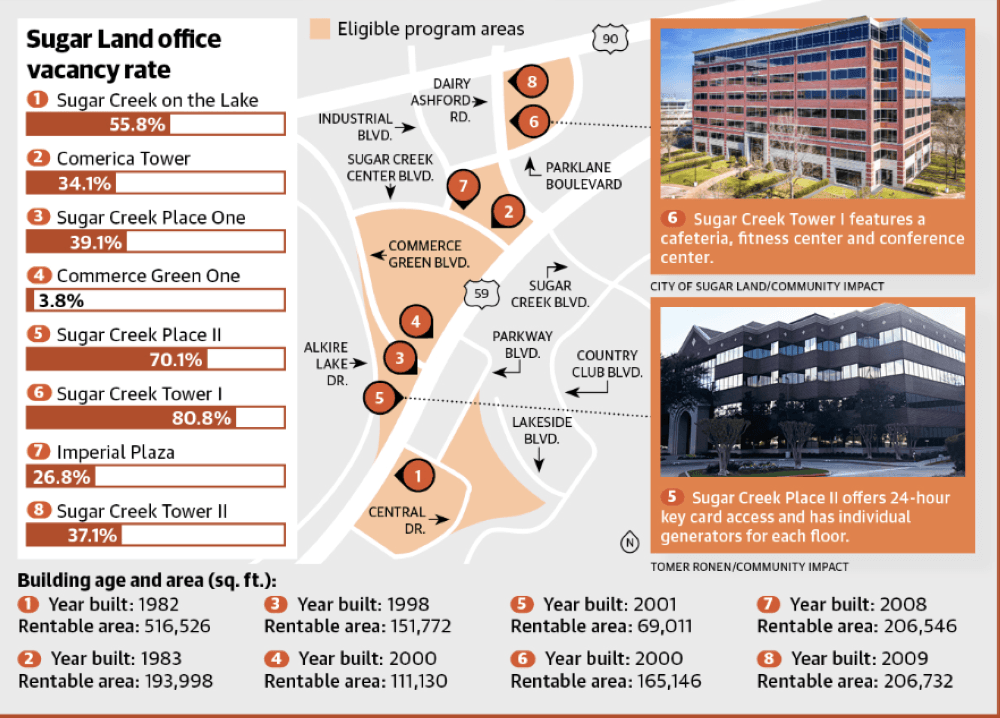
The program will provide property owners and office tenants of office buildings within eligible corridors inside the Sugar Creek triangle up to 50% reimbursement through five- to 10-year performance-based agreements to help support building modernization, infrastructure upgrades and tenant improvements, per the release.
City officials said the program is meant to encourage offices operating in industrial or flex spaces to relocate to professional office environments—especially those that are vacant or underutilized—to preserve industrial land for targeted industries such as:
- Life sciences
- Advanced manufacturing
- Business and professional services
- Information technology
- Tourism
The program will be available through two pathways, including the property owner and tenant paths, both with varying requirements.
The funding
The program will be funded by the Sugar Land Development Corp. It will support building upgrades, which Alexander said can be tied to job creation and capital investment by ensuring the city keeps up with surrounding markets.
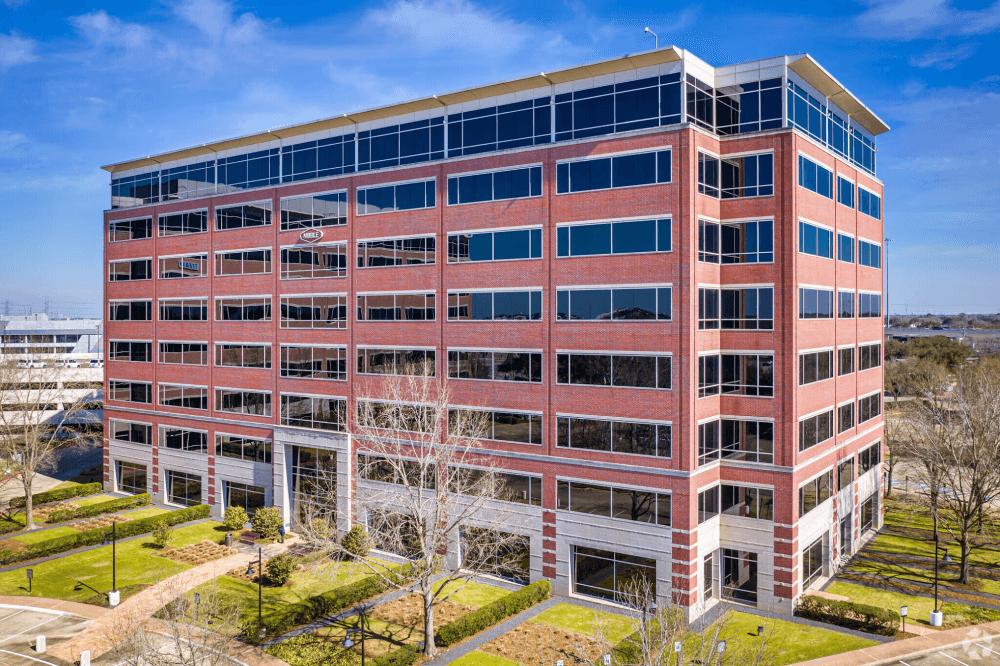
The program comes as the Sugar Creek area far exceeds the average 15% vacancy rate of Sugar Land office buildings, Alexander said. The goal is to bring the aging buildings to Class A status so Sugar Land can be viewed as a workplace destination akin to the Galleria or the Energy Corridor.
“It really draws in a crowd of people who want to work in person because, with working from home during [COVID-19], a lot of people got very comfortable,” she said. “We want you to come work here, play here and all the things in Sugar Land—that’s exactly what this program is for.”
To achieve these goals, Alexander said officials expect the modern office finish-outs to cost approximately $75-$100 per square foot. However, maintenance items such as paint or carpet will not be covered by city funds.
The city will invest $500,000 in fiscal year 2025-26, with another $1 million planned for FY 2026-27.
The background
The city has seen a change in its workforce preferences, which Alexander said could be attributed to the COVID-19 pandemic, with many offices continuing hybrid or remote workplaces, causing the need for the city to make buildings more desirable to achieve its goal of attracting businesses.
Additionally, many businesses have moved to higher-quality buildings as the buildings included in the program are aging and do not have the additional features companies are seeking, such as flexible seating and higher finishes.
Alexander said the idea for the program came after the city approved a $12.5 million agreement with Rebees, a commercial real estate company, to support office modernizations in Sugar Land Town Square.
“[The Sugar Land Town Square agreement] helped me develop the program ... helped me come up with the eligibility pathways and the rationale behind the funding,” she said.
Zooming out
Although the Sugar Creek area has seen an influx of vacancies, the overall Sugar Land market is at an approximate 15% vacancy rate, which is lower than the Houston metro at 22%, officials said.
This further emphasizes revitalizing the aging area to ensure the offices can attract clients instead of remaining near empty, Alexander said.
Office vacancies continued to rise across Fort Bend County in 2025, reaching 22.9%, according to a fourth-quarter 2025 commercial real estate report from Colliers. However, this is down from the same quarter of 2024, which saw a 25.6% vacancy rate.
As the county’s population nears 1 million residents—and with estimates saying that could double by 2050—Keri Schmidt, president and CEO of the Fort Bend Regional Partnership, said Sugar Land is leading the way in both commercial and residential revitalization with this new program helping to attract diversified businesses to the area.
“Sugar Land is really in a unique spot where they’re blazing the trail in Fort Bend County as a community that has less than 4% of property to expand,” she said. “Their focus is on all the right things right now.”
Stay tuned
More than just seeing the office vacancies go down, Alexander said another return on investment is the modernizing of spaces that can be used for years to come as the city shifts its focus to redevelopment with only 4% of developable land remaining.
“The final product that’s going to exist, the infrastructure that’s going to exist—that’s the true ROI,” she said. “We have the funds to be able to put back in our community—that’s what they’re there for.”
Mayor Carol McCutcheon said the program shows the city’s commitment to ensuring the community stays competitive in the region. City officials said they hope the program, which is one of the mayor’s first major initiatives since being sworn in last June, can lead the way for the Greater Houston area.
“Sugar Land is growing, and we need the right space for that growth,” McCutcheon said. “It is purposeful progress and workforce-focused growth that meets today’s needs while preparing for tomorrow’s future.”
Applications for the program are ongoing until the fiscal year funding runs out, with new applications opening for FY 2026-27 on Oct. 1, Alexander said. Projects must be within the project area during the pilot, although she said boundaries could be expanded in the future.
Each contract will be drawn on a case-by-case basis, with each project looking different based on improvements and needs, Alexander said.
Interested businesses, property owners, brokers and developers are encouraged to contact the Sugar Land Office of Economic Development at [email protected].
The city also launched the Sugar Land Starts Innovation Fund, a new economic development initiative designed to attract start-ups to Sugar Land, officials announced in a March 4 news release. The program aims to build the city’s innovation ecosystem help fill vacant office space.