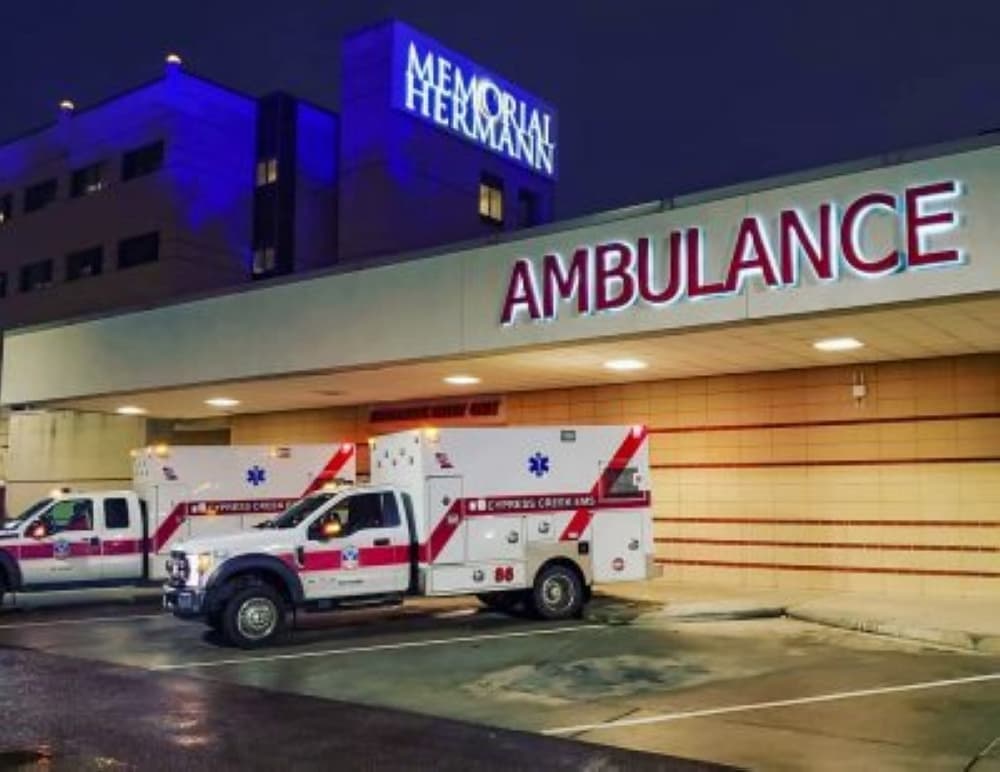
Cypress Creek Emergency Medical Services CEO Wren Nealy alleged several issues pertaining to the impending transition of services to Harris County Emergency Services District No. 11’s newly formed EMS provider, ESD 11 Mobile Healthcare, in an Aug. 10 news release.
Tension has risen between the two entities since June 2020, when ESD 11 commissioners initially voiced concern over extending the district’s contract with CCEMS, which provides emergency medical services for approximately 177 square miles of north Harris County. Last September, ESD 11 commissioners voted to terminate that contract after 360 days and announced in December it would form its own EMS provider—ESD 11 Mobile Health Services—to replace the services provided by CCEMS beginning Sept. 1.
According to Nealy, many of the employees that will be leaving CCEMS to work for ESD 11 Mobile Healthcare have requested to use paid time off in the final months leading into the transition of services, which Nealy said has strained CCEMS' ability to provide services.
“ESD 11 Mobile Healthcare CEO Doug Hooten publicly stated all CCEMS employees who wanted employment with ESD 11 must work through the transition if they wanted to be ensured of a job,” Nealy said in a statement. “I had to stop paid time off for July and August because many of the CCEMS employees planning to work for ESD 11 wanted to take time off for one or both months leading into their new job.”
Nealy referenced an email sent to a CCEMS employee from an ESD 11 human resources official stating, "Your status with CCEMS is no longer a factor in your employment with ESD 11."
“This statement encouraged the CCEMS employee and others to leave early,” Nealy said. “When I informed Mr. Hooten of this situation, he supported the position statement and abandoned our agreement that would better ensure a safe and orderly transition.”
While Jerry Thomas, ESD 11 Mobile Healthcare community engagement manager, confirmed that the email was sent, he said ESD 11 officials ultimately do not have the power to dictate what CCEMS employees do prior to joining ESD 11 Mobile Healthcare.
“During our new hire academy, we have made it clear to all new hires coming over from CCEMS that they are highly encouraged to fulfill their obligations to their current employer,” Thomas said. “ESD 11 will not interfere in the employment relationship between CCEMS and its employees.”
According to Nealy, the email sparked a wave of early resignations totaling around 20 employees, which he said was roughly the number of staff members required to run three ambulances.
Answering the call
In addition to staffing challenges, CCEMS officials alleged that ESD 11 is accusing CCEMS of prioritizing private transfers over 911 calls. In an Aug. 4 letter sent to Nealy, Hooten pointed to several new business ventures sought out by CCEMS that he believed were interfering with CCEMS’ ability to fulfill its contractual agreement with the district.
“CCEMS recently announced that to replace the loss of income that will result from the Sept. 1, 2021, end of CCEMS's contract with the district, CCEMS would begin providing pay-per-ride, nonemergency transport services to entities unaffiliated with the district,” Hooten said in the letter. “CCEMS also announced a partnership with an air travel provider for air ambulance services.”
Hooten alleged in the letter that during a recent chemical release incident at Hurricane Harbor Splashtown in Spring, CCEMS had at least one unit that was unable to respond because it was running a private transport call. Additionally, Hooten cited an Aug. 2 incident in which CCEMS sent a truck out on a pay-per-ride transport, while the EMS provider had five 911 calls on the board.
“Neighboring agencies have been calling me and the district commissioners to report that this is but one example of a very disturbing trend,” Hooten said in the letter. “This behavior is unacceptable and irresponsible. It is even more appalling considering that you have recently tried to blame the district for a supposed lack of staff. ... In sum, CCEMS is putting the entire community at risk by showing greater loyalty to its new business model than to the residents it is contracted to serve."
According to Nealy, the two transfers Hooten referred to were emergency transfers from a local hospital to a higher level of care for emergency surgery, which he said was keeping in line with CCEMS' long-standing critical care policy.