It’s been 3,167 days since Hurricane Harvey, and if there’s one person who won’t let Kingwood residents forget, it’s Bob Rehak.
Since launching his website “Reduce Flooding - NOW!” nearly nine years ago, Rehak has become synonymous with flood mitigation efforts in Kingwood. Posting on his website nearly every day, Rehak said he has published the equivalent of more than 25 average-length novels.
Community Impact sat down with Rehak to learn more about the writer behind the blog and the inspiration that fuels his passion for flood mitigation.
The backstory
A self-proclaimed “child of the wind,” Rehak said his father’s military career moved his family to places like Pennsylvania, Minnesota and Germany. He earned his bachelor’s and master's degrees in journalism from Northwestern University, and later went into advertising working for major agencies in Chicago before moving to Dallas with his wife in 1980 in search of warmer weather.
“I bought a beautiful house that was on Spring Creek and looked out over the Richardson golf course ... in a lot of ways it was my dream house,” Rehak said. “And even though I was promised that it was 2 feet above the 100-year flood plain, within two years it flooded.”
Rehak said the Army Corps of Engineers resurveyed the creek to find out why the area was flooding in minor rainfall events and found the culprit to be upstream development.
“What they didn’t tell me is that floodplains are dynamic, not static, and they’re constantly changing,” Rehak said. “And in the case of the house I had in Dallas, in the span of three years ... it went from 2 feet above the 100-year floodplain to 10 feet below it.”
The catalyst
Rehak and his wife sold the Dallas house and relocated to Houston before settling in Kingwood.
“I bought the [house] farthest from the river on the highest ground, [and] thank God I did, because during Harvey, flooding stopped at our driveway. ... They were launching rescue boats from our driveway,” Rehak said. “The other nine [houses I looked at] all flooded.”
With Harvey serving as a kind of “wakeup call,” Rehak said he launched his blog in early 2018 to educate people about the causes of flooding and lobby for flood mitigation.
“When the floodwater went down, I went out with my Nikon, and I photographed everything I could find to create a record of what it was like because I knew people weren’t going to remember it forever,” Rehak said.
The approach
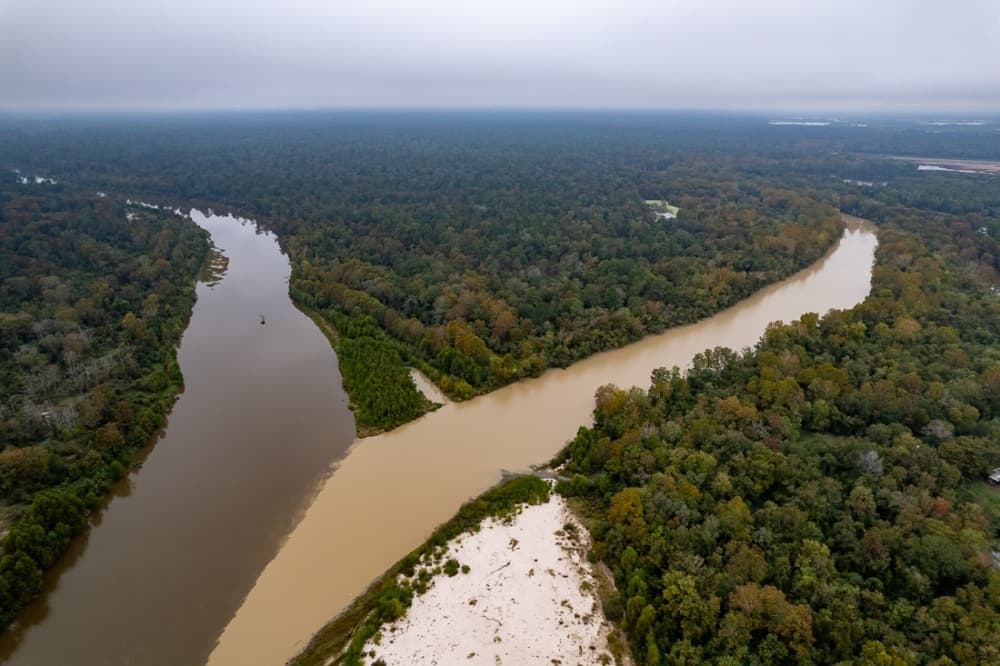
In the blog’s infancy, Rehak said he rented helicopters on a monthly basis to take inventory of the San Jacinto River Watershed. While he still takes the occasional helicopter tour today, much of his observation work can be done via drones—a less costly venture.
“I feel the need to protect people who may not be aware of the dangers, so that’s the education part of the blog,” Rehak said. “This is my way of giving back to the community.”
On the lobbying side, Rehak works with government officials to lobby for flood mitigation, serving as Precinct 3 Commissioner Tom Ramsey’s representative on the Harris County Community Flood Resilience Task Force.
In addition to advocating for flood mitigation funding for the San Jacinto River Watershed, Rehak pushes for upstream detention, dredging and higher outflow capacity on Lake Houston. Updating development regulations in neighboring counties, requiring abandonment plans for sand mining operations, prohibiting senior living facilities from being built in floodplains, and implementing flood warning systems are also areas of focus, he said.
During a September town hall, Houston City Council member Fred Flickinger honored Rehak for his work in the Kingwood area with a proclamation from Mayor John Whitmire declaring Sept. 30, 2025, to be Bob Rehak Day in Houston.
What’s next
Currently, Rehak is working on a new “Lessons” section of his website that summarizes everything he’s learned about flooding and flood mitigation since Harvey. He said the new section may inspire him to wrap up a book he’s been working on. With or without a book though, Rehak said he’ll continue writing.
“Nothing has really changed in the watershed, and I’m not going to stop until it does,” Rehak said. “Most people don't have a clue about the power of moving water; I have a healthy respect for it.”