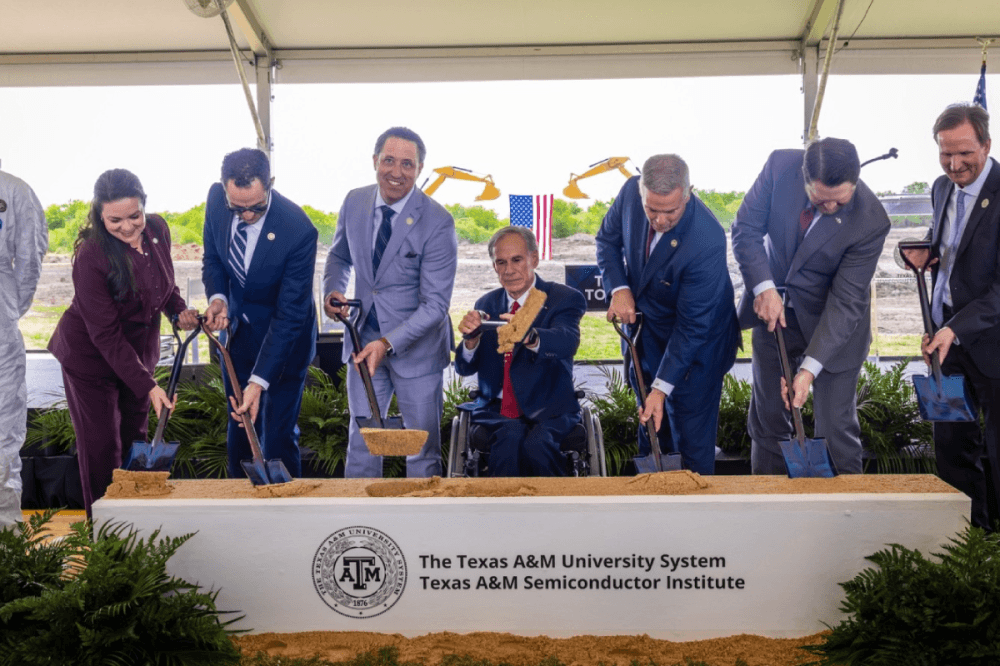
Texas A&M University leaders, state officials and industry partners gathered at the university’s RELLIS campus on April 9 to break ground on the Texas A&M Semiconductor Institute. (Courtesy Office of the Texas Governor)
Texas A&M University leaders, state officials and industry partners gathered at the university’s RELLIS campus on April 9 to break ground on the Texas A&M Semiconductor Institute. It’s a project worth more than $200 million, designed to expand training, manufacturing and domestic research on computer chips, which powers computers, phones and cars, among other technology.
The big picture
Speakers at the groundbreaking all agreed that the institute, referred to as TSI, would help position Texas to reduce reliance on overseas semiconductor production while strengthening economic growth and national security.
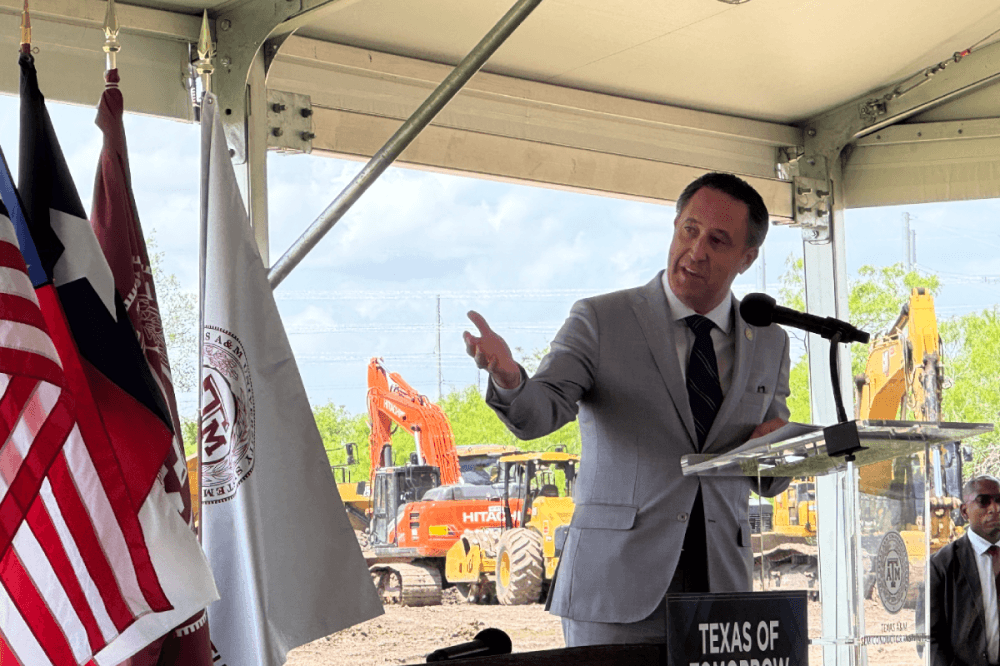
The Texas A&M University System Board of Regents approved construction of TSI in February as part of a $205.5 million infrastructure and equipment project. (Karley Cross/ Community Impact)
“We are working on cutting edge technologies that are going to impact this state, the nation and the world,” A&M University System Chancellor Glenn Hegar said during the ceremony. “Semiconductors power everything from phones and vehicles to defense systems, and right now, we’re working to bring that capability back home to the State of Texas.”
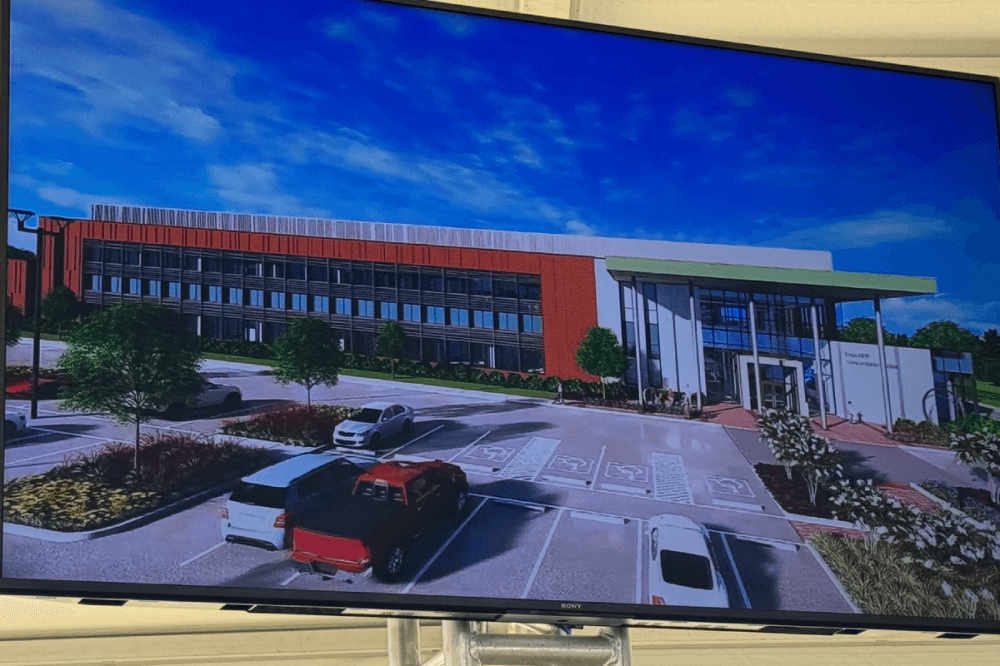
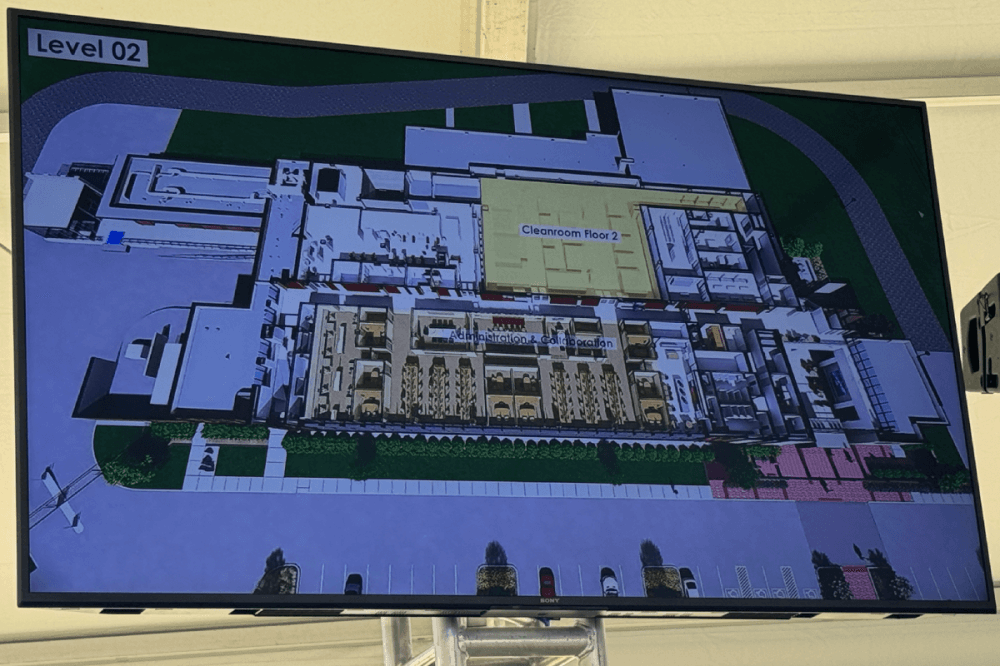
TSI is a project worth more than $200 million, designed to expand training, manufacturing and domestic research on computer chips. (Karley Cross/Community Impact)
Located behind RELLIS’s Research Integration Center in Bryan, the roughly 80,000-square-foot facility will include advanced clean rooms, fabrication space and labs designed to mirror real-world semiconductor production environments, officials said.
What leaders are saying
Regent Jay Graham said the institute will serve as a hub connecting academic researchers, government agencies and private industry partners, including companies already investing heavily in semiconductor manufacturing across Texas.
He described the project as a strategic response to supply chain disruptions exposed during the COVID-19 pandemic.
“We were reminded how dependent we were on other countries. This is a national vulnerability. This is for national security,” Graham said. “This project ... strengthens Texas. It strengthens our workforce and it strengthens our country.”
Headlining the groundbreaking, Texas Governor Greg Abbott framed semiconductor production as a global race tied to artificial intelligence, defense technology and future economic growth.
Texas Governor Greg Abbott framed semiconductor production as a global race tied in with artificial intelligence, defense technology and future economic growth. (Karley Cross/ Community Impact)
“It is truly an existential threat to the United States if we don’t lean into [semiconductor research and manufacturing], step up to it and ensure that we lead the way forward,” Abbott said. “We, in Texas, and we, in America, must be microchip independent.”
Abbott said Texas already ranks first nationally in semiconductor manufacturing and exports, and said this investment in research and workforce is going to help maintain that position.
The impact
State Rep. Paul Dyson, R-Bryan, said the institute could help keep local graduates and attract new employers to Aggieland.
“For years, we’ve watched many of our brightest Aggie grads take their talents elsewhere,” Dyson said. “At the heart of this institute is the next generation of semiconductor workforce, skilled technicians, engineers and researchers. Graduates who can stay right here and launch new companies and attract high-quality employers here in Brazos Valley.”
The TSI project comes as Bryan-College Station continues to attract major investment, including the recently opened US Modules solar facility, signaling a broader push toward domestic energy and technology in the area.
Put in perspective
Speakers repeatedly emphasized workforce training as a central mission of the institute.
Students and researchers will train inside industry-standard clean rooms while working alongside private-sector partners. It’s an approach university leaders hope bridges a gap between academia and industry.
Students and researchers will train inside industry-standard clean rooms while working alongside private-sector partners. (Karley Cross/ Community Impact)
TSI Director Steve Putna called that gap the “valley of death” between innovation and industry adoption.
“We are committed to bridging those ecosystem gaps and lowering the barrier for innovation to come to market,” Putna said.
The groundbreaking follows state efforts to expand domestic semiconductor manufacturing, including the Texas CHIPS Act.
Speakers also agreed that TSI represents a long-term investment in innovation, economic growth and national defense preparedness.
Dyson added, “I see more than this concrete and steel being built out here. It’s the future of American innovation taken route right here in our own backyard. Semiconductors are the backbone of our modern economy.”
Next steps
Construction on the Texas A&M Semiconductor Institute is expected to continue through 2028.
More Development news from Bryan - College Station