On any given day, many Houston drivers pass dozens of Flock cameras without noticing. When they pass, their license plate numbers and characteristics of their vehicle—its color, bumper stickers, damage to its exterior, etc.—are also recorded into a shared network where Flock users can see the information.
This process has caused concern for many residents, who say it feels like a privacy violation, and cases of law enforcement misuse have heightened those worries.
Due to these concerns, Gov. Greg Abbott has halted funding for the technology, and Harris County is reviewing its contract with Flock. However, for the city of Houston, Mayor John Whitmire says it’s a “non-issue.”
Houston officials signed a contract with Flock Safety in 2022 for five years. In 2027, the city will have to decide if it will renew or end the contract with the technology company as state funding fizzles out.
How we got here
Some cases of misuse of the cameras and their information have prompted privacy concerns from residents. In Texas, officers have been suspended and faced charges for misusing Flock for personal or criminal reasons.
However, Whitmire’s office said those aren’t problems for Houston and that Flock cameras “have historically been a valuable crime-fighting tool,” but they must be monitored, and those who misuse it must be held accountable, he said.
In 2025, Hector Soliman-Valdez, a representative from Flock, told Houston City Council that the Houston Police Department receives notifications for Amber and Silver alerts for matching vehicles within 20 seconds of the alert. He also said at the time, $7.4 million in stolen vehicles had been recovered in Houston using Flock.
“That’s folks who are getting their vehicles returned to them,” Valdez said.
HPD declined to provide comment, but in 2022, when proposing a contract with Flock, department leaders said it had success with the technology, noting specific cases of recovering stolen vehicles and a case where the technology helped the department find a missing minor because of ALPRs tracking the vehicle she was in.
When proposing the contract, HPD officials said the ability to tie into a larger network of cameras with other departments is part of the reason they want to use the technology.
“One of the reasons we were looking at [Flock] in the first place is the number of partners that are available to us already,” said former Assistant Police Chief Milton Martin during a 2022 meeting. “We can’t do it alone; it requires partnerships and teamwork and cooperation throughout the city to keep our residents safe.”
At the time, several council members supported the technology. During the meeting to approve the contract, former District C council member Abbie Kamin said HPD was taking proper precautions to ensure the technology is properly used and that the benefits of Flock “are clear from a law enforcement and an investigative perspective.”
Whitmire said that “good leadership” is a solution to the concerns around Flock, and the city of Houston does not have problems of misuse.
“It’s a non-issue in the city of Houston,” he said. “We do it right. They’re a tool of law enforcement that protects the public, and we listen to the community.”
What is it?
Flock Safety cameras are automatic license plate readers, or ALPRs. According to the company, the cameras record vehicle sightings at a specific place and time, and capture license plates and vehicle characteristics. They can be used to help authorized users find relevant vehicle evidence and provide leads for investigators to assess alongside other evidence.
While security cameras and LPRs are not new, Flock's networked platform allows participating law enforcement agencies to search and share license plate data across jurisdictions. Traditional closed-circuit television (CCTV) cameras, by contrast, often store footage locally or under the control of the camera's owner, rather than in a shared law enforcement database.
The technology company also keeps data for up to seven days unless an authorized investigation requires them to retain it longer. However, each authorized user, such as a police department, controls the data generated by its cameras, and agencies decide whether they want to share data and with whom, according to Flock Safety.
According to the city of Houston’s policy, the Houston Police Department is allowed to share ALPR data with other law enforcement agencies. However, data collected by city-used cameras must be deleted after one year unless a division requests that it be kept longer for a specific case. The department’s Technical Operations Group sets rules for who can access the systems and how they can be used, and oversees training for employees who use them.
Cost to the city
In 2022, Houston officials approved a $6.3 million contract with Flock Safety for 318 cameras to be placed in various locations throughout the city.
The five-year contract is set to expire in 2027. Since the initial contract, the city has also accepted grants from the Texas Department of Motor Vehicles over the last five years, with some of the funding going toward purchasing ALPRs, though Flock was not specifically named in the documents.
Although the city approved over 300 cameras, users have documented over 1,500 cameras within Houston’s city limits, according to DeFlock, a website that lets people report where Flock cameras are installed. Though unconfirmed how many, private entities’ devices are included in the reporting.
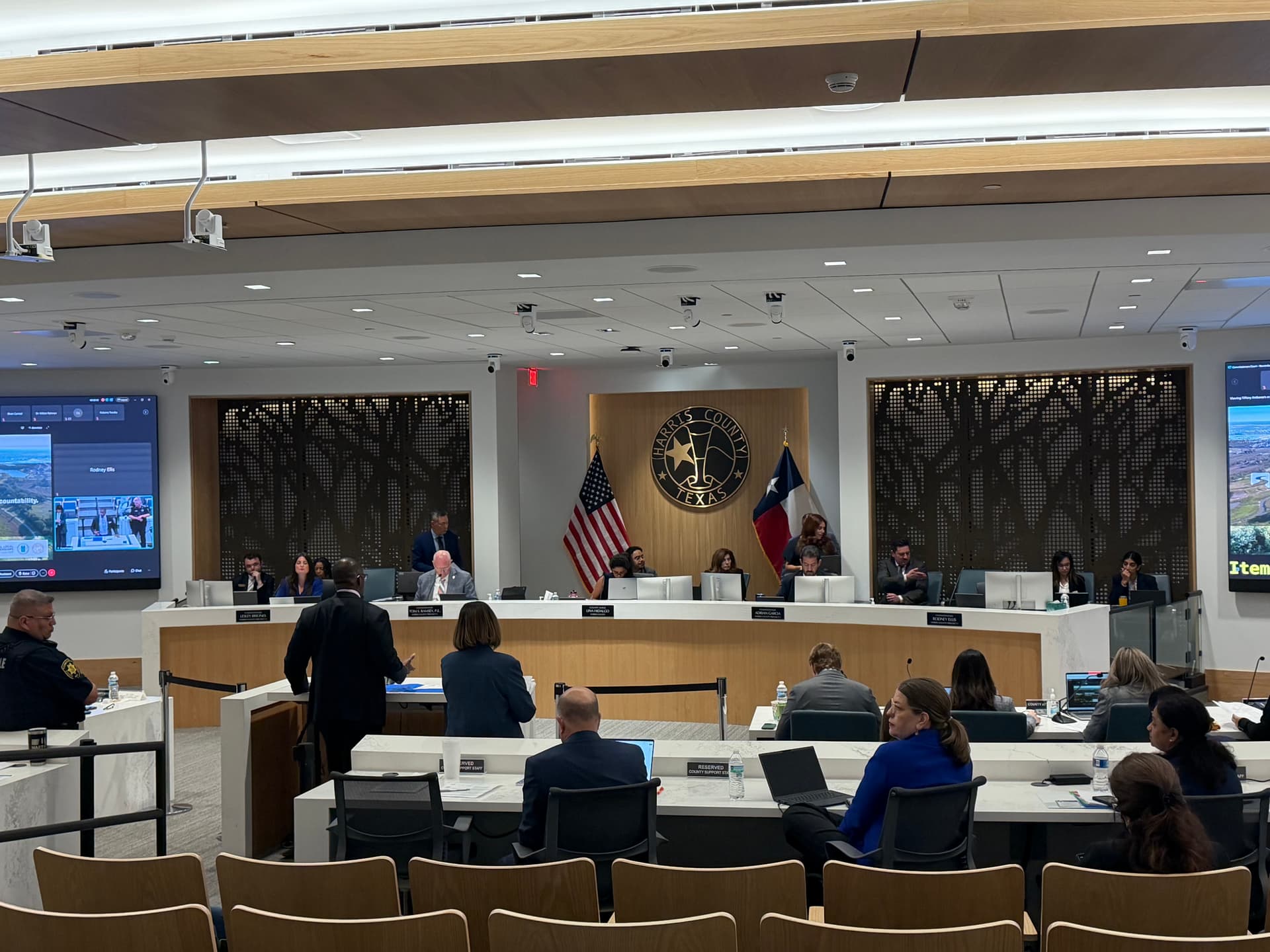
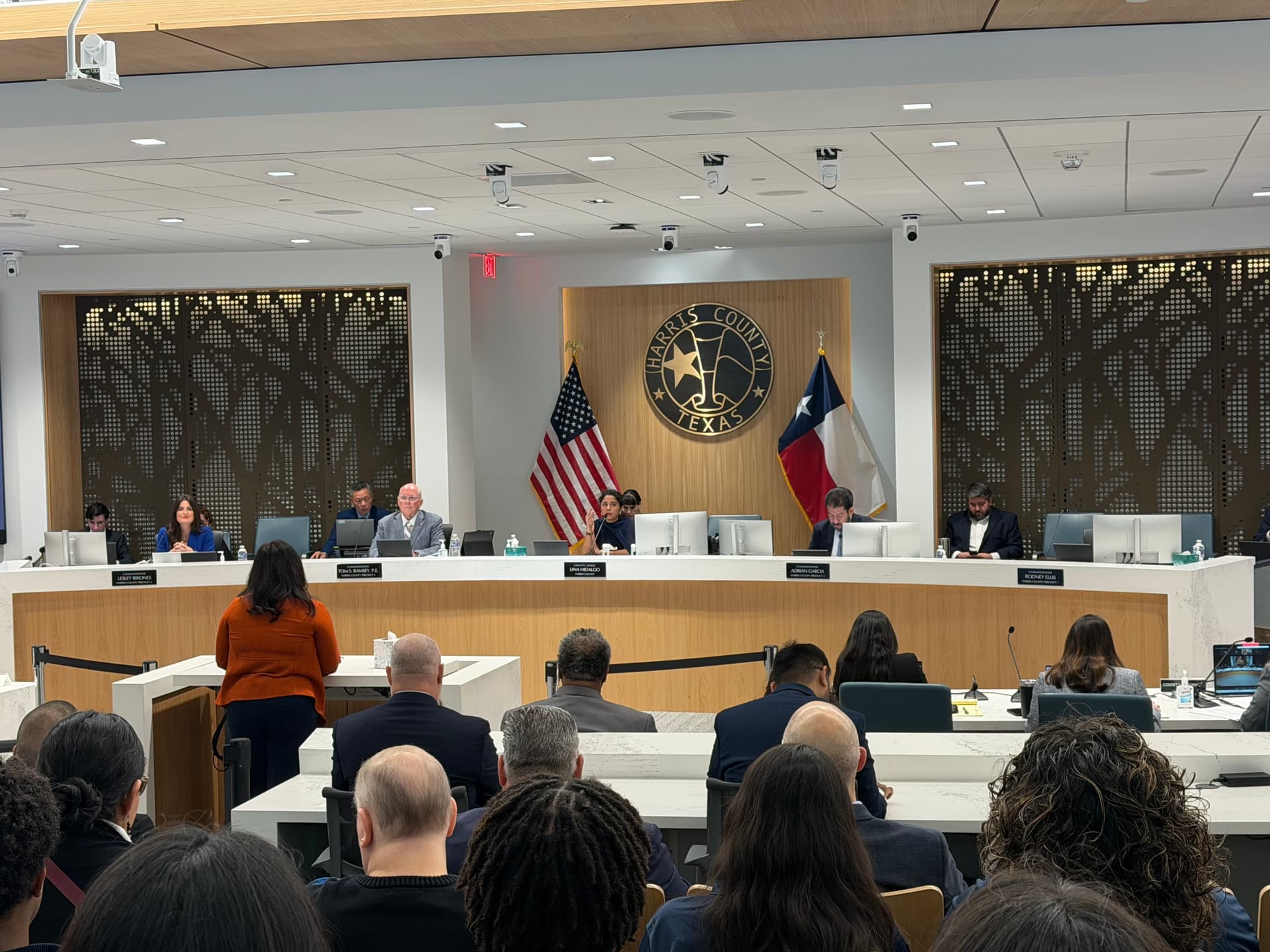
In October, Harris County officials said Flock Safety reported about 5,300 active cameras across the county as of December 2025. However, it is unclear how many are located within Houston.
Many of the county’s cameras are contracted with municipal agencies and private organizations such as homeowners associations. The county does not have control over those cameras, the report states, but county law enforcement can administer third-party networks or access data through sharing arrangements.
What residents are saying
As more concerns have been brought up in recent months, Abbott ordered the state to halt funding for Flock cameras in August. This includes state agencies purchasing cameras and providing funding for local agencies to purchase the system. Harris County also decommissioned the county’s cameras in Precinct 4 in October.
On the other hand, nearby cities, such as League City, are letting residents voice whether or not the city should disable the cameras through propositions on the November ballot.
Luke Ramoutar is a member of the Democratic Socialists of America and leads a coalition that advocates against Flock. He said even if there are departments that don’t abuse the system, Flock itself is still accessible by other agencies whose personnel could misuse it.
“It doesn't actually matter if you are a particularly good individual because there is going to be some department out there that is going to start scanning for stuff that you don't want,” Ramoutar said. “So, it doesn't actually change the conversation even one little bit, if we say, ‘Our police station is good,’ because it just takes one bad agency.”
District C council member Joe Panzarella said District C’s office has not purchased Flock cameras and they are not actively considering purchasing any because District C residents have concerns about data privacy and malpractice.
Panzarella added that while the city has cameras operating, the biggest purchasers of Flock cameras in his district are not agencies but private citizens, whether for homeowners associations or private businesses.
“The state pulling funding only took a small percentage offline,” Panzarella said. “It really shows how many Houstonians are actually the ones kind of pushing the Flock contracts forward.”
In an emailed response, Flock representatives said its technology is an important safety tool for law enforcement in Texas.
“We support thoughtful legislation and strong privacy, transparency and accountability guardrails that ensure technology is used responsibly while preserving law enforcement’s ability to use effective tools to keep people safe,” the company said.
They also added that in cases of misuse, agencies are responsible for investigating employee conduct and applying their own disciplinary policies, not Flock.
Looking ahead
Whitmire’s office said the city is assessing how the state funding pause will affect Houston. However, the city is not considering decommissioning any Flock cameras at this time.
He did not answer whether or not the city will renew its contract in 2027, but Panzarella said he is sure that it will be discussed in depth when the time comes.
Whitmire also added that Flock cameras have historically been a valuable asset for law enforcement, but they must be monitored and the users of the cameras must be held responsible.