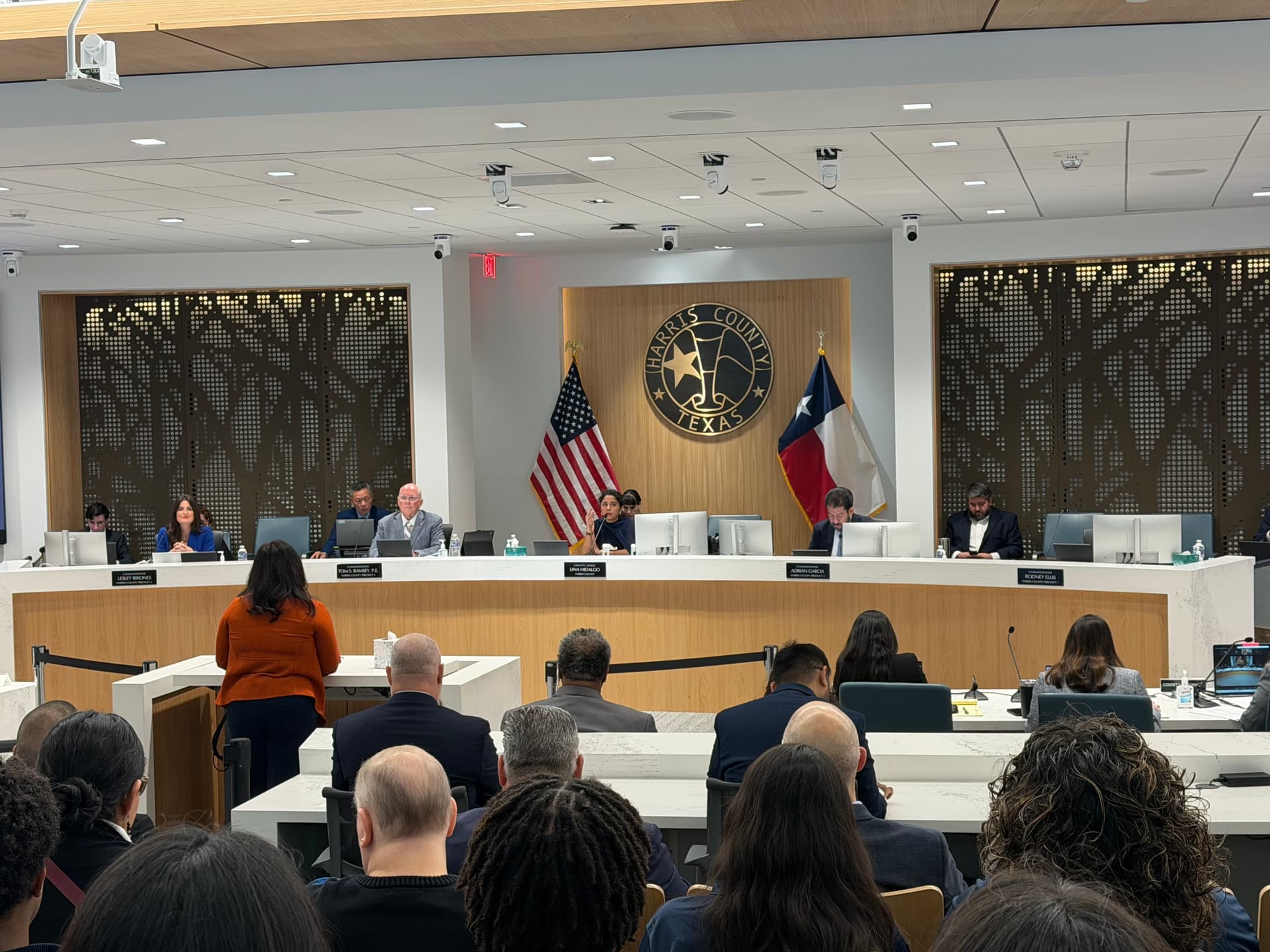
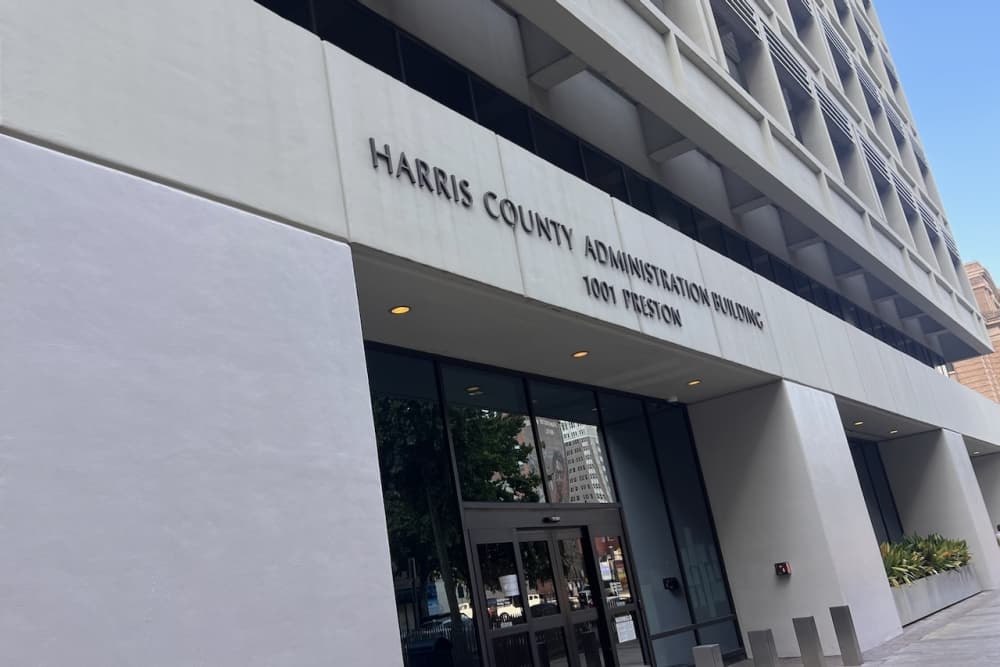
The Harris County Commissioners Court voted to table a discussion on how to allocate infrastructure and road funds between the four precincts during its regular meeting Nov. 12.
What happened
Commissioners will revisit the previously agreed-upon allocations from the county’s mobility fund that the Harris County Toll Road Authority, or HCTRA, gives to the county. Precinct 1 Commissioner Rodney Ellis requested discussion on the item, seeking “equitable allocation,” according to agenda documents.
In a statement, Ellis said every county resident deserves “safe roads and reliable infrastructure, regardless of their ZIP code.”
“Working families pay into this system and deserve to see their tax dollars invested in safer roads and stronger neighborhoods,” Ellis said. “Under the current formula, they have been forced to prop up the wealthy at their own expense.”
HCTRA is one of the organizations the court governs, setting the budget and tax rates for it each year. In the FY 2026-27 budget, the court approved $180 million for the mobility fund, with allocations to each precinct.
The mobility fund is made of transfers of surplus revenue from HCTRA and funds transportation projects in the county, according to budget documents. The money can be used to study, design, construct, maintain, repair, or operate roads, streets, highways or other related facilities, per the documents.
The formula “equally weights” historical mobility transfers, lane-miles of county road and pavement condition in determining transfer amounts, the documents state.
In the adopted budget, the precincts will receive the following allocations:
Precinct 1: $39,357,339
Precinct 2: $41,462,555
Precinct 3: $57,393,176
Precinct 4: $41,786,930
Offering input
In an email newsletter to constituents sent Nov. 11, Ramsey asked constituents to speak against a change to the funding formula during the meeting’s public comment session. About 20 residents showed up to comment.
Stephanie Madrid, director of client services and operation at Cypress Assistance Ministries, said her organization faces a daily struggle to help those in need.
“If the government is by the people and for the people, we must ensure that money remains in Precinct 3 so we may continue to serve our community members on the day-to-day basis,” Madrid said.
Dajauneke Minor, Spring ISD’s civic engagement coordinator, asked commissioners to keep community needs and safety front-of-mind. Spring ISD sits in Precinct 1 and Precinct 3.
“We’re talking about families who depend on safe streets, children walking to school and neighborhoods that cannot afford to be overlooked,” Minor said. “I’m not saying road mileage shouldn’t matter. I’m saying it shouldn’t be the only deciding factor. As you consider funding, I ask that you prioritize safety, community impact and need. Because funding should reflect need, not just mileage.”
The background
After the 2021 county redistricting that created new precinct boundaries, Ramsey’s newsletter states Precinct 3 now oversees 47% of the county’s unincorporated areas and Precinct 1 is responsible for 15%.
“While the responsibilities per precinct changed, the funding percentages per precinct did not—leaving Precinct 3 at a significant financial disadvantage,” the email states.
Ramsey warned a formula change could jeopardize millions in funding that currently go toward road and infrastructure improvements.
“I think it has worked, and I think it will be effective going forward,” Ramsey said during the meeting.
The court approved a funding formula during a special meeting April 21, 2025 to distribute Harris County Toll Road Authority or HCTRA, mobility funding.
During the meeting, Ramsey said the mobility fund formula was established in response to threats that the state legislature would set one for Harris County instead of allowing commissioners to decide it for themselves.
Zooming out
During the Oct. 15 regular meeting, Ellis said he would vote in favor of the no-new-revenue rate on the budget for FY 2027-28 if a formula change isn’t approved. He said Precinct 1 and 2 have the “highest proportion” of low-income residents in the county.
A majority of the court is required to adopt a budget and set tax rates. Adopting the no-new-revenue rate means the county collects the same amount of property tax revenue as the previous year.
“I don’t think our job ought to be to reinforce the inequities that our predecessors put in place,” Ellis said Oct. 15. “We just went through a very heated discussion on setting our tax rates, and in part, they were set where they were because of cuts from the state government and the federal government. And I, for one, don’t feel comfortable reinforcing those inequities in my precinct.”
During the Nov. 12 meeting, Garcia said equity is a concern for him but that the court needs to be thoughtful of the entire county.
“It is important for us to look at this new day with a very, very clear set of lenses, in that we need to work to take care of the entire county in a very, very practical way,” Garcia said.