Georgetown City Council members denied a request from Pulte Homes, the developer of Sun City, to adjust development standards in the future Neighborhood 61.
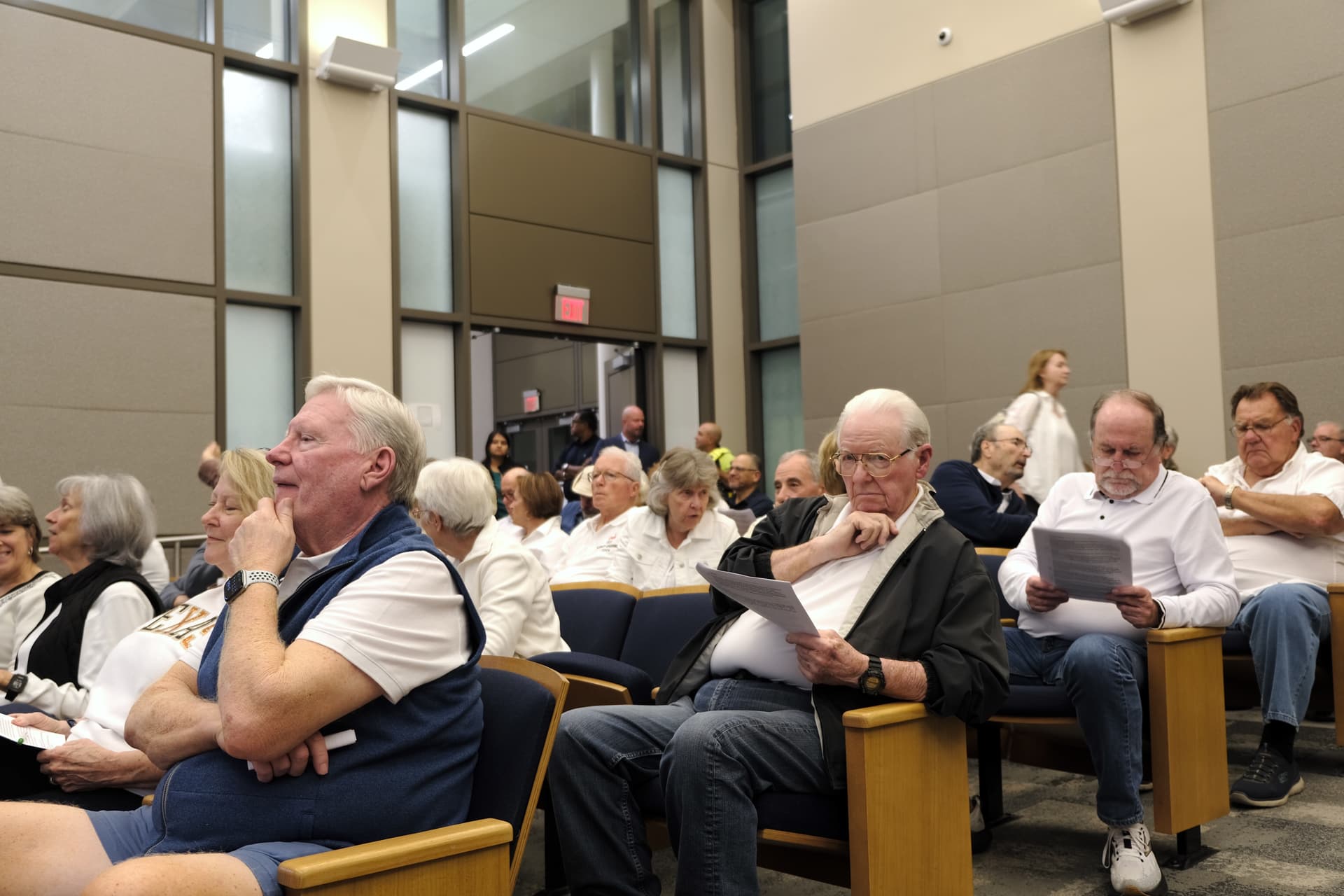
Sun City residents came out to the Nov. 10 meeting to speak against the request, citing lack of communication from the developer and unsanctioned expansion.
What happened
Council members voted 6-1 to deny the request and hold Pulte to Sun City's original development standards, including a minimum lot size of 5,000 square feet and up to 75 homes in the neighborhood.
Pulte's request would have reduced the lot size by 1,000 square feet for homes in Neighborhood 61—the final undeveloped 25-acre tract within Sun City's original development agreement boundaries, located along SH 195.
Additionally, the developer proposed increasing the maximum building coverage from 50% to 55%.
How we got here
The original Sun City development agreement between Georgetown and developer Del Webb was finalized in 1995. This established the framework, land use and development standards for the group of neighborhoods.
As each neighborhood developed, the city annexed them individually and approved planned unit developments, or PUDs—approximately 75 PUDs across the community—which defaulted to the standards in the development agreement.
Community amenities like golf courses, pools and activity centers were planned around an original projected build-out of around 10,000 homes. Del Webb later sold the project to Pulte.
Those in favor
Peter Verdicchio—a representative for SEC Planning, which partners with Pulte for the master planning of the neighborhood—said that Neighborhood 61 will offer an attached duplex housing type—a new Sun City product.
The smaller lot sizes are consistent with the duplex-style house, requiring less lawn maintenance, reducing irrigation and leaving common areas as native open space, Verdicchio said.
Those opposed
Dozens of Sun City residents attended and raised the following concerns in the public comment period:
Overcrowded amenities, including fitness classes, ballroom reservations, golf tee time bookings and congested roads
Losing mature heritage oak trees and canopy cover, and displacing wildlife
Lack of transparency from the developer
Residents said that Sun City's original marketing capped the community at 10,000 homes, yet the neighborhood continues to expand through annexing outside PUDs such as Somerset and Woodside, and has pushed the population past capacity.
"The issue here tonight is about a breakdown in communication and transparency," resident Tanya Carr said. "Sun City residents are passionate because many feel uninformed and unheard. ... We cannot allow a lack of transparency and distrust to divide Sun City Texas. Let's take a beat and let's talk."
Something to note
Although the city has legal authority over zoning and development agreements, it has no legal control over private homeowners association rules or amenity center capacities, city attorney Skye Masson said.
"If I lived in Sun City, I'd want to know about the amenity centers and the sidewalks and the pedestrian friendliness and all those things as well, but you need to take those up with Pulte because they are your developer," District 1 council member Amanda Parr said. "We are not the people that are making those decisions."
Council members strongly urged Pulte, the Sun City Community Association and residents to have structured town hall discussions before any future proposals come back to the city.