Central Health is aiming to make a lifesaving opioid antagonist more accessible to Travis County residents.
The Travis County hospital district plans to install 13 new naloxone distribution units in Austin, Pflugerville, Bastrop, Del Valle and Manor between April and September.
What you need to know
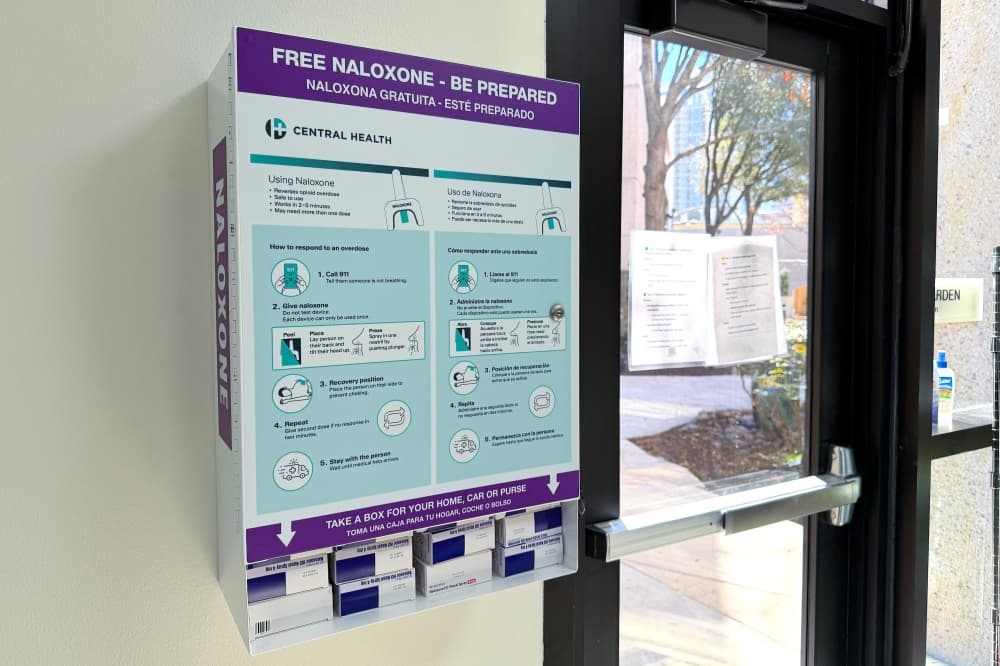
Naloxone, also known as Narcan, is a fast-acting medication used to stop and reverse an opioid overdose and death from occurring, according to Central Health information. The county’s 45 current and future distribution units include outdoor vending machines, wall-mounted dispensers and newspaper-style kiosks.
Over the next six months, Central Health is slated to open distribution units at CommUnityCare Health Centers and Integral Care—the county's mental health authority. The organization will install four units at the Travis County Jail in Del Valle.
The impact
The Travis County Commissioners Court, Central Health and local nonprofits have ramped up efforts to fight opioid overdoses in recent years. In 2022, the county declared a public health crisis as drug-toxicity deaths surpassed vehicle collisions as the leading cause of accidental deaths, according to the 2022 Travis County Medical Examiner’s report.
From 2023 to 2024, drug related-accidental deaths decreased by around 22%, while fentanyl-involved deaths fell by about 36%.
Central Health has distributed more than 3,200 free boxes of naloxone to community members, totaling over 6,400 doses, from October to March, according to Central Health data.
Quote of note
"It's a privilege to help provide access to lifesaving medications to people across Travis County and beyond," said Alanna Boulton, Central Health's director of operations for mental health, addiction care, and justice involved health, in a news release. "We also want to recognize the community organizations that have been doing vital harm-reduction work for years, helping save and improve the lives of our neighbors most in need.”
Going forward
Central Health will train staff on overdose-prevention readiness and maintaining adequate naloxone supplies through its new Overdose Prevention Champion Program.
The district is investing $40.2 million in behavioral health and substance use disorder care this fiscal year.