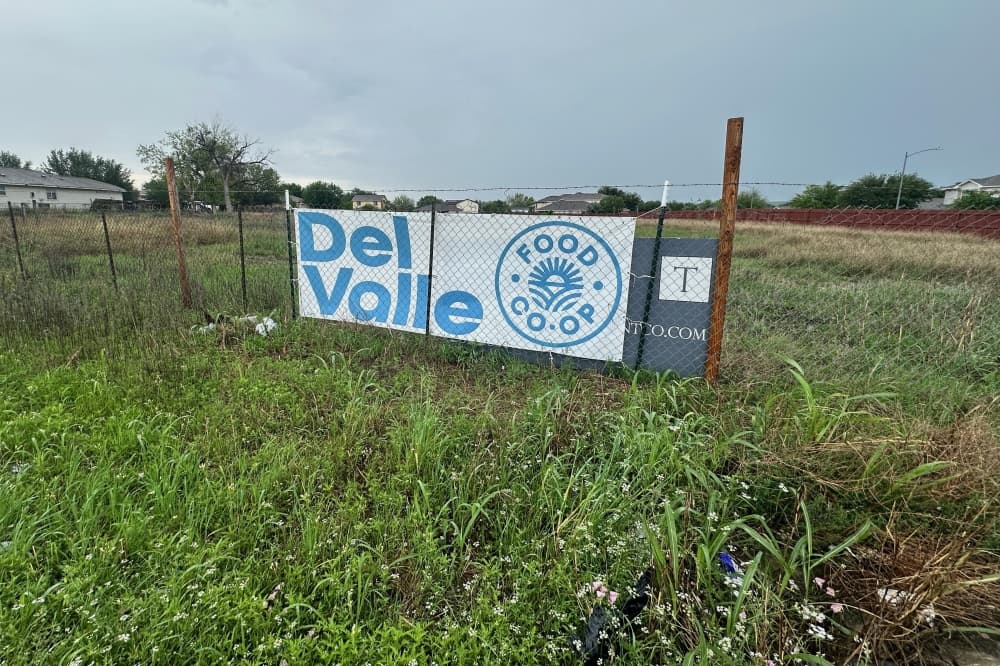
A community-owned food cooperative is moving closer to opening in Del Valle years after receiving more than $500,000 from the city to support its launch.
“We know that Del Valle is a food desert and the community has, for a very long time, been advocating and organizing around improving food access," said council member Vanessa Fuentes, who represents the area. "When we had the American Rescue Plan Act federal relief dollars, we worked to very quickly draw down some of those dollars to set the pathway for what will be the very first city-owned and -operated grocery store. That is huge for us."
The setup
City Council previously directed federal pandemic relief funds to the creation of a community-controlled grocer in an area historically lacking in healthy food retail options.
Officials reserved $3 million of Austin's nearly $190 million ARPA recovery funding to address food insecurity as part of regional food planning efforts, including half a million dollars for the food retail project serving the Eastern Crescent. Fuentes said she sponsored the approach given her view of local government's role in addressing health disparities.
"We can’t just leave it to the private market to address. Because guess what? It’s been up to the private market for all of this time, and we have yet to see a grocery store retailer in this area that meets the needs of this community," she said.
A city contract for the project's development led to public outreach, business planning, market research, site selection and securing hundreds of pledged co-op members in the Del Valle area. A local board of directors that doesn't include traditional grocery professionals was also identified.
The co-op pilot program is now slated to open in the fall, later than initially expected when the city funding was first approved. Board Chair Christopher Reyes said those involved in co-op planning have spent time learning the business and faced some challenges along the way, but he believes the community-oriented process is on track.
"I've heard from some people that this is taking too long," Reyes said in an interview. "In terms of timeline, we're actually doing quite well. And the reason cooperatives take so long is really a function of hearing a lot of voices and coming to a consensus."
The specifics
Co-op leaders eventually picked a retail location in Del Valle at 5807 Ross Road and signed a three-year lease. However, the property is zoned for residential use, where grocery operations wouldn't be allowed.
A resolution from Fuentes, approved by City Council on April 23, calls to update that zoning and clear the way for co-op operations. The move was also supported by the resident-led Austin-Travis County Food Policy Board.
Reyes said finding a suitable site proved difficult, given Del Valle's mix of city and county jurisdictions and much of the area being a flood zone. In the end, co-op leaders picked the Ross Road property given its proximity to residential areas, public schools, a future library and stops on Capital Metro's Del Valle bus route. The centralized site is meant to serve as a neighborhood grocer for residents who haven't had that resource, Reyes said.
What's next
The co-op's launch as a pilot later this year will be at a smaller scale than it's eventually expected to grow to. Retail operations will initially be based out of a temporary modular-style portable, with a permanent brick-and-mortar location planned after operations are established and more fundraising has taken place.
The for-profit co-op will provide grocery staples like eggs, milk, rice, beans and other produce options, as well as ethnic products reflecting Del Valle's Hispanic community, Reyes said.
"There is an excitement that people aren't going to have to drive an hour out to receive reasonable prices on their groceries. They're very excited that they won't have to go to gas stations and convenience stores, and not really have a quality produce aisle," he said.
Co-op membership is open with $50 public shares available to anyone who'd like to join. Reyes said memberships are for life and allow residents to become a part-owner of the project, run for its board and buy products at a discount.
The city rezoning will likely be completed this summer, and the co-op will be able to open its doors after that process is complete. Reyes said the project will also host events and provide community education once it's up and running.
“People are eager and anxious to see it open. They know how important it is to the area, and at the end of the day, people just want options," Fuentes said. "They want nearby options, and that’s what I hope we can see all throughout Austin for the areas that have food deserts; is that everyone, regardless of where you live, you should be able to get to your nearby grocer."