Richardson's Charles W. Eisemann Center for Performing Arts and Corporate Presentations is working to stabilize its revenue following post-COVID-19 challenges and amid budget pressures that could result in cut city programs.
Eisemann Center Executive Director Ally Haynes-Hamblen presented recent organizational and programming improvements at the Eisemann as well as future revenue plans to City Council on Feb. 16.
The big picture
This presentation is part of a larger evaluation of city services and programs as city staff plans the fiscal year 2026-27 budget, City Manager Don Magner said. The statewide cap on property tax increases, which has been in place since 2019 and is likely to be lowered further in the next legislative session, has created budget pressures that could lead to a budget deficit in Richardson in the coming years, Magner said at a past City Council meeting.
“Unfortunately the system that the state has put on us is [that] we are more limited than ever in the buckets of funding that we have,” Magner said.
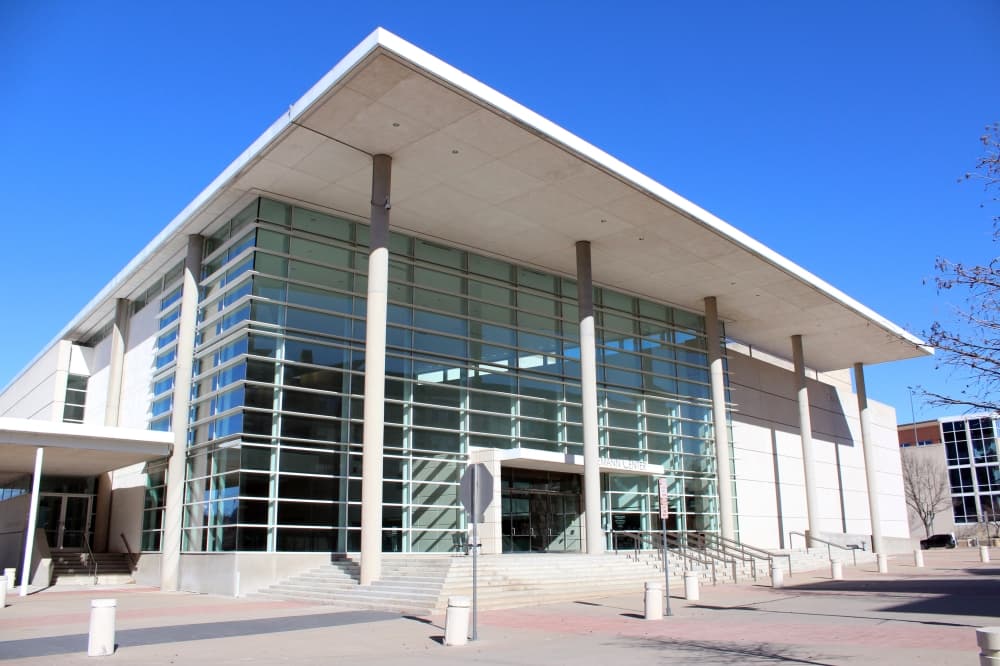
The Eisemann Center, which opened in 2002 and hosts a range of theater, music and dance events as well as meetings, lectures, banquets and receptions, is city-owned and -operated. This means the city is responsible for all facility operations, maintenance, capital improvements and programming.
The city currently provides about $3 million a year in subsidy funds for the center, but Haynes-Hamblen said the center aims to reduce its reliance on city funding by increasing its earned and contributed revenue. With sustained growth, she said the subsidy could drop to $2 million a year.
Breaking it down
Haynes-Hamblen said the Eisemann Center hosts rental events, which include nonprofit organizations and for-profit and corporation events, city of Richardson events, and “Eisemann Center Presents,” which are a majority of the music and theater shows.
Out of the rental events, for-profit and corporation rentals break even, while nonprofit events are subsidized by the city. The subsidized nonprofit events include five "COR 5" organizations that are original rental partners of the center and receive reduced rates. Haynes-Hamblen said staff are working every year to hone the offerings of ticketed events and identify incentives to bring in more audiences.
“We’re really trying to learn every single year more and more about the market and the way that this market behaves, but also about our audience and how this audience behaves,” Haynes-Hamblen said.
Haynes-Hamblen said the center is also working to grow ancillary revenue from events—such as parking, ticket fees, concessions sales, artist merchandise and catering fees—that are not included in the base rental invoice.
She identified several rental events that bring in higher ancillary revenue, such as dance recitals, pageant competitions, cultural events and music concerts, that the center will target.
Haynes-Hamblen started as the center’s executive director in late 2022, after the Eisemann’s revenue dropped substantially due to the COVID-19 pandemic. She presented a range of improvements to council that she has implemented over the last several years to help the center bounce back from the pandemic, including staff restructuring, customer service upgrades and new corporate rental marketing.
“I’m really pleased to see that overall the Eisemann Center’s revenues have been on the rise and they keep growing every single year,” Haynes-Hamblen said. “[This] really underscores that these improvements that we’re making and the strategies that we’re employing for customer service and revenue generation are working.”
Also of note
Haynes-Hamblen said the number of Eisemann events and usage days, which are preparation and restoration days before and after events, have remained fairly stable even as revenue has grown.
While increasing the number of events may appear to be an easy strategy to increase revenue, Haynes-Hamblen said fully booking the center would create budget pressure and accelerate wear on the facility, leading to diminishing budget returns.
“Our best practices from the industry tell us that we need to have recovery time between events,” Haynes-Hamblen said. “It protects the building, it protects the equipment, and it protects the staff.”
Going forward
Haynes-Hamblen said the greatest opportunity to increase revenue is to fill the seats for the events already on the calendar. She proposed several strategic investments in marketing support, sponsorship development and ticket office support in order to grow audiences and decrease the city’s subsidy in the long term.
“There are a number of different things that we do across our city that don’t have a break-even or a payback in the kind of way that we’d expect,” Mayor Amir Omar said. “We’ve got to figure out how that’s going to balance with everything else we’re trying to do.”
In addition to budget considerations, council member Arefin Shamsul said the Eisemann Center contributes to economic growth around the city.
“This is one of the things that differentiates us from other cities, and this brings other businesses, which sometimes we can’t see directly,” Shamsul said.
The center has not met revenue projections for the last few years, so the city’s subsidy has been more than anticipated, but Magner said the center is expected to hit its revenue goal this year. After hitting that benchmark, Magner said the center will be in a stable position to begin implementing Haynes-Hamblen’s investment strategies for long-term growth.