


The overview
The Frisco Police Department will launch six drones as a first responder, or DFR, in May.
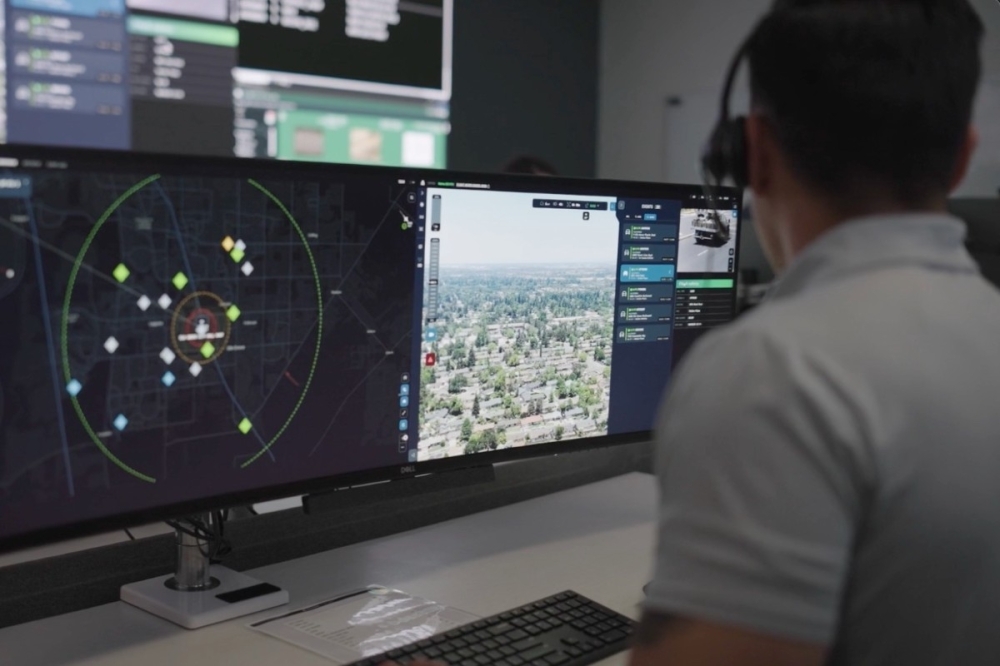
The drone technology will allow first responders to assess situations through the high-definition camera and thermal radar before sending human first responders.
The drone, which is provided by security company Flock Safety, can be deployed on average in two minutes and can act as “eyes on the scene” from the air, said Sgt. Ryan Thomas, who works for the Frisco PD’s community services division, in an email.
Frisco City Council approved $427,500 for the program to be reimbursed through a grant from the Motor Vehicle Crime Prevention Authority. The group has provided grants for other municipalities to implement the new technology, including Prosper, which was the first in Texas to use drones as a first responder. Frisco is providing a matching amount of $39,660.
“It is important to note that our Drone as First Responder (DFR) program is still cutting‑edge and relatively new, but it has already seen great success,” Thomas said. “We are proud to be one of the first agencies in Collin and Denton counties to implement this program.”
The cost
The drones are a cheaper alternative to a helicopter but offer similar benefits. A helicopter could cost anywhere between $7 million to $10 million for the aircraft alone and millions additionally every year for maintenance and fuel, Criminal Investigations Division Lt. Evan Mattei said.
“Though a valuable asset to public safety, a manned air program has largely been a luxury for larger departments,” Mattei said in an email. “Through a DFR program, citizens of Frisco will receive the same value as they would from a manned aerial program for a fraction of the cost with a much faster response.”
The goal of the drones is to provide faster service to incident calls. Drones can launch from their sites in about 90 seconds and provide real-time aerial views to combat crime, said Paris Lewbel, Flock Safety’s public relations manager.
A closer look
The Frisco Police Department currently has 18 Federal Aviation Administration-certified pilots to operate the drones.
Drones must be flown with a horizon-fixed camera view and only record video relevant to the call response, Mattei said.
The drone can respond within a 3.5-mile radius of its docking site. In Frisco, those docking sites are not yet finalized, but the preliminary locations have been outlined as shown in the map.
Zooming out
There are a number of call types that can warrant a drone as a first responder launch, Lewbel said. These include:
- Missing or endangered person searches
- Active investigations where aerial context accelerates leads
- Scene assessment before officer arrival
- Tactics planning around suspect containment
- Large public events or evolving incidents requiring broader situational awareness
Other North Texas entities that use DFRs include Arlington, Euless, Roanoke and Irving.
In Prosper, officials have reported a 71% drop in response times, with a drone arriving on the scene first in 37% of service calls, Prosper Police Sgt. Keith Mann said.
The program has been so successful that Prosper is now starting construction on a second launch site, which is to be completed early this year, Mann said.
Prosper will continue to partner with the Frisco PD on service calls including the DFR program, Mann said.
“It really is a force multiplier; an officer safety multiplier as well,” he said. “Drones allow officers to see things they couldn’t see from the ground.”
The takeaway
Once the six drones are implemented, they will be used to bolster the existing drone program, Mattei said. The drones can also help with fire department calls.
“We anticipate that any call where having a drone and its operator able to provide information and intelligence as eligible for a drone response,” he said. “We also anticipate providing assistance for fire department calls where an aerial view may be beneficial in providing information to responding fire apparatus.”
The drones will only be used for response to calls for services and will only record video when it’s relevant to a call to protect community privacy, Mattei said. They will not be used for patrolling or looking for crime, he said.
“Implementing new technologies means giving public safety agencies tools that help them be more informed, more effective and safer,” Lewbel said. “We see DFR and other integrations continuing to evolve as part of a comprehensive public safety ecosystem.”